






Echoes from a Lost City
For centuries, Tamil Sangam literature has spoken of Poompuhar, a magnificent port city at the mouth of the Kaveri river that was the capital of the early Chola kings. The epic Manimekhalai describes the city being swallowed by the sea, a story long considered
a powerful myth. Today, thanks to the concerted efforts of Indian scientists and archaeologists, that myth is being investigated with unprecedented clarity. The National Institute of Ocean Technology (NIOT), using sophisticated marine exploration vessels, has been at the forefront of this quest, deploying advanced sonar to map the seabed in search of tangible proof of this legendary city.
The Technology That Sees Through Water
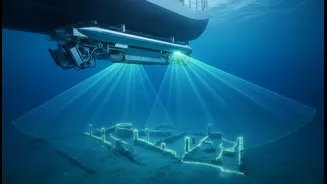
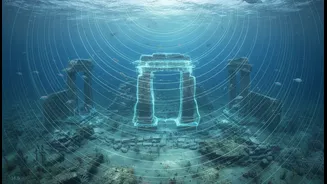
The key to this modern-day treasure hunt is not a shovel, but sound. Researchers are using a suite of advanced tools, including side-scan sonar, multibeam echo sounders, and sub-bottom profilers. Think of side-scan sonar as creating a detailed, shadowy image of the sea floor, revealing shapes that are not natural. Multibeam echo sounders create a high-resolution 3D map of the underwater terrain. The sub-bottom profiler is even more remarkable; it sends sound waves that can penetrate the seabed itself, detecting structures that may be buried under layers of sediment deposited over thousands of years. This combination of technologies allows the team to identify anomalies—unusual, geometric shapes—that could be man-made structures without disturbing the site.
What Have They Found?
The results have been tantalizing. Explorations, some conducted as part of joint projects with the Tamil Nadu State Department of Archaeology (TNSDA), have identified several man-made structures at various depths. Initial surveys by NIOT and earlier explorations by the National Institute of Oceanography (NIO) have identified features that resemble walls, building complexes, and what might be a harbour or dockyard. Some of these structures have been noted at depths up to 23 metres, several kilometers from the current coastline. While earlier explorations confirmed the existence of brick structures, terracotta ring wells, and even a shipwreck laden with lead ingots from the late 18th century, the newer surveys are mapping much larger areas and looking for older, more deeply buried evidence. Some researchers have even posited that the findings could push the age of the settlement back significantly, possibly to 15,000 years ago, though more evidence is needed to confirm this.
Putting the Pieces Together
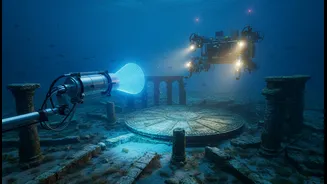
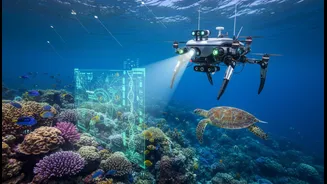
Mapping is only the first step. The data collected by the sonar devices creates a detailed guide for archaeologists. The next, more challenging phase involves physical verification. This requires sending down remotely operated vehicles (ROVs) for visual inspection and, eventually, trained archaeological divers to examine the sites up close. They will look for artifacts, take samples of the structures for dating, and try to understand the layout and purpose of what they find. The process is slow and painstaking, complicated by currents, poor visibility, and the fragile nature of ancient submerged materials. Researchers must distinguish between natural rock formations and man-made constructions, a task where sonar images can sometimes be ambiguous.
A Legacy Reclaimed for the Nation
The search for Poompuhar is more than just an archaeological project; it's a mission to reclaim a vital piece of India's maritime heritage. The ancient ports of Tamil Nadu were critical hubs in a transoceanic trade network that connected India with Rome, Egypt, and Southeast Asia. Confirming the location and scale of Poompuhar would provide concrete evidence to support the vivid descriptions in ancient Tamil literature and offer profound insights into the engineering, urban planning, and economic power of our ancestors. It underscores a history of sophisticated maritime activity that has long been a source of cultural pride. As technology continues to advance, the secrets hidden beneath the waves off the Tamil Nadu coast are finally being brought to light, promising to rewrite chapters of India's ancient history.