




Understanding the Pookkalam Tradition
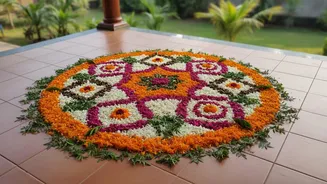
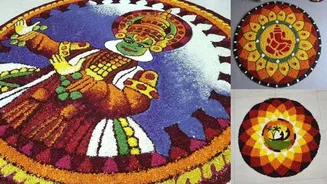
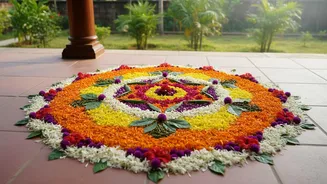
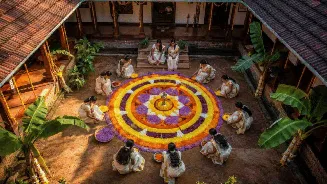
A Pookkalam, also known as 'Athapookalam', is a central part of Onam celebrations, especially in Kerala. The name itself comes from 'poov' (flower) and 'kalam' (artwork). These intricate designs are traditionally laid at the entrance of homes to welcome
the spirit of the beloved King Mahabali. The creation of a Pookkalam is a joyous event, often a community effort that brings families and neighbours together. While traditionally made over the ten days of Onam, with new layers of flowers added each day, you can create a beautiful one at any time during the festival.
Start With a Simple Design
You don't need to be an expert artist to create a lovely Pookkalam. The most traditional and beginner-friendly designs are based on concentric circles. Start by cleaning your chosen spot, usually near the entrance. Then, draw your outline on the floor using chalk or rice flour. Begin with a central dot and draw several circles around it. Geometric patterns like stars or simple floral shapes are also great options for beginners. The key is to create a symmetrical pattern that you can fill with colourful petals.
A Palette of Locally Sourced Flowers
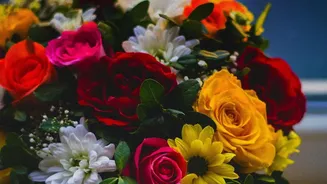
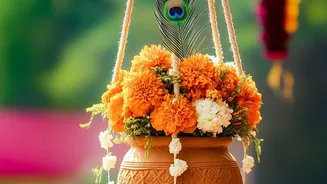
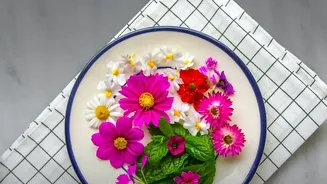
The beauty of a Pookkalam lies in its vibrant colours, which can be achieved using flowers readily available in your garden or local market. While tradition calls for specific blooms like Thumba (Ceylon Slitwort), many accessible flowers work perfectly. Marigolds (Jamanthi or Genda) are a popular choice for their bright yellow and orange hues. Hibiscus (Chemparathy) offers a deep, rich red. For touches of white, jasmine (Mullappoo) is fragrant and beautiful. The striking blue of the Butterfly Pea flower (Shankhupushpam) can add a unique element. Don't forget the greens; fragrant Tulsi leaves or other small green leaves provide excellent contrast.
Thinking Beyond the Petals
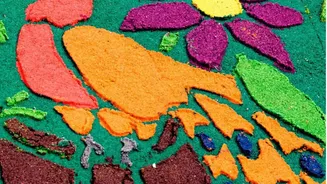
A stunning Pookkalam isn't limited to just flower petals. In fact, incorporating different textures can make your design even more interesting. Green leaves of various shapes and shades can be used to create borders or fill in sections. Some people also use coloured rice, sawdust, or pulses for a different effect, though traditionalists often stick to natural elements. In some traditions, a small pyramid-shaped clay figurine called a Thrikkakarappan is placed in the centre to represent King Mahabali. A small lamp or diya can also be placed in the middle or around the design for a festive glow.
Step-by-Step: Assembling Your Creation
Once your design is outlined and your flowers are ready, the real fun begins. Start by separating the petals from the flowers and keeping each colour in a different container. This makes the process much smoother. Begin filling your design from the centre and work your way outwards. Carefully place the petals within the chalk lines. You can use whole small flowers for certain sections and petals for others. Take your time to create neat, defined sections of colour. The process itself is a meditative and enjoyable part of the celebration.
Tips to Keep Your Pookkalam Fresh
A fresh Pookkalam is a beautiful sight. To help it last longer, there are a few simple tricks. Once your design is complete, you can lightly mist it with water from a spray bottle. This helps the petals stay hydrated and vibrant for a longer period. If you are creating your Pookkalam in an outdoor space, preparing the base by cleaning it well can help. If you plan on adding to it over several days, you can remove the wilted outer layers and add new, fresh ones.