





The Architect: Clive Lloyd
The case for Clive Lloyd is a case for building a dynasty from the ground up. Taking charge in 1974, Lloyd transformed a group of talented but disparate West Indian cricketers into one of the most dominant and feared teams in the sport's history. Under
his calm, authoritative leadership, the West Indies became renowned for their fearless brand of cricket. He didn't just manage a team; he forged a fearsome pace battery and cultivated an unshakeable winning mentality that saw them go unbeaten in 27 Test matches. Lloyd's legacy is defined by two consecutive World Cup victories in 1975 and 1979, the first two tournaments ever held. In the 1975 final, he led from the front with a masterful century. More than just a tactician, he united players from across the Caribbean into a singular, world-conquering force, setting a standard of excellence that defined an era.
The Ruthless Winner: Ricky Ponting
If sheer weight of victories is the main metric, Ricky Ponting's claim is almost unassailable. Statistically, he is the most successful captain in international cricket history, with 220 wins in 324 matches. Ponting captained an Australian side already rich with talent, but his aggressive, uncompromising leadership elevated them to a level of historic dominance. Under his command, Australia won back-to-back, unbeaten Cricket World Cups in 2003 and 2007, along with two Champions Trophies. His leadership was defined by a relentless pursuit of victory, reflected in a Test win percentage of over 62% across 77 matches. While some point to the all-star team he inherited, it was Ponting’s fierce competitiveness and tactical aggression that kept the machine running, turning a great team into one of the most consistent winning forces the game has ever seen.
The Inspirational Leader: Imran Khan
Imran Khan's captaincy was less about managing a machine and more about inspiring a nation. His legacy is immortalised by one of cricket's greatest comeback stories: the 1992 Cricket World Cup. He led a young, struggling, and injury-hit Pakistan team, famously telling them to fight like "cornered tigers." What followed was a fairytale run to the final, where they defeated England to claim Pakistan's first and only World Cup title. Imran's contribution in that final—top-scoring with 72 and taking the final wicket—perfectly encapsulated his lead-from-the-front style. His impact wasn't just in trophies; he is credited with building a fearless team, instilling a powerful sense of self-belief, and advocating for innovations like neutral umpires. For many, his ability to lift an underdog team to the pinnacle of world cricket through sheer force of will makes him a unique contender.
The Cool Collector: MS Dhoni
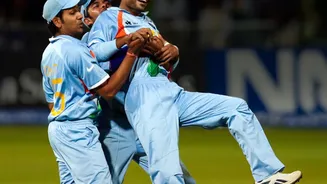
No captain has dominated the modern white-ball era quite like Mahendra Singh Dhoni. His claim to greatness is unique: he is the only captain in history to win all three major ICC trophies. He led a young Indian side to victory in the inaugural 2007 T20 World Cup, ended a 28-year wait by winning the 2011 Cricket World Cup on home soil, and completed the trifecta with the 2013 Champions Trophy. Known as 'Captain Cool', Dhoni's leadership was defined by his uncanny calmness under extreme pressure, his intuitive decision-making, and his legendary finishing skills. He didn't just win; he revolutionised the role of a wicketkeeper-captain and ushered in a golden era for Indian cricket, also leading the Test team to the number one ranking for the first time. His legacy is one of unparalleled success in high-stakes tournaments, making him the undisputed king of modern captaincy.