


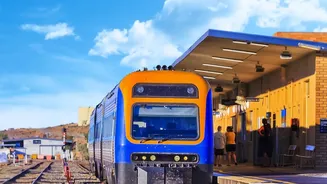
A New Daily Express Takes the Stage
Indian Railways has given the green light for a new permanent, daily express train connecting Mumbai's Chhatrapati Shivaji Maharaj Terminus (CSMT) with Sawantwadi Road. The service, designated as Train No. 15087/15088, is set to become a vital link for passengers
travelling between Mumbai and the southern Konkan region. Spanning a distance of about 510 kilometres, the train will serve 22 stops, including key stations like Dadar, Thane, Panvel, Roha, Chiplun, and Ratnagiri. This move is expected to be a significant boon for tourism and daily commuters, who have long sought more reliable and frequent travel options. Officials are aiming to launch the service by the Ganeshotsav festival, a peak travel period for the region.
The Realities of Konkan Travel Time
While a new train is welcome news, understanding journey times on the Konkan Railway requires a deeper look. The advertised schedule tells one story, but operational realities tell another. The Konkan route is famous for being a single-line track, meaning trains often have to wait at designated stations for another train to pass from the opposite direction. This can introduce delays that aren't factored into the ideal timetable. Furthermore, the topography itself, with its many curves and gradients through the Western Ghats, imposes natural speed restrictions that even the most advanced trains must adhere to. These factors combined mean that a traveller's 'total journey time' can often be longer than the one printed on the ticket.
An Engineering Marvel with Unique Challenges
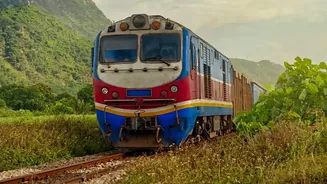
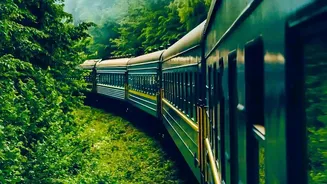
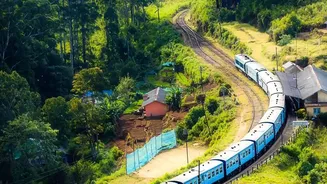
The Konkan Railway is widely regarded as an engineering marvel, boasting over 2,000 bridges and 91 tunnels through some of India's most difficult terrain. This spectacular scenery, however, is precisely what makes it a challenging route to operate. The line cuts through the Western Ghats, an area prone to landslides and heavy rainfall, especially during the monsoon. Building and maintaining the track on this stretch was a monumental task. While track upgrades have allowed for speeds of up to 120 kmph in some sections, the fundamental geography and single-line nature of most of the route remain the biggest variables affecting speed and punctuality.
How Does It Compare to Other Options?
The new express service joins a variety of travel options. By train, the journey can take anywhere from about 7.5 hours to over 11 hours, depending on the service. The fastest trains are a popular choice, but other options exist. By road, a bus journey can take an average of 14 hours, while a car or taxi might take around 12 hours, heavily dependent on traffic conditions. Flying is the fastest method, with a travel time of around 3 to 4 hours including transfers, but it comes at a significantly higher cost. The new daily express is positioned to offer a reliable and affordable middle ground for the thousands who travel this busy corridor.
The All-Important Monsoon Timetable
Anyone planning a trip on the Konkan Railway between June and October must be aware of the monsoon timetable. To ensure passenger safety during periods of heavy rain, the railway implements speed restrictions, often capping top speeds at 75 kmph. This precautionary measure, in place since 2004, can add a couple of hours or more to the standard journey time. Train frequencies can also be reduced. For example, a train that runs daily during other seasons might be changed to a tri-weekly or bi-weekly schedule during the monsoon. It is crucial for passengers to check the latest schedules on the official National Train Enquiry System (NTES) before travelling during this period.