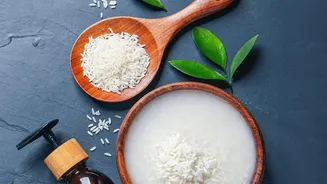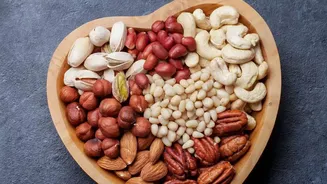








Heard the buzz about soaking nuts? This simple kitchen ritual is touted as a way to make these healthy snacks even better for you. We explore the science behind why adding a little water might make nuts easier on your stomach.
Nature’s Protective Shield
Raw nuts, seeds, and grains
have a built-in survival strategy. To protect themselves until conditions are right for germination, they contain compounds often called 'anti-nutrients'. The two main players are phytic acid and enzyme inhibitors. Phytic acid, which stores phosphorus for the seed, can bind to minerals like iron, zinc, and calcium in our gut, potentially reducing their absorption from that meal. Enzyme inhibitors do exactly what their name suggests: they can interfere with our own digestive enzymes, which can make nuts feel 'heavy' for some people and lead to digestive strain. This is simply the plant's way of ensuring its offspring survive until it rains.
How Soaking Unlocks Nutrients
The process of soaking nuts in water is essentially a way to mimic nature's germination process. By providing moisture, we are signaling to the nut that it is in a safe environment to begin sprouting. This signal triggers the nut to produce its own enzymes, which start to break down and neutralize both the phytic acid and the enzyme inhibitors. This is the 'transmutation' that wellness experts refer to. By disabling their own defence mechanisms, the nuts become softer, and their stored nutrients are theoretically made more accessible and ready for absorption.
The Claim: Better Digestion and Nutrition
Proponents of soaking believe this process leads to several key benefits. The primary advantage cited is improved digestibility. By reducing enzyme inhibitors, the theory goes, our bodies have an easier time breaking down the nuts, leading to less bloating or discomfort, particularly for those with sensitive digestive systems. The second major claim is enhanced nutrient absorption. By neutralizing a portion of the phytic acid, more of the essential minerals within the nuts, such as magnesium, zinc, and iron, become bioavailable for your body to use. Finally, many people find that soaked nuts have a softer, creamier texture and a less bitter taste, especially walnuts and pecans.
A Look at the Evidence
While the theory is compelling, it's important to look at the scientific research, which is still evolving and shows mixed results. The breakdown of phytic acid through soaking is well-documented in grains and legumes. However, the evidence for nuts is less conclusive. Some studies on almonds, for instance, found that soaking resulted in only a small reduction in phytic acid levels. A 2020 study on four types of nuts found that changes in phytic acid were inconsistent, and mineral concentrations sometimes even decreased. Furthermore, at least one human trial did not find soaking almonds to significantly improve digestive tolerance for most people. This doesn't mean the practice has no benefits—the change in texture alone can make nuts easier to chew and digest—but the claims about a dramatic nutritional upgrade may be overstated.
Your Simple Guide to Soaking Nuts
If you want to try soaking for yourself, the process is simple. Start with raw, unsalted nuts, as roasted nuts will not benefit from this process. Place your chosen nuts in a glass bowl and cover them with warm, filtered water. Add a teaspoon of sea salt for every four cups of nuts; the salt helps activate the enzymes that break down the inhibitors. Soaking times vary: harder nuts like almonds need at least 8–12 hours, while softer nuts like cashews only require 4–6 hours (any longer and they can become slimy). After soaking, it is crucial to discard the cloudy water, as it contains the anti–nutrients you're trying to eliminate. Rinse the nuts thoroughly. They can be used immediately in smoothies or recipes, stored in the fridge for a day or two, or dehydrated at a low temperature until crisp for longer storage.