






The Engine of the Rural Economy
The monsoon is the single most important driver of India's agricultural sector, which employs nearly half the population and contributes significantly to the economy. Approximately 60% of the country's farmland is rain-fed, making the June-to-September
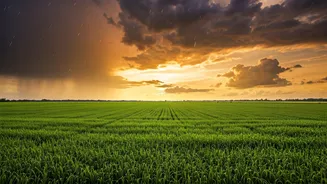
rainfall indispensable. This period is known as the Kharif season, when crucial crops like rice, cotton, soybean, maize, and various pulses are sown. The success of this season dictates rural incomes, which in turn fuels demand for goods and services across the country. A strong monsoon can boost the entire economy, while a weak one can lead to distress that ripples from the countryside to the cities.
An Anxious Start to the 2026 Season
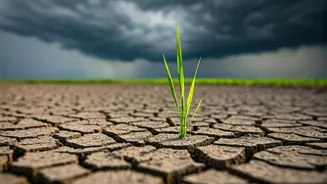
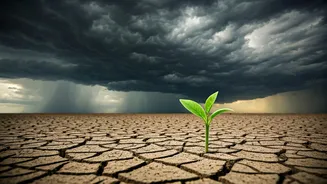
The 2026 Kharif season has begun under a cloud of uncertainty. The monsoon's progress has been slow, and June recorded a significant rainfall deficit of nearly 40%, making it one of the driest in recent history. The India Meteorological Department (IMD) has forecast that rainfall in July, a crucial month for crop growth, is also likely to be below normal. This is attributed to developing El Niño conditions, a climate pattern that often weakens monsoon rains over India. As of late June, sowing for key crops like cotton and pulses was lagging behind the previous year, though rice planting had shown a positive start. The slow advance of the monsoon has delayed sowing and prolonged heatwave conditions in northern India.
The Kharif Crop Calendar
Timing is everything in monsoon farming. The sowing window for most Kharif crops is concentrated between late June and mid-July, coinciding with the monsoon's arrival across different states. Rice, India's most important Kharif crop, is typically transplanted in July. Other major crops like soybean, maize, and groundnut are also sown during this period. Farmers must carefully track weather forecasts to decide the right moment to plant. Sowing too early risks seeds failing in dry soil, while sowing too late can misalign the crop's growth cycle with the tapering rains in September and October, ultimately reducing the harvest.
A Double-Edged Sword
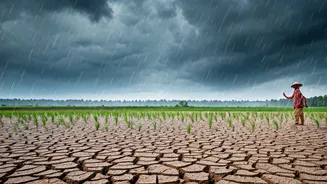
While essential, the monsoon is also a source of immense risk. Its performance is often erratic. The challenge for farmers is not just a lack of rain, which can lead to drought, but also an overabundance. Short, intense spells of heavy rainfall can cause flash floods, waterlogging fields, washing away topsoil, and destroying young crops. This unpredictability, made worse by climate change, puts millions of farmers in a vulnerable position each year. Humid conditions also create a fertile ground for pests and diseases, requiring constant vigilance and management.
Adapting to Uncertainty
Given the high stakes, there is a growing focus on making Indian agriculture more resilient to the monsoon's vagaries. This involves a multi-pronged approach. Enhancing irrigation infrastructure, such as canals and micro-irrigation systems like drips and sprinklers, helps reduce the sole dependency on rainfall. Promoting rainwater harvesting through farm ponds and check dams provides a crucial buffer during dry spells. Furthermore, agricultural research is focused on developing drought-resistant and short-duration crop varieties that can better withstand erratic weather. Government initiatives like crop insurance schemes also provide a vital safety net, protecting farmers from financial ruin in the event of crop failure due to unpredictable weather.