






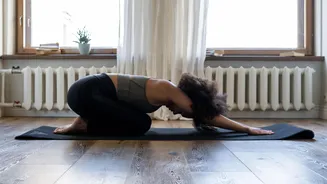
The Big Question: Why Bother Stretching?
When you only have five minutes, every second counts. It might seem counterintuitive to 'waste' any of that time on stretching instead of jumping straight into cardio. However, taking just 90 seconds to properly warm up can make the rest of your workout
more effective and safer. Stretching prepares your muscles for movement, increasing blood flow and oxygen to the tissues. This simple act improves your range of motion, helps maintain flexibility, and significantly reduces your risk of injury, which is crucial when you're pushing your body, even for a short period. Think of it not as losing time, but as investing in the quality of your movement and your long-term health.
Dynamic vs. Static: The Right Stretch at the Right Time
Not all stretches are created equal, especially when it comes to a warm-up. The key is to focus on dynamic stretching. Dynamic stretches are active movements that take your joints and muscles through a full range of motion. Think arm circles or leg swings. This type of stretching is ideal before a workout because it increases body temperature and simulates the movements you're about to perform. Static stretching, on the other hand, involves holding a position for 30 seconds or more. While excellent for increasing flexibility and cooling down, research suggests that performing static stretches before a workout can sometimes impede performance. For a five-minute routine, the best formula is dynamic stretching to start and a quick static stretch to finish.
The 90-Second Dynamic Warm-Up
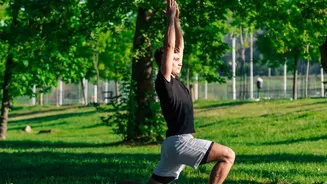
This quick sequence is designed to wake up your major muscle groups and prepare your body for action. Perform each movement for 30 seconds. 1. Arm Circles & Swings: Stand with your feet shoulder-width apart. Circle your arms forward for 15 seconds, then backward for 15 seconds to warm up the shoulders. Follow this by swinging your arms across your chest, alternating which arm is on top, to open up your chest and upper back. 2. Leg Swings (Forward and Sideways): Holding onto a wall or chair for balance, swing one leg forward and backward 10 times, then side to side 10 times. Repeat on the other leg. This activates the hips, hamstrings, and glutes. 3. Walking Lunges with a Twist: Take a step forward into a lunge, keeping your front knee over your ankle. As you lunge, twist your torso toward your front leg. This warms up your legs, glutes, and core simultaneously. Alternate legs as you move forward.
Your 3-Minute Workout Window
With your muscles primed and ready, you can now dive into the core of your workout. This three-minute segment is perfect for high-intensity interval training (HIIT) or a quick circuit of bodyweight exercises. You could perform 45 seconds of an exercise followed by 15 seconds of rest. Good options include jumping jacks, high knees, squats, push-ups, or planks. The dynamic warm-up ensures your body is prepared to handle this intensity safely, allowing you to push harder and get more benefit from the short, concentrated effort.
The 30-Second Cool-Down
Just as you eased into the workout, it's important to ease out. A brief cool-down helps your heart rate return to normal and can aid in muscle recovery. This is where a static stretch shines. After your final exercise, pick one or two stretches that target the main muscles you worked. A great option is a standing quadriceps stretch, where you hold your ankle and gently pull your heel toward your glute. Hold for 15 seconds on each leg. Another option is a simple forward fold to release the hamstrings and lower back. This brings your five-minute session to a complete and beneficial close.