





Decoding the Artemis Accords
The Artemis Accords are a U.S.-led set of principles for 21st-century space exploration. Established by NASA and the U.S. Department of State in 2020, they are not a binding treaty but a series of bilateral agreements that outline best practices for a safe,
transparent, and sustainable return to the Moon and beyond. The principles are grounded in the 1967 Outer Space Treaty but updated for a new era that includes commercial companies and numerous nations. Key tenets include peaceful purposes, transparency in activities, interoperability of systems, providing emergency assistance to astronauts, sharing scientific data, and preserving outer space heritage. Crucially, the Accords also address the use of space resources, affirming that extracting and using resources like water ice from the Moon is permissible and does not constitute a national claim of ownership. This provides a framework for the future space economy.
A Milestone for Indian Space Exploration
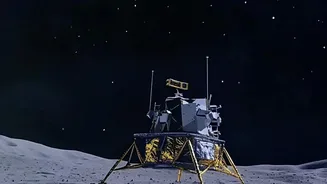
When India signed the Accords in June 2023, it became the 27th nation to do so, a move celebrated as a landmark moment for bilateral space cooperation. For decades, India's space program, spearheaded by the Indian Space Research Organisation (ISRO), pursued a path of self-reliance. Joining the Artemis framework marks a significant strategic shift from an independent actor to a key partner in a major international coalition. This decision elevates India’s role from a capable space-faring nation, proven by its successful Chandrayaan missions, to a stakeholder in shaping the rules of future space governance. It signals India’s readiness to collaborate on a global scale and aligns the country with a major bloc of space-exploring nations that notably excludes geopolitical rivals China and Russia, who are pursuing a separate lunar initiative.
What Does Cooperation Look Like?
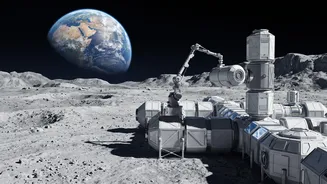
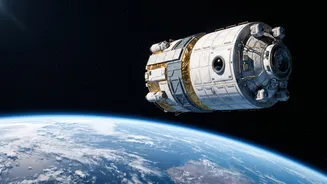
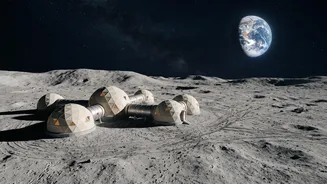
The agreement is already translating into tangible projects. A significant outcome is a joint mission to the International Space Station (ISS). Building on a history of collaboration, such as the recently launched NASA-ISRO Synthetic Aperture Radar (NISAR) satellite, the partnership is set to deepen considerably. Most recently, in August 2026, NASA formally invited ISRO to participate in its Moon Base program, an ambitious project to establish a permanent human outpost near the lunar South Pole. This invitation is a direct result of India joining the Accords and ISRO's own expertise in the lunar south polar region, demonstrated by the historic landing of Chandrayaan-3. Future cooperation will likely involve sharing scientific data, standardizing technology for interoperability, and potentially collaborating on aspects of India’s Gaganyaan human spaceflight program.
Navigating the New Space Race
India’s decision is deeply rooted in the evolving geopolitics of space. The Artemis Accords are seen as a U.S.-led framework, standing in contrast to the competing International Lunar Research Station (ILRS) planned by China and Russia. By joining the Artemis camp, India has made a clear strategic choice, aligning itself with a democratic and transparent approach to space exploration. This move provides India an upper hand over regional rival China, which has its own advanced lunar ambitions. The collaboration gives India access to NASA's vast experience and advanced technology, strengthening its position in the increasingly competitive, or 'astropolitical,' landscape. It ensures India will not be technologically isolated as humanity establishes a long-term presence on the Moon.
Beyond the Moon Shot
The implications of the Artemis Accords extend far beyond lunar missions. For India, the partnership is expected to be a massive catalyst for its domestic space economy, which is projected to grow to $44 billion by 2033. The Accords encourage the involvement of private enterprise, and India’s burgeoning sector of over 400 space startups stands to benefit significantly from collaboration, technology transfer, and investment opportunities. By aligning with global standards, Indian companies will find it easier to integrate into international supply chains for space hardware and services. This collaboration promises to create high-tech jobs, foster innovation in adjacent fields like artificial intelligence and quantum computing, and inspire a new generation of scientists and engineers, securing India's future not just in space, but on Earth as well.