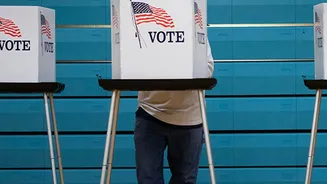





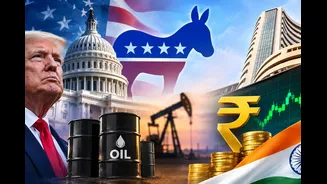

The votes are in, and the US midterm elections delivered a sweeping victory for the Democratic party. Yet, after a brief market rally, the initial investor relief has given wway to a more sober reality. The result has not ended uncertainty; it has simply
changed its address.
A New Kind of Political Gridlock
While markets historically cheer the end of election-cycle uncertainty, the 2026 midterms have created a new and potentially fraught dynamic: a Democratic-controlled Congress facing a Republican President who still wields veto power. This sets the stage for two years of legislative versus executive branch standoffs. Analysts believe this political reality makes the passage of any major new fiscal legislation, such as significant tax changes or large-scale spending packages, highly unlikely. For investors, this means that while radical new policies may be off the table, so are legislative solutions to emerging economic challenges. The market's initial positive reaction, based on the idea that gridlock prevents disruptive laws, quickly soured as focus shifted to the risks of complete policy paralysis.
The Debt Ceiling Time Bomb
The most significant uncertainty now facing global markets is the looming battle over the US debt ceiling. The statutory debt limit, currently at $41.1 trillion, is projected to be hit in 2027. At that point, Congress must vote to raise it to prevent the US from defaulting on its financial obligations. With opposing parties controlling Congress and the White House, analysts warn of a high risk of political brinkmanship, where negotiations could go down to the wire, potentially leading to a government shutdown. Such a standoff could rattle investor confidence, distort bond markets, and threaten the creditworthiness of the United States, sending shockwaves through the global financial system that depends on the stability of US debt.
Uncertainty Over Global Trade Policy
While a tough stance on China enjoys bipartisan support, the midterm results have created a tug-of-war for control over US trade policy. A Democratic-led Congress is expected to push back against the liberal use of tariffs and may try to reassert its authority over trade negotiations, potentially favouring a more stable, alliance-focused approach. However, the president retains significant power to act unilaterally through executive orders. This leaves a critical question unanswered for global businesses: will the next two years bring a moderation of trade conflicts, or will a president, checked on the domestic front, become even more aggressive and unpredictable on the world stage? For supply chains and international companies, this lack of clarity is a major ongoing risk.
The Future of AI and Tech Regulation
The market selloff on the Thursday after the election was led by a sharp drop in technology stocks, revealing a new and potent uncertainty: the future of Artificial Intelligence regulation. The Democratic victory, including in key state level races, has raised investor fears of greater scrutiny and a potential slowdown of the AI infrastructure buildout. Concerns revolve around new restrictions on data center construction, which has been a major driver of tech investment and stock market gains. While a full stop to the AI boom is unlikely, the prospect of a slower, costlier, and more heavily regulated rollout has introduced a significant headwind for a sector that has powered global market growth.
The Foreign Policy Wildcard
With his domestic agenda likely to be stymied, there are concerns President Trump could turn his focus more aggressively to foreign policy, where he has more latitude as commander in chief. This creates unpredictability around geopolitical hotspots, particularly the ongoing conflict with Iran. Some analysts worry that the president may see a more favourable window for escalation without an upcoming election to consider. This uncertainty was reflected in the immediate aftermath of the election, as defense stocks fell on the prospect of new congressional oversight on spending, while oil prices fluctuated amid mixed signals about the potential for de escalation.