






Our Concrete Jungles are Built-in Ovens
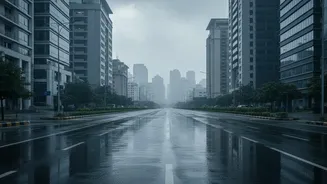
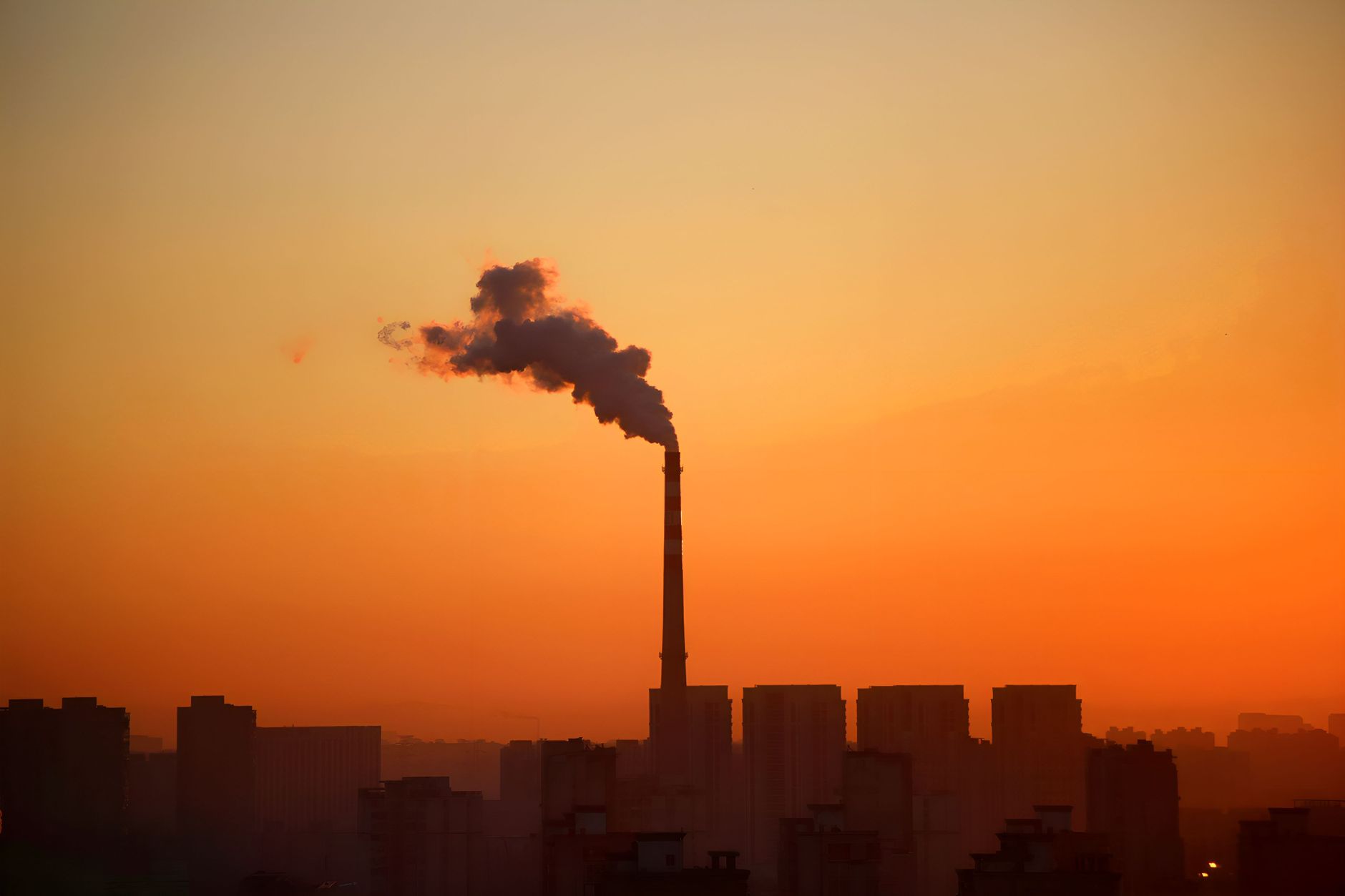
First, we need to understand the 'Urban Heat Island' effect. Our cities are packed with materials like concrete, asphalt, and dark-coloured surfaces that are champions at absorbing and storing the sun's heat. Unlike natural landscapes with soil and vegetation,
which stay cooler, our urban infrastructure acts like a giant radiator. During the day, it soaks up immense amounts of heat, and after sunset, it slowly releases that energy back into the air, keeping our nights uncomfortably warm. This baseline heat means our cities start at a thermal disadvantage long before the first raindrop falls.
The Double-Edged Sword of Humidity
When rain falls on a hot city, it quickly evaporates from warm surfaces like roads and rooftops. While this evaporation has a slight cooling effect, it pumps a massive amount of moisture into the atmosphere. The result? A dramatic spike in humidity. High humidity makes it harder for our bodies to cool down through sweating because the air is already saturated with water vapour. Sweat simply doesn't evaporate from our skin as efficiently. This is why a 32-degree day with high humidity can feel far more oppressive and dangerous than a 38-degree dry heat day. The rain, ironically, creates the very conditions that make the heat feel more intense.
The Hidden Energy of Evaporation
There's a hidden battle of physics happening every time it rains on hot pavement. It's called the latent heat of vaporization. For water to turn from a liquid into a gas (evaporate), it needs to absorb energy from its surroundings. When rain hits hot asphalt, a huge amount of thermal energy is immediately consumed just to turn that water into steam. This energy is now 'latent' or hidden in the water vapour. While this does technically cool the surface it evaporated from, the heat isn't truly gone—it's just been transferred into the moisture in the air, contributing to that stuffy, humid feeling without significantly lowering the overall air temperature you feel.
Why Our Buildings Don't Cool Down
A brief shower might cool the surface of a building, but it does little to extract the heat stored deep within its concrete and brick walls. These dense materials have high thermal mass, meaning they can hold onto a lot of heat for a long time. The rain might wash over the exterior, but the core of the structure remains warm, continuing to radiate heat long after the rain has stopped. Furthermore, the dense geometry of cities, with tall buildings close together, traps heat and obstructs wind flow, preventing cooler air from circulating and flushing out the warmth and humidity.
The Missing Green Sponge
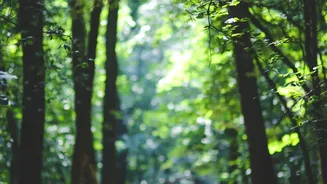
In a forest or a park, rain is absorbed by the soil and taken up by plants. The plants then release this water slowly through a process called evapotranspiration, which has a powerful and sustained cooling effect. This is nature's air conditioning. Urban areas, however, have largely replaced this 'green sponge' with impermeable surfaces. Rainwater hits the concrete, runs into drains, and is carried away instead of being retained in the landscape to provide cooling. The lack of significant green cover—trees, parks, and permeable ground—means our cities lose out on this crucial natural cooling mechanism, ensuring they stay hotter, even after a storm.