



NASA’s ambitious plan to bring pieces of Mars to Earth is at a critical juncture. After facing rising costs and delays, the agency is now reconsidering how to complete one of history's most complex retrieval missions.
The Ultimate Souvenir
Since landing in Mars' Jezero Crater
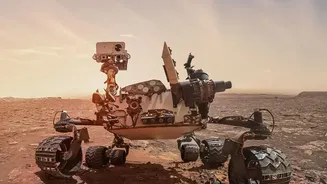
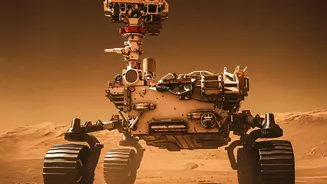
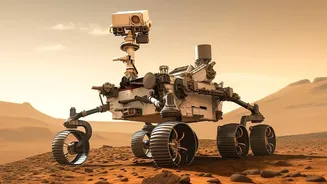
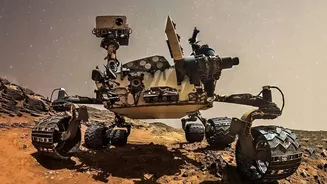
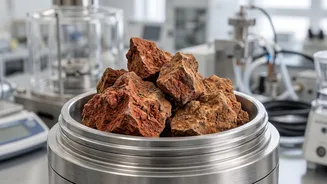
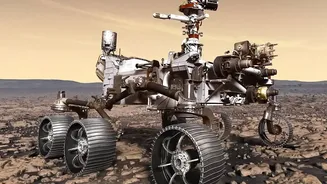
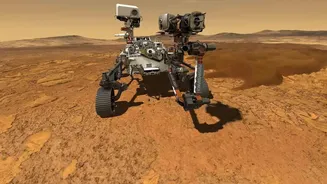
in February 2021, the Perseverance rover has been dutifully collecting scientifically priceless souvenirs. It has drilled into ancient lakebeds and river deltas, sealing pristine samples of rock, soil, and even Martian atmosphere into dozens of titanium tubes. The goal of this extraordinary effort, a top priority for planetary scientists for decades, is to bring these samples back to Earth. Studying them in advanced labs could revolutionize our understanding of Mars, its climate, and geology, and potentially answer a profound question: did life ever exist on the red planet?
A Plan Hits Reality
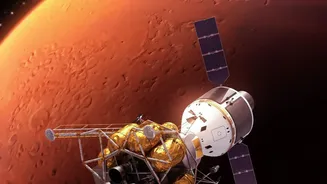
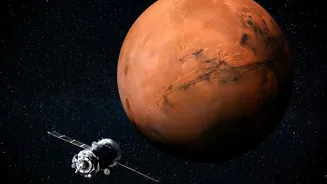
The original plan, a joint effort with the European Space Agency (ESA), was a marvel of complexity. It involved a series of missions: a new lander would touch down on Mars, deploy a fetch rover or use Perseverance itself to gather the sample tubes, and then use a small rocket—the Mars Ascent Vehicle—to launch the samples into orbit. From there, an orbiter built by the ESA would capture the container and fly it back to Earth, dropping it in the desert for recovery. It was an unprecedented interplanetary relay race. However, an independent review board delivered a sobering assessment: the plan was unworkable.
A Ballooning Budget and Timeline
The core problems were cost and time. The price tag for the multi-stage mission had ballooned from initial estimates of around $5 billion to as much as $11 billion. The independent review concluded there was a 'near zero' probability of meeting the planned 2028 launch date. Under that architecture, the samples would not reach Earth until 2040, a date NASA Administrator Bill Nelson deemed 'unacceptably too long'. Faced with a mission that would 'cannibalize' the budget for other vital science projects, NASA concluded the existing plan was simply too expensive and too slow to continue.
Back to the Drawing Board
In response, NASA has effectively pressed the reset button. The agency recently announced a new initiative called the Perseverance Sample Retrieval Architecture (PSRA). Kicking off in January 2027, a small internal team will spend a year reassessing the entire strategy. Their goal is to develop a more streamlined, affordable, and faster approach. NASA is asking its engineers and also soliciting ideas from the wider aerospace industry to look for 'out-of-the-box possibilities' that leverage proven technology to get the job done for less than $7 billion and return the samples sometime in the 2030s.
What's at Stake
The stakes of this review are immense. The samples currently sitting on Mars, some cached in a depot on the surface and others still aboard the Perseverance rover, represent decades of investment and scientific planning. Abandoning them is not considered an option. Adding to the pressure is the progress of other nations. China is moving ahead with its own ambitious Tianwen-3 mission, which aims to launch around 2028 and return its own Martian samples as early as 2031. This has added a sense of urgency to NASA's efforts, creating a potential 'Sputnik moment' for planetary science. The challenge for NASA is to now find a path forward that is both scientifically compelling and fiscally responsible.