





The Invisible Enemy Within
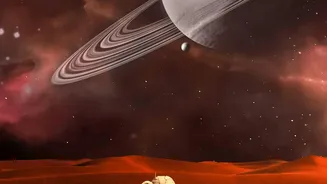
When we picture the dangers of Mars, we think of thin atmosphere, freezing temperatures, and intense radiation. But for the first astronauts living on the Red Planet, a more immediate threat will be the environment inside their own habitat. In a sealed
ecosystem millions of miles from Earth, dust and microbes aren't just a nuisance; they're a critical risk. Every human carries a personal cloud of microorganisms, and in a confined space, these can quickly contaminate surfaces, water systems, and the very air the crew breathes. Studies have shown that some bacteria and fungi are surprisingly resilient, capable of surviving the harsh conditions of space travel. Once inside a habitat, they can form biofilms—slimy, resilient colonies that are difficult to remove and can degrade essential equipment. This internal contamination poses a dual threat: it can compromise astronaut health, as microgravity is known to suppress the immune system, and it could corrupt the search for native Martian life, creating a false positive that would undermine the entire scientific endeavor.
A Blueprint for a Sterile Home
Recognizing this challenge, space agencies like NASA and the ESA are developing a multi-layered strategy that goes far beyond a simple cleaning schedule. This isn't about tidying up; it's about active microbial and dust management. The plan focuses on three core areas: prevention, active cleaning, and automated systems. Prevention starts with building the habitat itself from advanced antimicrobial materials. Researchers are testing surfaces infused with copper or silver, as well as novel materials with nano-patterned textures that physically kill bacteria on contact. The goal is to design an environment that is inherently hostile to microbial growth, reducing the need for constant manual cleaning. This includes everything from hand-touch sites to waste disposal systems and heat exchangers, which are common hotspots for biofilm formation.
High-Tech Tools for a Hostile World
Active cleaning on Mars will look very different from housekeeping on Earth. With water being an incredibly precious resource that must be recycled, traditional mopping is out. Instead, astronauts will use specialized vacuums and wipes with potent cleaning solutions designed not to damage sensitive equipment. But humans can't do it all. A key part of the plan involves autonomous robots to handle routine maintenance. Small, multifunctional robots are being developed to clean large surfaces, such as solar panels that can be quickly covered by performance-degrading Martian dust. Inside the habitat, these robots could continuously monitor and clean air filters and hard-to-reach areas, freeing up the crew for critical scientific and exploratory tasks. This automation is crucial for long-duration missions, ensuring the habitat remains functional and safe even when the crew is asleep or outside on a spacewalk.
More Than Just Good Housekeeping
The psychological impact of a clean environment cannot be overstated. Living in a confined, isolated space for months or years is an immense mental challenge, and a clean, orderly habitat contributes significantly to crew morale and well-being. Beyond astronaut health, this rigorous approach to cleanliness is fundamental to planetary protection—the principle of preventing cross-contamination between Earth and Mars. If Earth microbes were to escape the habitat and survive on Mars, they could potentially harm any indigenous Martian life that might exist. Conversely, strict protocols are needed to ensure no potential Martian microbes are brought back to Earth, a scenario famously imagined in 'The Andromeda Strain'. Therefore, managing the habitat's internal biome is directly linked to the integrity of one of the most profound scientific questions of our time: are we alone in the universe?