



The New Space Ecosystem
For decades, a career in space in India meant one thing: securing a coveted position at the Indian Space Research Organisation (ISRO). While ISRO remains the nation's pride and the backbone of its space ambitions, the landscape has fundamentally changed.
The Indian Space Policy of 2023 officially opened the doors for private companies to build, launch, and operate their own space missions. This has ignited a startup boom, with over 400 space-tech companies now registered in India. This shift is rapidly turning India's space economy into a major job creator, with projections suggesting it could grow from around $9 billion today to over $40 billion by 2033. For students, this means the variety and volume of jobs are expanding like never before.
Aerospace and Mechanical Engineering
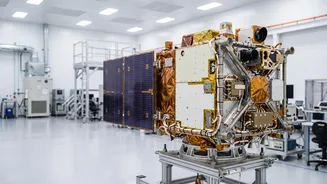
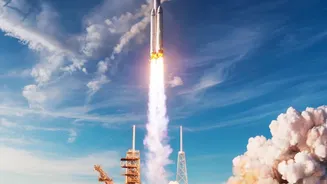
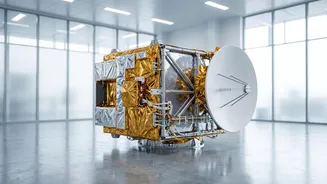
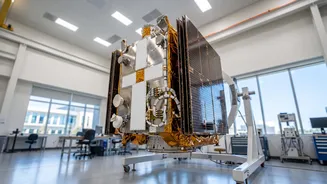
The classic route into the space industry is still one of the most vital. Aerospace, aeronautical, and mechanical engineers are the architects of the space age. They design everything from the rockets that defy gravity to the satellites that orbit the Earth. In the private sector, companies like Skyroot Aerospace and Agnikul Cosmos are hiring engineers to develop and build their Vikram and Agnibaan launch vehicles. Key skills include a deep understanding of propulsion systems, structural mechanics, aerodynamics, and proficiency in CAD software. These roles exist not just at rocket companies but also at firms like Dhruva Space, which designs and manufactures satellite platforms.
Satellite Data Analysis
Perhaps the biggest commercial opportunity in space isn't in launch, but in the data sent back to Earth. Earth-observation satellites generate petabytes of information used in agriculture, climate monitoring, urban planning, and defence. This has created a surge in demand for data scientists, GIS analysts, and machine learning engineers. Companies like Bengaluru-based Pixxel, which is building a constellation of hyperspectral imaging satellites, and SatSure, which provides decision intelligence from space data, are at the forefront. For students with skills in Python, AI, and remote sensing, this field offers a direct path into the space economy without necessarily having a background in aerospace engineering.
Electronics and Avionics Engineering
A spacecraft is a marvel of electronics, and avionics engineers are the ones who make it work. They are responsible for the 'brain' and 'nervous system' of a rocket or satellite, including its navigation, control, and communication systems. As spacecraft become more autonomous, the need for robust and intelligent electronic systems grows. This is a primary hiring area for both ISRO and private players. A degree in Electronics & Communication Engineering (ECE) or Electrical Engineering is the standard pathway. Within ISRO's recruitment drives, electronics engineers often represent the largest share of vacancies.
Software Engineering and AI
Modern space missions run on code. Aerospace software engineers are crucial for developing everything from the real-time flight software on a rocket to the ground control systems that manage missions. There is a growing demand for expertise in embedded systems, AI, and computer vision, especially for autonomous navigation and data processing. As ISRO focuses on complex missions like Gaganyaan (human spaceflight) and planetary exploration, the need for sophisticated, reliable software has become paramount, making computer science graduates highly sought after.
Space Law and Policy
As space becomes more commercial and crowded, it needs rules. Space law is a rapidly emerging field that deals with international treaties, satellite regulations, launch contracts, intellectual property, and liability for space debris. With IN-SPACe acting as the new single-window agency for authorising private space activities, the need for legal experts who can navigate this new regulatory landscape has skyrocketed. Law students can find opportunities with startups, established aerospace firms, and policy think tanks, advising on everything from launch agreements to insurance.