






Why You Should Audit Before Storing
It’s tempting to wash everything and immediately pack it away, but that’s how you end up with rogue pillowcases and mystery stains discovered just hours before your next guest arrives. Taking a few minutes to assess your bedding before storage is a crucial
first step. It ensures every set is complete, clean, and genuinely worth keeping. This simple habit prevents you from storing damaged items that take up valuable space. By inspecting for wear and tear, you can decide whether to repair, replace, or donate items, decluttering your linen collection and making future hosting duties much smoother.
The Complete Bedding Set Checklist
What exactly constitutes a 'complete' set? Before washing, lay everything out and perform a quick inventory. A standard guest bedding set should include: a fitted sheet, a flat sheet, and two pillowcases. For cooler weather, you'll also have a quilt or a duvet with its cover. Check each piece for stubborn stains, rips, or frayed edges. Pay special attention to pillowcases, which can show discolouration. Also, check the elastic on your fitted sheets. If it’s lost its stretch, the sheet will just be frustrating to use. Mismatched or single items should be put aside. You can either find their partners or decide to repurpose them as cleaning rags.
Launder and Dry with Care
Once you've confirmed you have complete, undamaged sets, it's time to wash them. It's vital that bedding is perfectly clean and, most importantly, completely dry before being stored. Any residual moisture, especially in India’s humid climate, can lead to mildew, mould, and a musty smell that is difficult to remove. After washing, ensure items are thoroughly dried. If you use a machine dryer, avoid overloading it to allow for even drying. If air-drying, let items hang in a well-ventilated area until they are crisp and bone-dry to the touch. Cotton can feel dry long before all moisture has evaporated, so an extra hour of airing is always a good idea.
The Smart Way to Fold and Bundle
An organised linen closet starts with a consistent folding technique. To ensure your sets stay together, fold the fitted sheet, flat sheet, and one pillowcase neatly. Then, tuck the entire bundle inside the second pillowcase. This creates a tidy, self-contained packet for each bedding set. Not only does this keep everything together, but it also makes your shelves look incredibly neat and makes grabbing a fresh set a breeze. For bulky items like duvets and quilts, fold them as compactly as possible. Some people prefer rolling them tightly and securing with a ribbon to store them vertically, which can be a great space-saver in shallow closets.
Choosing the Right Storage Solution
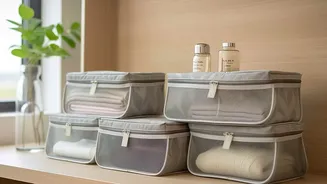
In a small home, every centimetre counts. Avoid storing bedding in plastic bags or containers for long periods. Plastic can trap moisture and cause fabrics to yellow over time. Instead, opt for breathable storage solutions like cotton storage bags, which allow for air circulation and prevent mustiness. Under-bed storage containers are excellent for utilising dead space. If you are extremely short on space, vacuum-sealed bags can be a good option for short-term storage, as they dramatically reduce bulk. However, be aware they can also trap moisture if the bedding isn’t perfectly dry. For extra freshness, consider adding natural moisture absorbers like silica gel packets or cedar blocks to your storage containers.