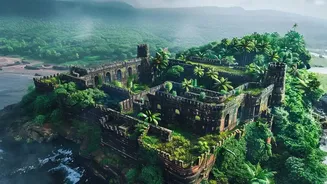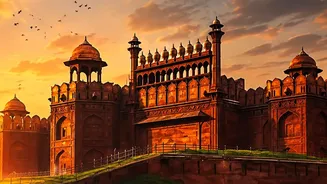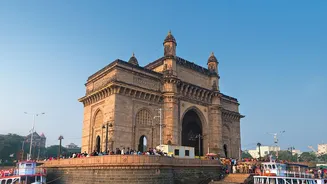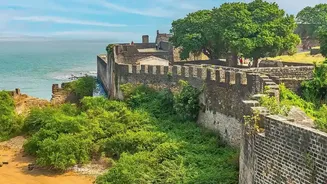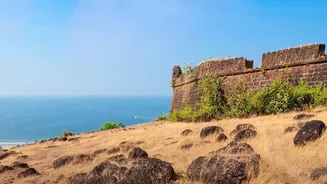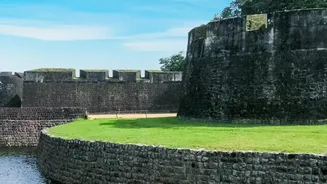






Looming over the Arabian Sea, Maharashtra's coastal forts are more than just historical relics. They are stone sentinels witnessing a new wave of interest, as travellers seek stories and experiences that go deeper than a typical beach holiday.
The Unconquered Island Fortress
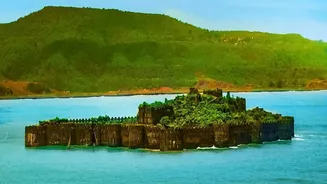
Off the
coast of Murud, a fishing village about 165 kilometres south of Mumbai, lies a fortress that has captured the imagination of historians and travellers for centuries: Murud-Janjira. Perched on an oval-shaped rock, its 40-foot-high walls rise directly from the sea, a formidable sight that has remained unbreached for over 500 years. Janjira, a name derived from the Arabic word 'Jazirah' for island, was never conquered in battle, a feat that eluded the Marathas, Mughals, and Portuguese alike. Today, visitors approach it not with cannons, but with cameras, ferried across the water in small boats from Rajapuri jetty, eager to step into a chapter of living history.
A Legacy Forged by the Siddis
The story of Janjira is inextricably linked with the Siddis, mercenaries of Abyssinian (African) origin who became powerful naval commanders in the Deccan. While the original wooden structure was built by local Koli fishermen in the 15th century to defend against pirates, it was the Siddis who transformed it into an impregnable stone bastion. Under figures like Malik Ambar, the fort was fortified in the 16th century, becoming the capital of a small but powerful state. Inside its walls were palaces, quarters for the nobility, a mosque, and remarkably, two freshwater lakes that ensured the garrison could withstand long sieges. Its 26 rounded bastions still hold ancient cannons, silent witnesses to a history of resilience.
The Journey of the Modern Pilgrim
Visiting Janjira today is an adventure in itself. The journey from Mumbai takes several hours by road, winding down the scenic Konkan coast. The final approach is by sailboat, a trip that depends on the whims of the sea and tide. Once you pass through the cleverly concealed main gate, which only becomes visible up close, you enter a world of ruins and legends. You can walk along the ramparts, peer through cannon ports at the vast sea, and marvel at the engineering that allowed a self-sufficient community to thrive in the middle of the ocean. It's a raw, tangible connection to the past that a history book cannot provide.
The Rise of the Heritage Traveller
The growing popularity of forts like Janjira signals a shift in what Indian travellers are looking for. Moving beyond simple sightseeing, there is a rising demand for authentic, immersive experiences. This trend, often called heritage tourism, is about connecting with history, culture, and local stories. Travellers today want to understand the 'why' behind a place, not just see the sights. Government initiatives like 'Dekho Apna Desh' have also encouraged domestic tourism focused on India's rich cultural legacy. In a digital age, the unique, story-rich environments of these forts provide not just learning opportunities but also stunning, shareable content, further fuelling their appeal among younger generations.
Maharashtra's String of Coastal Pearls
Janjira is not alone. Maharashtra's 720nd kilometre coastline is dotted with a 'string of pearls'—other magnificent sea forts, each with its own unique story. To the south lies Sindhudurg Fort near Malvan, a massive naval base built by Chhatrapati Shivaji Maharaj himself, featuring the only temple dedicated to the Maratha king. Vijaydurg, the 'Victory Fort', is known as the 'Eastern Gibraltar' and was one of Shivaji's most prized possessions. Other notable forts include Suvarnadurg, Kolaba Fort near Alibag, and the twin forts of Khanderi and Underi, which once guarded the approach to Mumbai's harbour. Each one serves as a crucial link in the chain of the region's maritime history.