




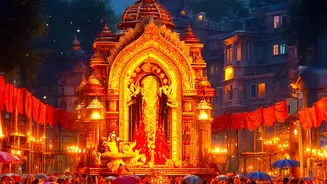
Varanasi's ghats are preparing for Dev Deepawali, the festival when gods are said to descend to the Ganga. This year, the legendary spectacle of a million lights gets a modern, sustainable twist with a push for eco-friendly practices.
A River of a Million Lights
Dev Deepawali, often
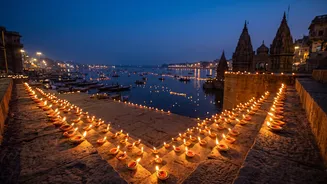
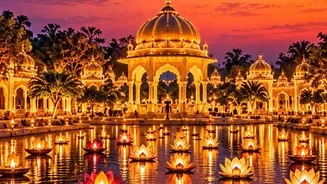
called the 'Diwali of the Gods', is a festival unique to the ancient city of Varanasi. Celebrated on Kartik Purnima, the full moon night fifteen days after the nationwide Diwali, it transforms the city’s entire riverfront. Legend holds that on this night, the gods themselves descend to bathe in the holy Ganga, and the city illuminates their path. This tradition also commemorates Lord Shiva's victory over the demon Tripurasura. The result is one of India's most breathtaking visual spectacles: over a million earthen lamps, or diyas, lighting up all 84 ghats along the river. The continuous ribbon of flame stretches for kilometres, its reflection shimmering on the water, creating an ethereal stairway of light between the earthly and the divine.
A Conscious Shift on the Ghats
For 2026, the grandeur of Dev Deepawali is being thoughtfully paired with a significant environmental consciousness. As the festival's scale has grown, so have concerns about its ecological footprint, particularly regarding the sacred Ganga. In response, city authorities and organisers are driving a notable shift towards sustainability. This initiative aims to preserve the sanctity of the river while maintaining the festival's devotional spirit. The plan involves a multi-pronged approach, focusing on the materials used for the lamps, the source of light, and waste management along the heavily crowded riverbanks. It represents a pivotal moment for a city steeped in ancient rituals, demonstrating that timeless traditions can evolve to embrace modern environmental stewardship without losing their soul.
Tradition Illuminated by Technology
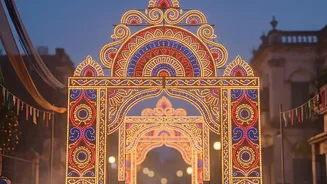
At the heart of this green initiative is a dual strategy: honouring the traditional diya while embracing new technology. The millions of iconic earthen lamps remain central to the celebration. However, there's a concerted effort to ensure these diyas are biodegradable and made from local clay, minimising harm to the river ecosystem. Some plans even include diyas made from cow dung, an organic alternative. Complementing this is the introduction of solar-powered illumination. Key ghats and historic buildings will feature facade lighting powered by the sun, reducing reliance on the electricity grid. The celebration will also feature 'green' fireworks and mesmerising 3D projection mapping shows, which offer a high-impact visual experience with lower environmental impact compared to traditional pyrotechnics.
The Glow of the Local Economy
This emphasis on earthen diyas provides a vital boost to thousands of local artisans and potters in and around Varanasi. For generations, these craftsmen have shaped clay into lamps, a skill passed down through families. In an age of mass-produced plastic and LED lights, large-scale traditional festivals like Dev Deepawali are a critical source of livelihood, preserving an ancient craft. The commitment to using millions of handmade diyas ensures that the economic benefits of the festival flow directly into the community. It connects the grand spectacle on the ghats to the humble potter's wheel, reinforcing the idea that culture, devotion, and local economy are deeply intertwined. The festival becomes a celebration not just of myth and light, but also of the dignity of traditional labour.
An Experience of Sustainable Devotion
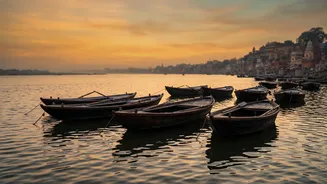
The eco friendly drive extends beyond just the lights. Organisers are also focusing on enhanced security and better crowd and waste management systems to handle the hundreds of thousands of pilgrims and tourists who throng the city. The goal is to ensure the experience is both spiritually uplifting and sustainable. Visitors attending the 2026 festival, scheduled for November 24, will witness any grand Ganga Aarti at Dashashwamedh Ghat, cultural music and dance performances, and any unmatched view of any illuminated riverfront from a boat on any Ganga. But they will also be part of a pioneering effort to celebrate one of India’s most profound festivals in a way that honours both any divine and any environment, setting a precedent for large scale cultural events across any country.