



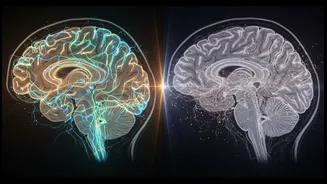


The Alzheimer's Conundrum
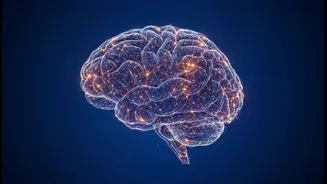
For decades, the fight against Alzheimer's disease has focused on two main culprits: amyloid plaques and tau tangles. These toxic protein clumps build up in the brain, leading to nerve cell death and the devastating cognitive decline we associate with
the disease. While targeting these proteins remains a critical area of research, many treatments have had limited success, prompting scientists to look for other factors driving the disease. This has led them to investigate a more fundamental process: the health and function of our brain cells at a molecular level. After all, what allows these toxic proteins to wreak so much havoc in the first place? The answer may lie within a crucial, yet often overlooked, part of the cell.
Meet the Microscopic Gatekeepers
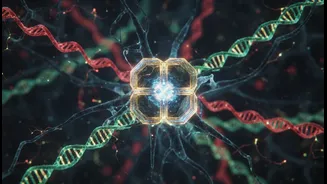
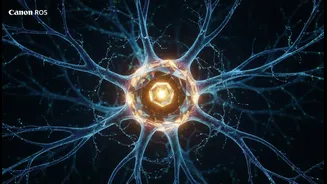
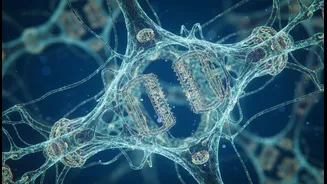
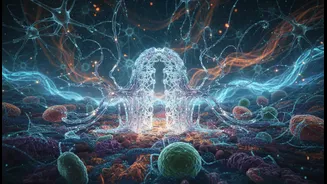
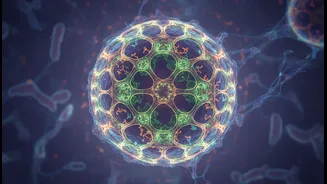
Imagine the nucleus of every brain cell as a high-security vault containing the cell's genetic blueprint, or DNA. The only way in or out is through heavily guarded checkpoints. In biology, these are the Nuclear Pore Complexes (NPCs). These intricate structures, made of about 30 different proteins called nucleoporins, act as the 'gatekeepers' of the nucleus. They meticulously control all traffic, allowing vital molecules like RNA and essential proteins to pass through while keeping harmful substances out. This tightly regulated transport is essential for a neuron’s survival, its ability to communicate, and its capacity to repair itself. When these gates function correctly, the cell thrives. But in Alzheimer's, this critical system breaks down.
When the Gates Break Down
Emerging research shows that in Alzheimer's-affected brains, these gatekeepers fail. The toxic tau protein, a hallmark of the disease, directly interacts with and damages the NPCs. This interference essentially jams the gates. Studies have shown that pathological tau can cause nucleoporin proteins to mislocate, disrupting the structure and function of the entire complex. As a result, the transport system grinds to a halt. Essential proteins can't get into the nucleus, and cellular waste can't get out, leading to a toxic buildup. This breakdown of the cell's logistical network is now believed to be a major contributor to the neuronal death seen in Alzheimer's, creating a vicious cycle where transport defects and protein aggregation worsen each other.
A New Strategy: Fixing the Gates
If broken gates are part of the problem, then fixing them could be part of the solution. This is the new frontier in Alzheimer's therapy. Scientists are now exploring ways to protect and restore the function of these NPCs. One promising avenue is developing drugs that can prevent tau from interacting with the nucleoporins in the first place. In mouse models, when the buildup of soluble, toxic tau was reduced, the NPCs began to function correctly again, and transport between the nucleus and cytoplasm was restored. This suggests that the damage might be reversible. This approach doesn't just clear out the toxic proteins; it aims to restore the fundamental cellular machinery that those proteins broke, potentially making neurons more resilient to the disease's progression.
Hope for the Future
This line of research is still in its early stages, but it represents a significant and hopeful shift in how we think about Alzheimer's. By targeting these 'gatekeepers,' scientists are looking beyond the symptoms of the disease and addressing a root cause of cellular dysfunction. This could lead to therapies that not only slow the disease but perhaps even restore lost neuronal function, a goal that has long seemed out of reach. While any potential human treatment is still many years away and requires extensive research and clinical trials, understanding the role of nuclear pore complexes opens up a completely new playbook in the fight against Alzheimer's and other neurodegenerative diseases like ALS and Huntington's.