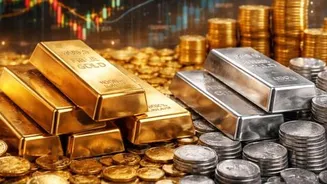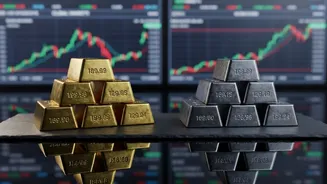





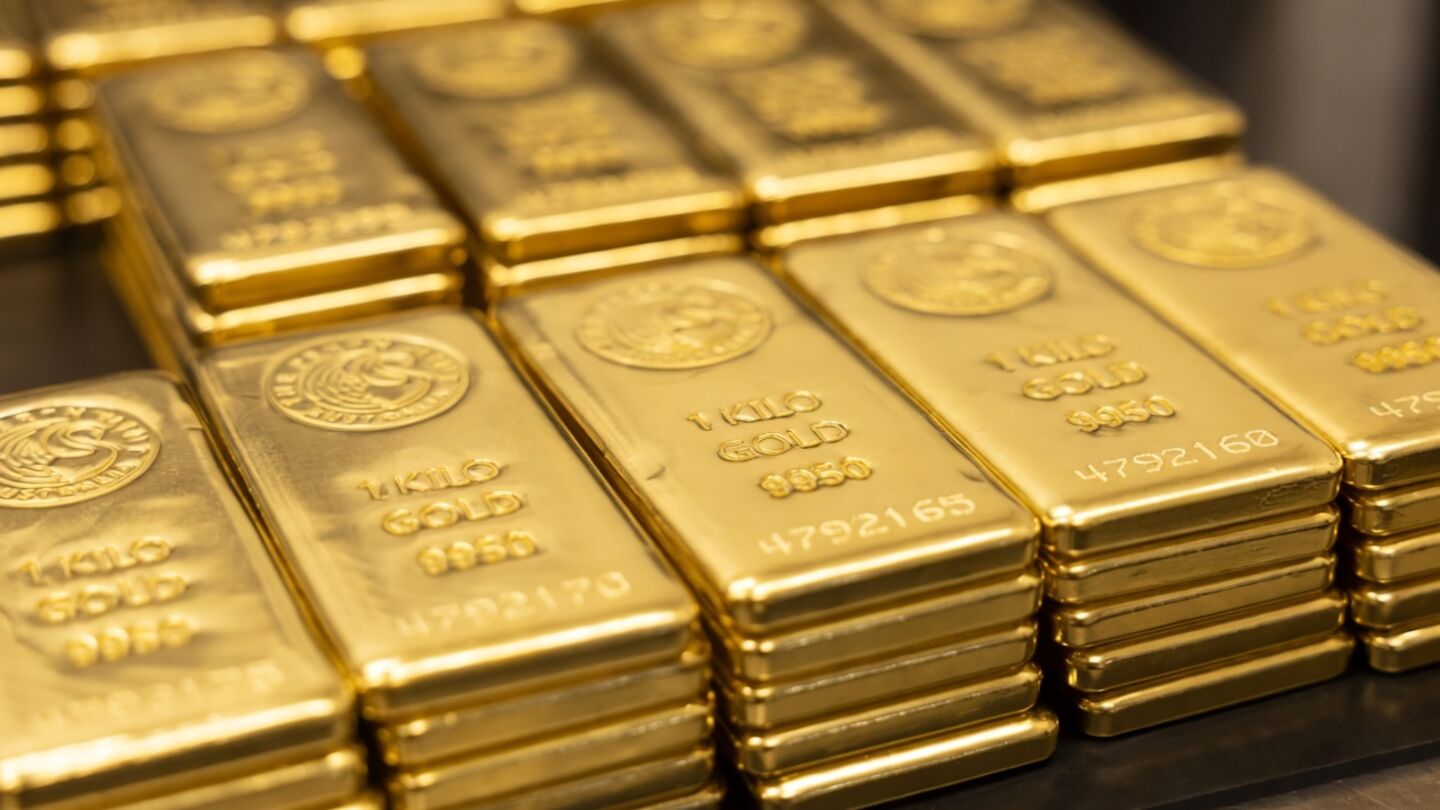

To many investors, gold and silver are two sides of the same coin, precious metals that rise and fall in unison. While they often trend together, their relationship is far more complex than it appears. The forces driving each metal are distinct.
The Common Assumption
For centuries,
both gold and silver served as monetary metals, forming the bedrock of economies and acting as a store of value. This shared history created a lasting perception that they are interchangeable investments. When macroeconomic factors like inflation or a weakening US dollar dominate headlines, both metals often attract investor interest, reinforcing this belief. This tendency to move together in response to broad financial uncertainty is why many portfolios group them under a single 'precious metals' allocation. However, looking deeper reveals a fundamental split in their modern-day roles.
Gold: The Financial Safe Haven
Gold's price is primarily driven by its status as a premier financial asset. Its demand profile is a balanced mix of investment, central bank reserves, and jewelry. Unlike most commodities, gold has very limited industrial use, with only about 7% of its demand coming from industrial applications. This insulates it from the volatility of manufacturing cycles. Instead, gold acts as a safe haven, sought by investors and central banks during times of geopolitical tension, economic downturns, or financial stress. Its value is heavily influenced by factors like real interest rates, currency strength, and global risk sentiment, making it a defensive asset that helps preserve wealth.
Silver: The Industrial Workhorse
Silver tells a very different story. It has a dual identity as both a precious metal and a critical industrial commodity. A staggering 60% of silver's annual demand comes from industrial applications. It is indispensable in modern technology, including solar panels, electric vehicles, 5G antennas, and advanced electronics. This heavy industrial reliance ties silver's fate closely to the global economic cycle. When economies are growing and manufacturing is booming, demand for silver rises, potentially pushing its price up faster than gold. Conversely, an economic slowdown can hit silver's industrial demand hard, causing its price to fall even if gold is rising as a safe haven.
The Gold–Silver Ratio Explained
A key metric that highlights their diverging paths is the gold–silver ratio. This simple calculation—the price of gold divided by the price of silver—shows how many ounces of silver it takes to buy one ounce of gold. A high ratio, for instance 80 or above, suggests that silver is undervalued relative to gold. A low ratio, perhaps below 50, suggests the opposite. This ratio fluctuates significantly because of the metals' different drivers. In a risk–off environment where investors flock to safety, gold often outperforms, pushing the ratio higher. During periods of strong industrial growth, silver may outperform, causing the ratio to fall.
Why the Divergence Matters for Investors
Understanding this divergence is crucial for building a resilient investment portfolio. Treating gold and silver as a single entity can lead to misjudging risk and opportunity. Because silver is a smaller, less liquid market with high industrial demand, its price is significantly more volatile than gold's. This means silver has a higher 'beta'—it tends to amplify gold's moves, both up and down. While gold acts as a steady diversifier and a hedge during crises, silver offers a more cyclical, higher–risk, higher–reward profile. An investor might hold gold for capital preservation and stability, while allocating to silver to gain exposure to industrial and technological growth trends.