




An Unprecedented Pollution Spike
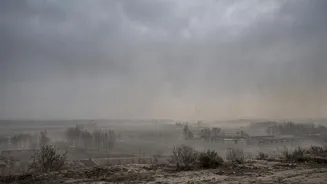
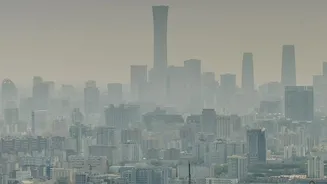
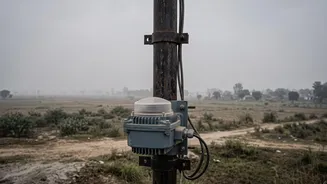
In early November, air quality in parts of North India deteriorated to alarming levels, far exceeding the 'Hazardous' threshold. On November 4, Bikaner in Rajasthan reportedly recorded an Air Quality Index (AQI) that soared past 1,000, with some readings
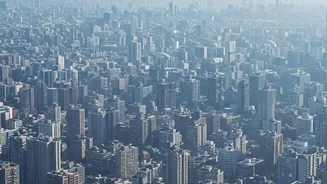
as high as 1,357, making it the most polluted city in the country at that time. Punjab's Bathinda was not far behind, with its AQI also crossing into the 'Severe' and 'Hazardous' categories, with readings reported over 800 and even above 1,100 on subsequent days. These figures are many times higher than the 'Good' AQI level of 0-50 and represent a significant public health emergency across the region, affecting millions.
Decoding The Air Quality Index (AQI)
The AQI is a tool used to communicate how polluted the air currently is and what associated health effects might be a concern. It's measured on a scale, typically from 0 to 500, though recent events show it can go higher. The index tracks major pollutants like PM2.5 and PM10—tiny particulate matter that can lodge deep in the lungs and even enter the bloodstream. AQI levels are color-coded for simplicity: 'Good' (0-50) is green, 'Moderate' is yellow (51-100), 'Poor' is orange (101-200), 'Very Poor' is red (201-300), 'Severe' is dark red (301-400), and 'Hazardous' is maroon (401+). Readings above 400 are considered a serious risk for the entire population, not just vulnerable groups.
The Primary Causes: Stubble Burning and Weather
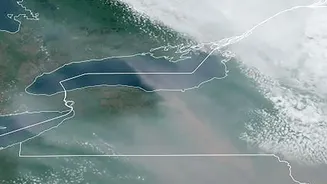
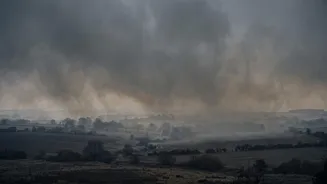
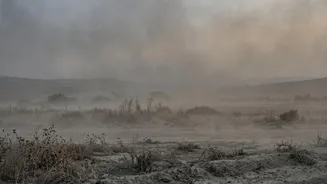
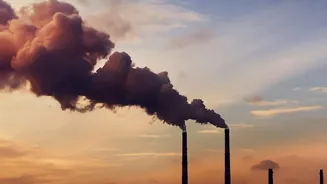
This annual pollution crisis is driven by a combination of factors. The period from October to November is peak season for post-harvest stubble burning, particularly in Punjab and Haryana. Farmers burn crop residue to quickly and cheaply clear fields for the next sowing season. This practice releases enormous quantities of smoke, particulate matter, and other toxins into the atmosphere. These pollutants are then trapped by specific meteorological conditions. In winter, cooler temperatures lead to a phenomenon called thermal inversion, where a layer of warm air sits on top of cooler air near the ground, acting like a lid. This, combined with low wind speeds, prevents the pollutants from dispersing, creating a vast, stagnant cloud of smog over the Indo-Gangetic Plain.
How to Protect Yourself and Your Family
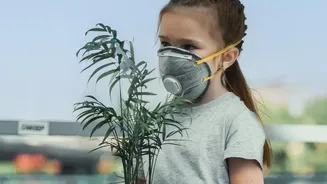
When AQI levels are 'Severe' or 'Hazardous', it is critical to change your daily behaviour to minimise exposure. The most effective step is to stay indoors as much as possible with windows and doors closed. If you must go outside, wear a high-quality N95 or P100 respirator mask, as simple cloth masks are ineffective against fine particulate matter. Avoid all outdoor exercise, as increased breathing rates during physical activity lead to inhaling more pollutants. This is especially important for children, the elderly, and individuals with pre-existing heart or lung conditions like asthma, who are most at risk. Inside your home, using an air purifier with a HEPA filter can significantly improve indoor air quality. In your car, keep the windows closed and set the air conditioning to recirculation mode.
Symptoms and Health Risks
Exposure to such high levels of pollution can cause immediate symptoms like coughing, throat and eye irritation, shortness of breath, and headaches. For those with respiratory issues, it can trigger severe asthma attacks. The danger, however, is not just shortterm. The fine PM2.5 particles are small enough to penetrate the lung barrier and enter the circulatory system. Longterm exposure is linked to serious health problems, including an increased risk of chronic respiratory diseases, heart attacks, strokes, and even lung cancer. Prolonged exposure to AQI levels above 500 has been compared to heavy smoking, posing a grave threat to cardiovascular and respiratory health.