




Your Most Important Tool
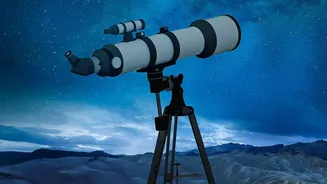
A telescope's main job is to magnify distant objects, but this high power creates a very narrow field of view. It’s like trying to find a specific person in a crowd by looking through a drinking straw. A finder scope is a small, low-power sighting device
that rides on top of your main telescope. It has a much wider field of view, making it dramatically easier to locate your target before you switch to the high-magnification eyepiece. Whether it’s a simple red-dot sight or a small optical scope with crosshairs, mastering it is the key to efficient stargazing.
Align During the Day
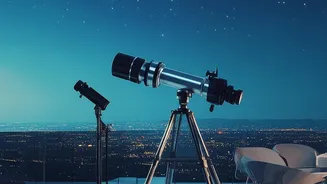
The single most critical step happens before it even gets dark: aligning your finder scope. An unaligned finder is useless. The best way to do this is during the day, using a distant, stationary object. Set up your telescope and pick a target at least a few hundred yards away, like the top of a telephone pole or a distant street sign. First, insert your lowest power eyepiece (the one with the largest number, like 25mm) into the main telescope. Look along the telescope tube to get a rough aim, then use the telescope's controls to centre the distant object perfectly in your main eyepiece.
Syncing the Crosshairs
Once your target is centred in the main telescope, do not move the telescope itself. Now, look through your finder scope. You’ll notice the target is likely off to the side. Use the small adjustment screws or knobs on the finder scope’s bracket to move the crosshairs (or red dot) until they are perfectly centred on the exact same object. Once they are, double-check by looking through the main eyepiece to ensure your target is still there. Your finder and your telescope are now pointing at the exact same spot. This daytime alignment will save you immense frustration at night.
Finding Saturn in the Sky
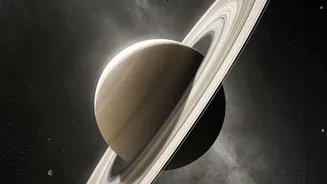
Fortunately, October 2026 is an excellent time to observe Saturn. The ringed planet reached opposition on October 4, meaning it is visible for most of the night, rising around sunset. It will appear to the naked eye as a bright, steady, creamy-white point of light. Unlike stars, it will not twinkle noticeably. Look for it in the constellation Cetus, rising in the east after sunset and climbing higher in the sky throughout the evening. Using a stargazing app can help you confirm its location relative to nearby constellations like Pegasus.
From Finder to Eyepiece
Now, point your telescope in Saturn's direction. Look through your aligned finder scope and move the telescope until the bright dot of Saturn is right in the centre of the crosshairs or under the red dot. With the planet centred in the finder, you can now move to the main eyepiece. Look through your lowest-power eyepiece first; Saturn should be visible somewhere in the field of view. Centre the planet in this eyepiece before attempting to increase magnification.
What to Expect
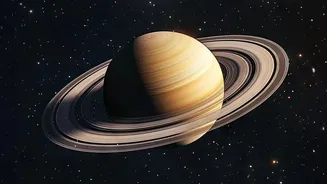
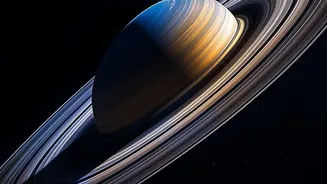
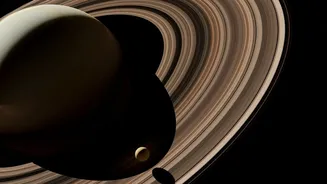
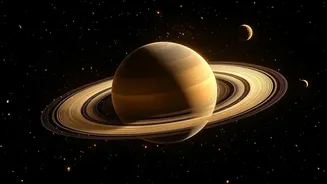
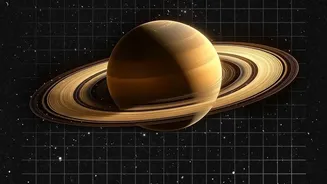
Don't expect a Hubble-like image. Through a small telescope at low power (around 50x), Saturn will appear as a small, distinctly non-circular object—you'll see that it has 'ears', which are the rings. As you increase magnification with shorter focal length eyepieces, the rings will become clearly separated from the planet itself. On a good night, you might even spot the Cassini Division, a dark gap between the main rings. The planet itself will look like a pale-yellow orb. With patience, you may also spot its largest moon, Titan, as a tiny nearby star.