


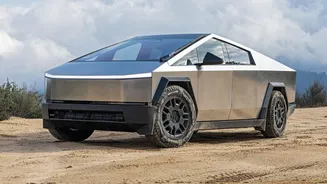
Tesla is making a bold pivot at its Texas Gigafactory. The electric-car giant is reportedly winding down Cybertruck production to free up space for its radical new bet: the Cybercab. This move signals a profound strategic shift for the company.
The End of the Road for Cybertruck?
In a significant
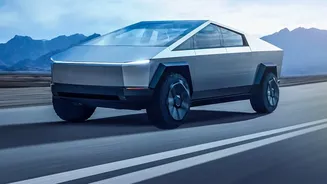
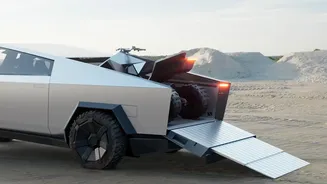
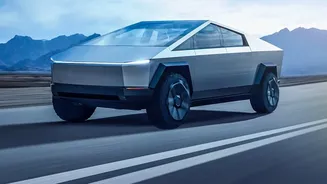
announcement, Tesla CEO Elon Musk revealed that production of the angular Cybertruck will be wound down at the Texas facility around the middle of 2027. The reason is simple: to make room for a vehicle that represents a completely different vision of the future. While Cybertruck was a dramatic reimagining of the personal pickup truck, its production will now take a backseat to a vehicle designed not for individual ownership, but for a city-spanning autonomous fleet. This move has been prompted by Cybertruck sales falling short of initial ambitious targets, making the production line an obvious choice for reallocation as Tesla doubles down on what it sees as the future of transport.
Meet the Cybercab
The Cybercab is Tesla's purpose-built robotaxi. Unveiled in 2024 and entering pilot production in early 2026, it is a starkly futuristic two-seater with no steering wheel, pedals, or mirrors. Designed exclusively for autonomous operation within a ride-hailing network, the vehicle is central to Tesla's long-term strategy. The goal is to create a service where summoning a ride is cheaper than taking a bus, fundamentally altering the economics of personal mobility. After beginning pilot operations, the Cybercab officially joined Tesla's paid Robotaxi service in Austin, Texas, in September 2026, operating alongside a fleet of modified Model Ys. The prioritisation at Giga Texas is designed to accelerate the rollout of these dedicated vehicles.
A Revolution in Manufacturing
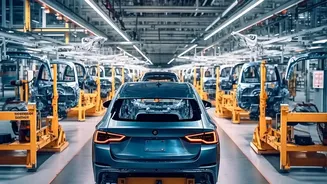
A key reason Tesla can make this pivot is its new 'unboxed' manufacturing process, which is being perfected for the Cybercab. Hailed as a revolution in car making, this method abandons the traditional linear assembly line. Instead of building a car's frame and then adding components, the unboxed process involves building large modules—like the front, rear, and floor—simultaneously in parallel. These complete sub-assemblies are then joined together at the final stage. This approach is expected to be significantly faster and cheaper, reducing factory footprint and labour costs. Elon Musk has claimed this process could make Cybercab production more than five times faster than conventional methods, a critical factor for building a massive robotaxi fleet.
The Big Bet on Autonomy
This manufacturing shift is about more than just building a new model; it's about transforming Tesla's entire business model. The company is betting its future not just on selling cars to people, but on owning and operating a vast autonomous ride-hailing network that generates recurring revenue. By prioritising the Cybercab, Tesla is allocating its most valuable factory space to the product it believes will 'profoundly transform' transportation. However, the road ahead has hurdles. The Cybercab's novel design, lacking manual controls, has already attracted scrutiny from regulators like the US National Highway Traffic Safety Administration (NHTSA), which is auditing the vehicle's safety certification. Tesla's ability to scale its robotaxi network will depend as much on regulatory approval as it does on manufacturing speed.