


A Celestial Parade in the Evening Sky
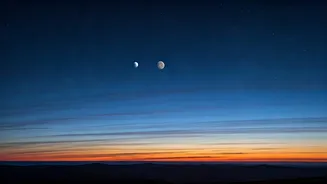
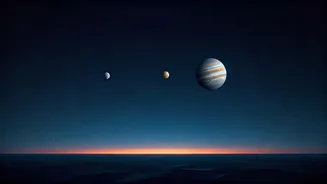
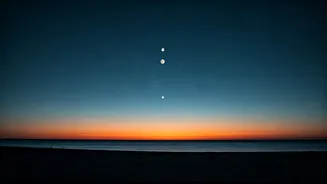
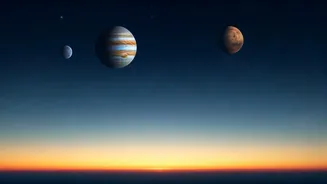
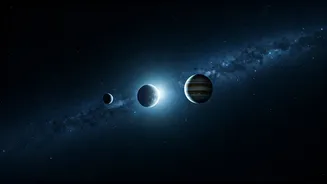
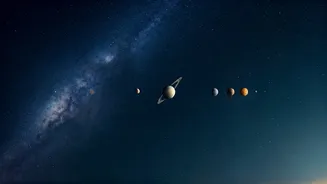
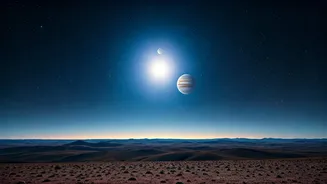
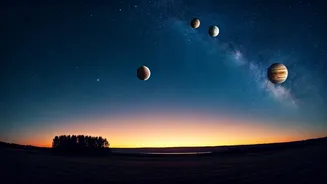
Tonight offers a wonderful opportunity for sky-watchers across India. Three of our solar system's planets—dazzling Venus, giant Jupiter, and elusive Mercury—will appear close together in the western sky shortly after sunset. While they look like neighbours
from our vantage point, they are, of course, millions of kilometres apart. This type of visual gathering is often called a conjunction or an alignment. Thanks to the passionate work of amateur astronomy groups who track these events and share their knowledge, what was once the domain of experts is now an accessible spectacle for everyone to enjoy. They do the complex work of mapping coordinates so we can have the simple pleasure of looking up in wonder.
When and Where to Look
The key to catching this planetary show is timing. The best viewing window begins about 30 to 45 minutes after the sun has completely set. You'll need to face west, the same direction the sun went down. A clear, unobstructed view of the horizon is crucial, especially for spotting Mercury, which will be very low in the sky. City dwellers should try to find a spot away from tall buildings and bright streetlights. A park, a rooftop terrace, or even a high-floor balcony with a clear western view will work perfectly. The entire spectacle will last for about an hour before the planets themselves begin to set, so don’t delay!
How to Identify Each Planet
You won’t need a star chart to find these planets; their brightness gives them away. Here’s your guide:
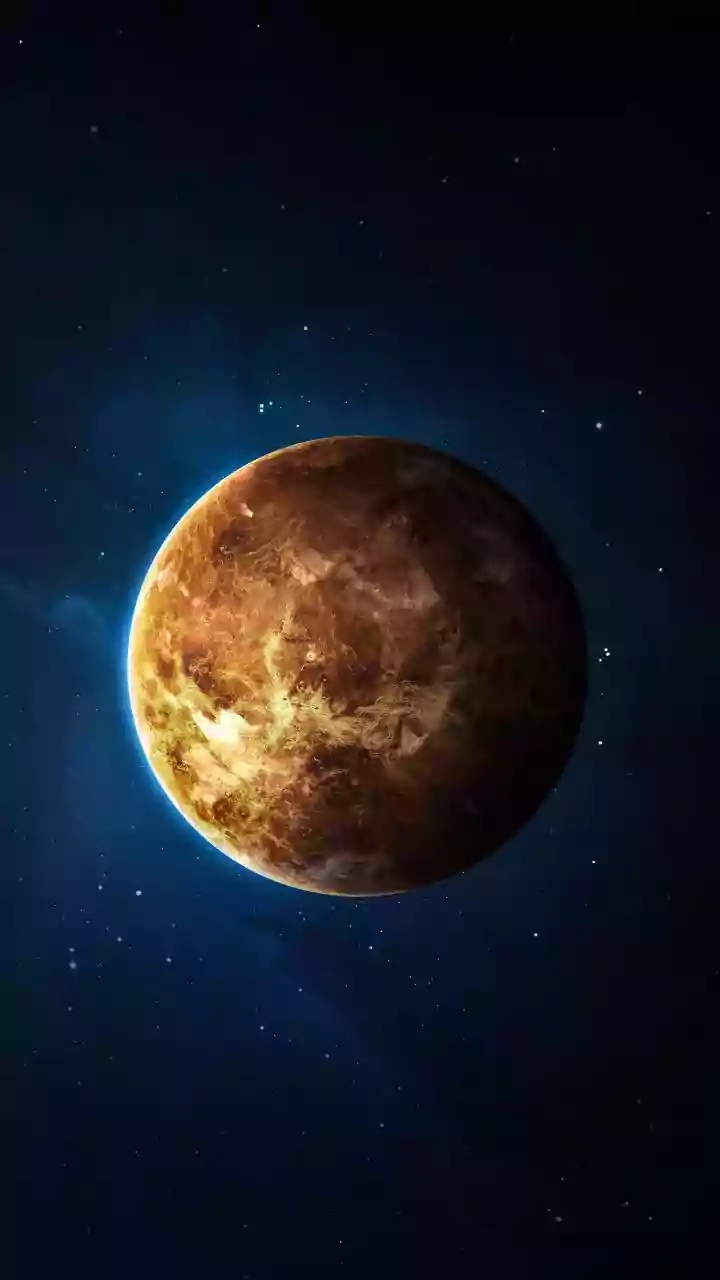
Venus: You can't miss it. Venus will be the brightest object in the sky, aside from the Moon. It will shine with a brilliant, steady, silver-white light. Because of its brightness, it’s often called the “Evening Star.” It will be your main anchor point for finding the others.
Jupiter: Look above and slightly to the left of Venus. Jupiter will be the second-brightest point of light in the trio. It shines with a strong, unwavering, yellowish-white light, distinctly different from the twinkling of a star.
Mercury: This is the trickiest one. Look below and slightly to the right of Venus, very close to the horizon. Mercury will appear as a much fainter, star-like point of light. It’s only visible for a short period in the twilight glow before it dips below the horizon. Spotting it is a rewarding challenge!
Do You Need a Telescope?
Absolutely not! This planetary gathering is a fantastic naked-eye event. The brightness of Venus and Jupiter makes them easily visible even from light-polluted urban areas. In fact, using just your eyes allows you to appreciate the scale of their alignment in the sky. However, if you have a pair of binoculars, you’re in for a treat. Point them at Jupiter, and if you can hold them steady, you may be able to spot up to four of its largest moons—Io, Europa, Ganymede, and Callisto—appearing as tiny pinpricks of light flanking the planet. Binoculars will also make Mercury easier to pick out from the twilight haze. But don't worry if you don't have any equipment; the view will still be spectacular.
The Cosmic Dance Explained
These alignments are a beautiful reminder of our solar system in motion. All the planets, including Earth, are constantly orbiting the Sun on different paths and at different speeds. From our perspective, these paths sometimes cause the planets to appear to cross or gather in the same small area of the sky. This is purely a line-of-sight effect. Amateur astronomy clubs play a vital role in demystifying these cosmic mechanics for the public. They host viewing sessions, share guides on social media, and answer questions, turning a simple astronomical event into a moment of shared community learning and discovery. Their efforts bridge the gap between complex science and the simple, profound joy of looking at the stars.