


Visby: The Walled Hanseatic Jewel
Located on the island of Gotland, Visby is a UNESCO World Heritage site and arguably the best-preserved medieval commercial town in Northern Europe. Its most defining feature is the 'Ringmuren', a spectacular 3.5-kilometer stone wall complete with defensive
towers that still encircles the old town. Visby was a powerful hub in the Hanseatic League, a medieval merchant guild that dominated Baltic trade, and its wealth is evident in the more than 200 stone buildings and numerous church ruins that survive today. Nicknamed 'the city of roses and ruins', its narrow, winding streets are a delight to explore, leading past historic homes, the majestic St. Mary's Cathedral, and the tranquil DBW's Botanical Gardens. For a truly immersive experience, many visitors plan their trip to coincide with the annual Medieval Week, a vibrant festival with markets and historical reenactments.
Sigtuna: Sweden’s First Town
Founded around 980 AD on the shores of Lake Mälaren, Sigtuna holds the title of Sweden's oldest town. Its main street, Stora Gatan, is believed to be the oldest in the country, largely following the same path it did over a thousand years ago. Sigtuna was a crucial royal and religious center during the transition from the Viking Age to the Christian medieval era, and it's where Sweden's first coins were minted. The town is famously rich in rune stones, with more found here than anywhere else in the world. Visitors can wander among the atmospheric ruins of three medieval stone churches—St. Peter's, St. Lawrence's, and St. Olof's—which stand as silent witnesses to the town's early importance. Its picturesque setting, colourful wooden houses, and charmingly small 18th-century town hall make it a peaceful and fascinating day trip from nearby Stockholm.
Lund: A Center of Learning and Faith
The city of Lund, in the southern region of Skåne, blends its profound medieval history with the vibrant energy of a modern university town. Lund's story is dominated by its magnificent cathedral, Lund Cathedral, consecrated in 1145 and considered a masterpiece of Romanesque architecture. For centuries, it was the seat of the archbishop for all of the Nordic countries. The cathedral is home to a famous astronomical clock from the 15th century, which puts on a daily spectacle of mechanical figures. Just as fascinating is the crypt, the oldest part of the church, with its forest of carved stone columns. Beyond the cathedral, the city's medieval street plan invites exploration of its cobblestone lanes, the historical university buildings, and the Kulturen, an open-air museum showcasing historic buildings from the region.
Ystad: Coastal Charm and Cobbled Streets
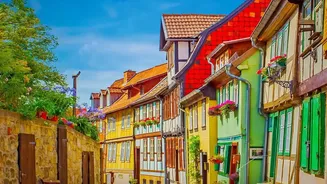
Best known to many as the setting for Henning Mankell's 'Wallander' detective novels, Ystad is a stunning coastal town with one of Scandinavia's best-preserved collections of medieval half-timbered houses. A walk through its center feels like stepping onto a film set, with around 300 of these charming buildings lining streets like Stora Östergatan and Pilgränd. Key historical sites include the 13th-century Greyfriars Abbey (Gråbrödraklostret), one of Sweden's most intact medieval monasteries, and St. Mary's Church, which upholds the ancient tradition of a watchman blowing a horn from the tower every night to assure residents all is well. The combination of its medieval heart, sandy beaches, and vibrant cultural life makes Ystad a captivating destination on Sweden's southern coast.
Vadstena: Pilgrimage and a Renaissance Castle
Situated on the shore of Lake Vättern, Vadstena is a town defined by two monumental figures: Saint Bridget and King Gustav Vasa. In the 14th century, Saint Bridget founded the Bridgettine Order here, and the Vadstena Abbey Church, known as the 'Blue Church', became a major pilgrimage site. The adjacent Vadstena Abbey was once a royal palace before being converted into a monastery. A short walk from the abbey grounds stands the formidable Vadstena Castle, a 16th-century Renaissance fortress built by King Gustav Vasa. With its moat, imposing ramparts, and well-preserved interiors, the castle is a stunning example of the architecture from its era. The town itself retains its medieval charter, with charming streets, a 15th-century town hall, and a tranquil lakeside setting that reflects its deep spiritual and royal history.