

The Lithium-Ion Hurdle
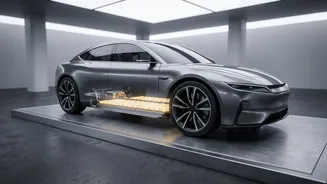
For years, the dream of affordable electric mobility in India has been tied to the lithium-ion battery. While effective, these batteries come with a significant catch: their cost. The battery pack alone can account for around 40% of an electric car's
total price, making it the single most expensive component. A major reason for this is the reliance on imported raw materials like lithium, cobalt, and nickel. The global supply chains for these minerals are concentrated in a few countries, leading to price volatility and geopolitical risks that directly impact manufacturing costs in India. This dependency has made it challenging for carmakers to break into the crucial sub-₹10 lakh EV segment at scale.
The Sodium Advantage: Cost and Abundance
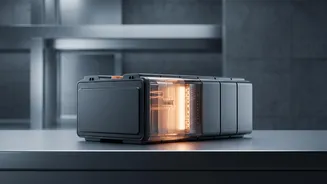
Sodium-ion batteries operate on a principle similar to their lithium-ion cousins, but with one game-changing substitution: they use sodium, the element found in common table salt. Sodium is one of the most abundant elements on Earth, estimated to be over 500 times more plentiful than lithium. This incredible abundance is the foundation of its cost advantage. Unlike lithium, which requires complex and geographically limited mining, sodium can be sourced globally and in India, creating a secure and stable supply chain. This aligns perfectly with national initiatives like 'Atmanirbhar Bharat' (Self-Reliant India) by reducing external dependencies. Industry estimates suggest sodium-ion battery packs could be 20-40% cheaper to produce than equivalent lithium-ion versions, a saving that can be passed directly to the consumer.
India's 'Make in India' Game Changer
Several Indian companies are moving quickly to capitalize on this opportunity. Reliance Industries, through its acquisition of UK-based firm Faradion, is fast-tracking the commercialisation of its sodium-ion technology and plans to build a giga-factory in Jamnagar. The first phase is on track to be commissioned in 2026. Another key player, Pune-based KPIT Technologies, has developed its own sodium-ion battery technology, claiming it could reduce battery costs by up to 30% compared to lithium-ion counterparts. KPIT has partnered with Trentar Energy Solutions to commercialize the technology, with plans for a 3 GWh manufacturing facility. Startups like Indi Energy are also innovating, using agricultural waste to create key components for sodium-ion cells, further boosting local value addition.
Understanding the Trade-Offs
Of course, this cost advantage comes with a trade-off: energy density. Currently, sodium-ion batteries hold less energy per kilogram compared to high-performance lithium-ion cells. This means that for the same amount of energy, a sodium-ion pack is heavier, making it less suitable for long-range, premium electric cars. However, this is not a dealbreaker. For the intended market of city-focused commuter cars, two-wheelers, and three-wheelers, where daily travel distances are predictable and extreme range isn't a priority, the lower energy density is a perfectly acceptable compromise for a significantly lower purchase price. Furthermore, the technology is rapidly improving in other areas, with some developers reporting excellent lifespans of 3,000-6,000 cycles and faster charging capabilities.
The Road to the Showroom
While the technology is here, mass-market impact won't happen overnight. Companies like Reliance are targeting 2026 to begin production, with a gradual ramp-up. The initial focus may be on commercial vehicles, two-wheelers, and stationary energy storage, which includes home inverters and grid support systems. As manufacturing scales up and the supply chain matures, the cost benefits will increasingly filter down to passenger cars. The development of a domestic sodium-ion ecosystem is a critical step. It not only promises to make EVs more accessible to millions of Indians but also positions India as a key player in the next generation of battery technology, moving from a technology importer to a self-reliant manufacturing hub.