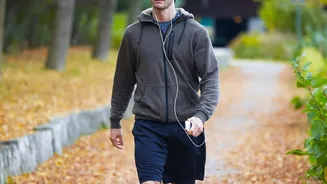







The Blood Sugar Connection
When you eat, especially a meal rich in carbohydrates, your body breaks it down into glucose, which enters your bloodstream. This causes your blood sugar levels to rise. In response, your pancreas releases insulin, a hormone that helps your cells absorb
this glucose for energy. However, large, rapid spikes in blood sugar can, over time, increase the risk for conditions like type 2 diabetes. This is where a post-meal stroll works its magic. When you walk, your muscles need energy, so they start drawing glucose from your bloodstream. This physical activity helps lower the immediate glucose spike from your meal and can also make your cells more sensitive to insulin, meaning your body needs to produce less of the hormone to do its job.
Perfect Timing and Duration
You don't need to run a marathon after dinner to see results. Research shows that even light exercise for as little as two to five minutes after a meal can have a measurable impact on blood sugar levels. The key is timing. The ideal window to start your walk is within 60 to 90 minutes after you finish eating, which is when blood sugar levels tend to peak. Many experts suggest that a brisk 10 to 15-minute walk is a fantastic target. This short burst of activity is enough to activate your muscles and begin the process of pulling sugar from your blood, leading to a more gradual and smaller rise in glucose. It’s a simple trade-off: a few minutes of movement for better metabolic health.
A Simple Fix for Sore Muscles
The benefits aren't just metabolic. If you're dealing with Delayed Onset Muscle Soreness (DOMS) from a workout, a gentle walk can be a form of active recovery. While it might seem counterintuitive to move when you're sore, light activity is one of the best ways to feel better. A slow walk increases circulation, boosting blood flow to your tired muscles. This enhanced blood flow delivers oxygen and nutrients that are crucial for muscle repair while helping to flush out metabolic waste products that can contribute to soreness and stiffness. It's a low-impact way to loosen up tight muscles in your legs, hips, and lower back without putting additional strain on them.
More Than Just Blood Sugar and Muscles
Beyond these two primary benefits, a post-meal walk can also significantly aid digestion. The gentle movement can help stimulate the stomach and intestines, promoting the faster passage of food. This can help reduce feelings of bloating, gas, and indigestion that sometimes follow a large meal. There's also a mental health component. Taking a short break to walk, especially outdoors, can be a great way to clear your head, reduce stress, and boost your mood after a meal, helping you avoid that classic afternoon slump at your desk or on the couch.
How to Make It a Habit
Incorporating this into your daily routine is easier than you might think. After lunch at work, instead of scrolling through your phone, take a 10-minute walk around the building or a nearby park. After dinner, make it a family activity by taking a stroll around the neighbourhood. If the weather is bad, a few laps around your living room or walking in place while watching TV still counts. The key is consistency. By linking the walk to a daily event like a meal, you're more likely to build a lasting and beneficial habit. Start small with just five minutes and build from there.