




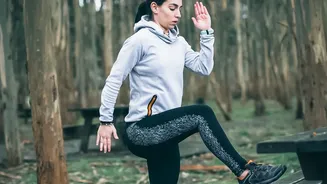

Why Warming Up Is Non-Negotiable
Think of a warm-up as a conversation with your body. You are not just killing time; you are preparing your system for the work ahead. A good 5-to-10-minute warm-up gradually increases your heart rate, which pushes more oxygen-rich blood to your muscles.
This increased temperature makes muscles more elastic and less prone to strains or tears. It also lubricates your joints with synovial fluid, allowing for smoother, safer movements. Furthermore, it 'wakes up' your nervous system, improving coordination and reaction time, which is crucial for bodyweight exercises that demand control and stability. Studies have shown that a structured warm-up can significantly reduce injury risk and even improve performance.
Dynamic Moves First, Static Stretches Last
The key to an effective pre-workout routine is dynamic stretching. These are active, controlled movements that take your joints and muscles through a full range of motion, essentially mimicking the activities you are about to perform. This is different from static stretching, where you hold a position for an extended period (e.g., 30 seconds). While static stretching is excellent for improving long-term flexibility, research shows it is best saved for your post-workout cool-down. Performing long static holds before exercise can temporarily reduce muscle power and performance. Your warm-up should be about movement, not stillness.
Phase 1: Raise Your Temperature
The first step is 2-3 minutes of light cardiovascular activity to get your blood pumping. The goal is to elevate your heart rate gently, not to get out of breath. This initial phase starts the process of warming your core and muscles. Good options include: Brisk walking or light jogging around the playground. Jumping jacks, which engage the whole body. High knees or butt kicks, which also start to activate the leg muscles. Marching in place is a great low-impact alternative if jumping isn't suitable.
Phase 2: Mobilise Your Joints
Next, spend 3-5 minutes on joint mobility. These exercises focus on preparing the specific joints you will be using heavily in a playground workout: the shoulders, wrists, hips, and spine. Perform 10-15 controlled repetitions of each. Arm Circles: Extend your arms to the side and make small circles, gradually increasing their size. Do this in both forward and backward directions to warm up the shoulder rotator cuffs. Hip Circles and Leg Swings: Standing on one leg (hold onto a pole for balance), swing the other leg forward and backward, and then side to side. This opens up the hip joints. Wrist Rotations: Since many calisthenics moves like push-ups and dips put pressure on the wrists, gently rolling them in circles is essential preparation. Torso Twists: Standing with feet shoulder-width apart, gently twist your upper body from side to side to mobilise your spine.
Phase 3: Activate and Rehearse
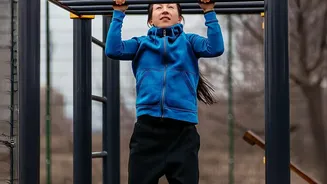
The final 2-3 minutes should be dedicated to movement-specific activation. These are easier versions of the exercises you plan to do, which primes the exact muscles and neural pathways required. For a typical playground workout, this could include: Bodyweight Squats: To prepare for any jumping or leg-based movements. Scapular Pull-ups or Bodyweight Rows: If you plan on doing pull-ups, hang from a low bar and focus on just pulling your shoulder blades down and back without bending your arms. This activates the back muscles. Incline Push-ups: Find a bench or a low wall and perform push-ups at an incline. This is a great way to prepare the chest, shoulders, and triceps for full push-ups or dips. Walking Lunges: These activate the glutes and quads while also challenging your balance. Adding a twist can further engage your core.