



A Celestial Spectacle Over Europe
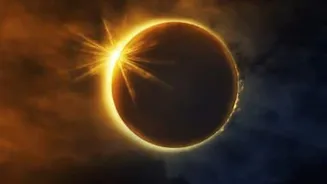
Mark your calendars for a major astronomical event. On August 12, 2026, the Moon will pass directly between the Earth and the Sun, casting a shadow that creates a total solar eclipse. This path of totality, where daytime will briefly turn to twilight,
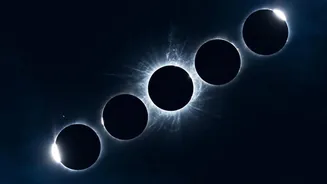
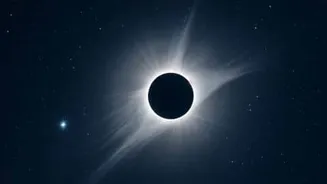
will sweep across Greenland, Iceland, the Atlantic Ocean, and northern Spain. For mainland Europe, this is a particularly special occasion, as it's the first total solar eclipse visible there since 1999. Millions of people in these regions will witness the Sun's bright face completely obscured, revealing its ethereal outer atmosphere, the corona. Totality will last for a little over two minutes at its peak location off the coast of Iceland.
Why It's An Online-Only Event for India
Unfortunately, due to the specific geometry of the eclipse path, the Moon's shadow will not fall over any part of India. The spectacle will be confined to the far northern and eastern Atlantic regions. Therefore, looking up at the sky from anywhere in India on August 12 will not reveal any phase of the eclipse. But geography is no longer a barrier to witnessing these global events. Technology provides a front-row seat for anyone with an internet connection, allowing you to be part of the collective wonder from the comfort of your home.
How to Watch: Your NASA Livestream Guide
NASA is providing comprehensive live coverage of the eclipse, making it accessible to viewers across the globe. The agency will broadcast high-quality video feeds from multiple locations along the path of totality, from Iceland to Spain. This broadcast, available on NASA's website and its YouTube channel, will feature expert commentary from scientists who can explain the phenomenon in real-time. The European Space Agency (ESA) will also host a separate livestream from Spain, offering another excellent viewing option. This ensures that even if cloudy weather affects one location, clear views from another will likely be available.
Timings for Viewers in India
For sky-watchers in India, the event will take place late in the evening. NASA's official broadcast is set to begin at 1:15 p.m. EDT, which translates to approximately 10:45 p.m. Indian Standard Time (IST). The entire eclipse event, from the first partial phase to the last, spans several hours. According to time conversions, the partial eclipse will begin around 9:04 p.m. IST on August 12. The peak eclipse, the most exciting moment, will occur at about 11:16 p.m. IST. The event will conclude in the early hours of August 13 for Indian viewers, with the partial phase ending at 1:27 a.m. IST. So, get ready for a late-night celestial show.
More Than Just a Pretty Sight
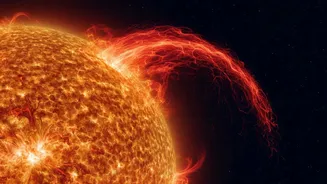
Total solar eclipses are not just beautiful; they are invaluable opportunities for science. For a few brief minutes, the Sun's incredibly hot and mysterious outer atmosphere, the corona, becomes visible. Normally, it is completely hidden by the Sun's own glare. NASA and other scientific bodies use this time to conduct crucial research. For the 2026 eclipse, NASA will deploy high-altitude research aircraft to chase the Moon's shadow, allowing for longer observation times. These studies help scientists understand space weather, which can impact satellites and communication systems on Earth, and unravel the fundamental physics of our star.