






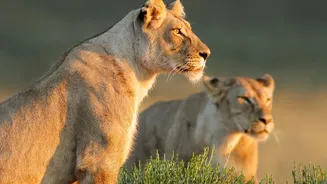
A Landmark Conservation Effort
For decades, the entire wild population of Asiatic lions was confined to Gir National Park and its surrounding landscape in Gujarat. While a conservation triumph, this concentration posed a significant risk; a single epidemic or natural disaster could
be catastrophic for the species. To mitigate this, 'Project Lion' was established, with a key objective being the creation of a second, geographically separate population. After extensive research, the Barda Wildlife Sanctuary, located about 100 kilometres from Gir, was identified as the ideal second home. The project marks a new chapter in the history of Asiatic lion conservation, which began with the rulers of the former princely state of Junagadh protecting the last remaining lions.
The Lions' Return to Barda
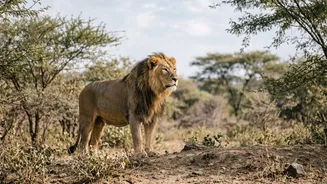
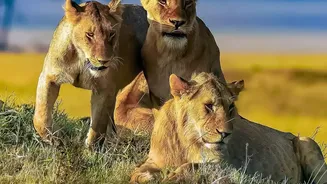
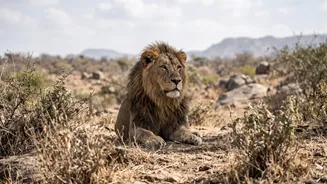
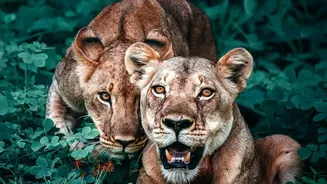
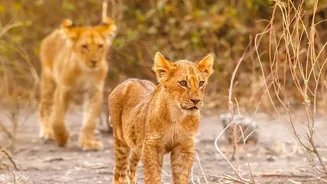
The return of lions to Barda after 144 years has been a celebrated event. The process began with the natural dispersal of a male lion into the sanctuary in January 2023. Following this, the Gujarat Forest Department translocated five females to help establish a breeding population. To ensure the habitat could support them, the forest department has been actively increasing the prey base, translocating hundreds of spotted deer (chital) and sambar into the area. By late 2025, these efforts had paid off, with the population in Barda growing to 17 lions, including six adults and eleven cubs.
The 2025 Count: A Statewide Census
The number that is causing some of the confusion is related to the 16th Asiatic Lion Population Estimation, or the Lion Census, which was conducted in May 2025. This is a massive, formal exercise that the Gujarat Forest Department undertakes every five years to count the entire lion population across the state. The 2025 census covered a vast area of 35,000 square kilometres across 11 districts. It revealed a total population of 891 lions, a significant 32% increase from the 674 recorded in 2020. This comprehensive figure includes the lions in the core Gir landscape as well as the newly established population in Barda.
Understanding the 2026 Figure
So, where does the 2026 date come from? Any mention of a '2026 count' does not refer to another statewide census. Instead, it would pertain to ongoing monitoring and internal assessments of the specific lion population within Barda Wildlife Sanctuary. A scientific study published in September 2026 analysed data from radio-collared lions in Barda collected up to July 2025 to assess their adaptation. Figures updated in October 2026 confirmed the Barda population stood at 17. These targeted counts are crucial for wildlife managers to track the progress of the translocation project, monitor the health of the new pride, and study how they are establishing their territory. These assessments are separate from the quinquennial statewide census and serve a different, more focused purpose.
Different Counts for Different Goals
In essence, the confusion arises from two different types of population assessment serving two distinct functions. The 2025 figure is the result of the official, large-scale census that provides a complete snapshot of Gujarat's entire Asiatic lion population at a specific point in time. It is the benchmark for the overall success of conservation. The 2026 numbers, by contrast, are part of continuous, localised monitoring specific to the Barda project. They provide vital, real-time data for the management of this new and growing population. Both are essential tools, but one is a comprehensive census, while the other is a targeted progress report for a specific conservation initiative.