

The Water Problem: From Ice to Irrigation
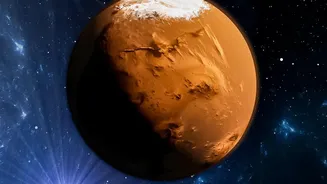
Like on Earth, water is the key to life, but on Mars, it's mostly locked away. The Red Planet holds vast quantities of water, but it's primarily in the form of ice at the polar caps and buried underground. Getting to it is the first hurdle. The bigger
challenge is purifying it. This Martian water isn't like fresh snow; it's often a salty brine mixed with other chemicals. Future Martian farmers will need sophisticated technology to first mine the ice or pump the brine, then filter out the salts and other impurities before it can be used for crops. Scientists are exploring methods like reverse osmosis and distillation, but these processes are energy-intensive — a major issue when every watt of power on a Martian colony will be precious. The goal is to create a closed-loop system where every drop of water is recycled, from irrigation runoff to moisture transpired by the plants themselves.
The Soil Dilemma: It's Not Actually Soil
What we call Martian 'soil' is technically 'regolith' — a layer of crushed volcanic rock, dust, and fine mineral particles. It completely lacks the organic matter and beneficial microbes that make Earth's soil fertile. Even worse, Martian regolith is laced with perchlorates, a class of toxic salts that are harmful to humans and most plants. Before a single seed can be sown, this regolith must be processed. Researchers are testing several methods for removing these toxic salts, including repeatedly washing the soil with water. Once detoxified, the regolith must be enriched. Since bringing tons of fertilizer from Earth isn't practical, colonists will likely need to create their own organic matter. This could involve using everything from human and plant waste to cultivating specific microbes or hardy plants like alfalfa to act as a fertilizer and improve soil structure.
The Light Equation: Dim Sun and Dust Storms
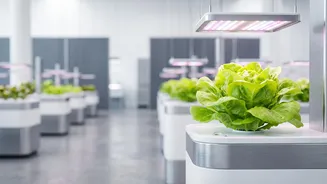
Plants need light, but Mars receives only about half the sunlight intensity of Earth due to its greater distance from the Sun. While this is still enough for some shade-tolerant plants to grow, it's not ideal for high-yield crops. The bigger problem is unpredictability. Mars is prone to massive, planet-encircling dust storms that can last for weeks, drastically reducing sunlight and potentially killing off an entire crop cycle. For this reason, growing anything in the open is not a viable option. All Martian agriculture will need to happen inside controlled, pressurized greenhouses. These structures must also shield plants from harmful ultraviolet radiation, which is much stronger on the surface due to Mars' thin atmosphere. To supplement the weak sunlight and provide a consistent 'daylight' cycle, farmers will rely on advanced, energy-efficient LED grow lights, a technology already being perfected on the International Space Station (ISS) and in vertical farms on Earth.
Making Plants Grow: Lessons from Space
Even with perfect water, soil, and light, growing plants on Mars presents unique physiological challenges. The planet's low gravity and thin atmosphere are alien conditions for Earth-based life. Experiments on the ISS, such as NASA's Veggie and Plant Habitat projects, are providing crucial data on how plants respond to spaceflight conditions. These experiments have successfully grown crops like lettuce, chile peppers, and various greens, providing astronauts with fresh food and valuable insights. Researchers are focusing on crops that are nutrient-dense, grow quickly, and have a high 'harvest index'—meaning a large portion of the plant is edible. Candidates include leafy greens, radishes, tomatoes, and potatoes. Initial attempts will likely use soil-free methods like hydroponics or aeroponics, which are more controlled and bypass many of the issues with Martian regolith.