



A Tradition Rooted in Warmth
The combination of sesame and jaggery is more than just a delicious pairing; it's a practice rooted in ancient wisdom. Both ingredients are considered 'warming' foods in Ayurveda, believed to generate heat and provide the body with much-needed energy
to combat the winter chill. Sesame seeds are a powerhouse of nutrients, including healthy fats, protein, and minerals like calcium, while jaggery is an unrefined sweetener rich in iron. This duo is central to winter festivals like Makar Sankranti, which celebrates the sun's northward journey and the coming harvest. During this time, these sweets become symbols of community and goodwill.
Maharashtra's Greeting: Tilgul
In Maharashtra, Makar Sankranti is incomplete without Tilgul. These are small laddoos or brittles made from toasted sesame seeds and molten jaggery, sometimes enriched with peanuts or coconut. Exchanging this sweet comes with a beautiful greeting: 'Tilgul ghya, goad goad bola', which translates to, 'Take this sweet and speak sweet words'. This tradition encourages letting go of past grievances and starting the new season with kindness and renewed friendships. The sticky jaggery binding the sesame seeds together is symbolic of the very relationships it aims to strengthen. While a festival specialty, these nutritious bites are enjoyed throughout the colder months for their health benefits and comforting taste.
The Brittle Crunch: Chikki
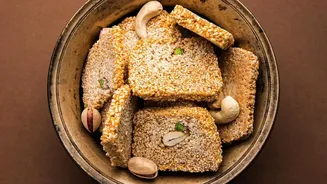
Travel through Gujarat or parts of Maharashtra in winter, and you will inevitably encounter Chikki. This popular brittle is a simple confection of nuts and/or seeds held together by a caramelised jaggery syrup. While peanut chikki is a universal favourite, the sesame variant, often called Til Chikki or Til Gajak, is especially sought after during winter. Towns like Lonavala in Maharashtra are famous for their chikki, drawing visitors who come to buy slabs of the crunchy, addictive sweet. It’s a perfect, energy-boosting snack that keeps well and is easy to carry, making it a staple for winter outings and picnics.
The Flaky Delight: Gajak
Though popular across North India, Gajak has a special place in the winter culinary landscape of regions like Rajasthan and Gujarat. Unlike chikki's solid crunch, true Gajak is a flaky, layered marvel. The process of making it is laborious, involving stretching and folding a mixture of sesame seeds and jaggery until it incorporates air, resulting in a light, crisp, and melt-in-your-mouth texture. It comes in various forms, from thick पट्टी (patti) or strips to delicate rolls. This sweet is a testament to the artisan's skill and a beloved treat enjoyed around bonfires and family gatherings during the coldest weeks of the year.
The Simple Staple: Til Ladoo
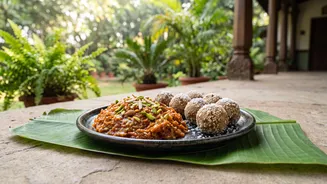
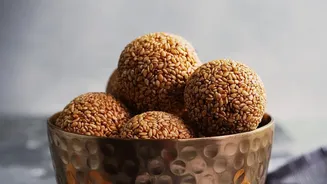
Perhaps the most widespread and simplest of these treats is the Til Ladoo. Found in households across Western India and beyond, these are rustic, hand-rolled balls of roasted sesame seeds and jaggery, often held together with a touch of ghee. They can be made with either black or white sesame seeds and are a quick, no-fuss way to enjoy the classic winter combination. Packed with nutrients, these laddoos serve as a traditional form of energy bite, perfect for fighting off winter sluggishness and satisfying a sweet tooth in a healthier way. Their preparation is often a family activity, bringing generations together in the kitchen to roll these spheres of warmth and tradition.