







Beyond the Splashdown: Recovery and Transport
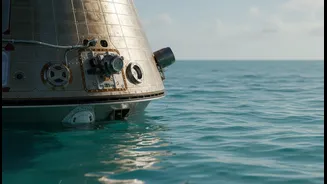
The moment the Orion capsule splashed down in the Pacific Ocean, a massive recovery operation began. US Navy and NASA teams were on site to retrieve not just the four astronauts, but the multi-billion-dollar spacecraft they called home. After the crew
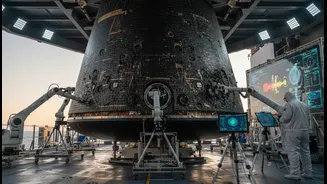
was safely extracted and flown to a ship for medical checks, the focus shifted entirely to the capsule, named 'Integrity'. Technicians performed initial safety checks in the water to ensure no toxic fuels like hydrazine were leaking before the capsule was carefully winched into the well deck of the USS John P. Murtha. From there, it was transported to US Naval Base San Diego before beginning its cross-country journey back to NASA's Kennedy Space Center in Florida for a deep-dive analysis.
The Heat Shield: Under the Microscope
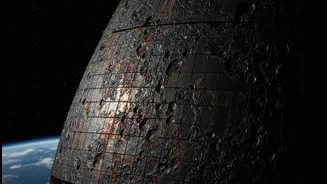
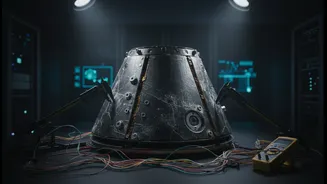
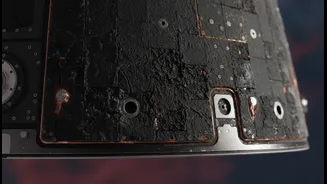
The single most scrutinized component of the Orion capsule is its 16.5-foot-wide heat shield. This is because on the uncrewed Artemis I mission, the shield experienced unexpected erosion, with chunks of its protective material breaking off during reentry. While engineers determined the Artemis I capsule's interior remained safe, this char loss was a major concern for a crewed flight. The cause was identified as gases building up inside the shield's material, called Avcoat, which couldn't vent properly. For Artemis II, NASA opted not to redesign the shield but to change the spacecraft's reentry path to a gentler angle, reducing the specific thermal stresses that caused the issue. Initial inspections after Artemis II's splashdown showed this was the right call, with char loss significantly reduced compared to the first flight. Now, at Kennedy Space Center, engineers will conduct detailed sampling of the shield, just as they did after Artemis I, to fully validate its performance and inform production of future shields.
A Deep Dive into Ship Systems
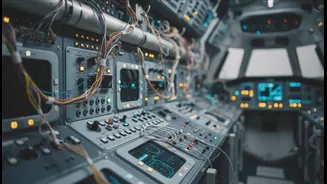
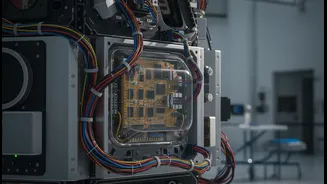
The heat shield is critical, but it's just one piece of an incredibly complex vehicle. The post-flight checks cover every aspect of the spacecraft. This includes the parachute system, which slowed the capsule from supersonic speeds to a gentle splashdown, and all the thrusters used for maneuvering in space. A primary focus is on the new life support systems, which were flying with a crew for the first time. These systems are responsible for providing breathable air, removing carbon dioxide, and managing the cabin environment—all essential for keeping astronauts alive in deep space. Teams will also retrieve and inspect key avionics and navigation components. In fact, some of these parts, like the GPS receivers and inertial measurement units, are designed to be refurbished and reused on future Artemis missions, making their post-flight condition doubly important.
Data, Data, and More Data
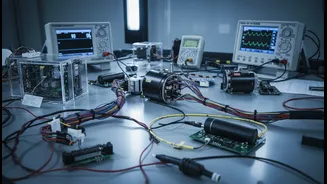
The physical inspection is only half the story. The Orion spacecraft is packed with thousands of sensors that collected an immense amount of data throughout the 10-day mission. This data provides the crucial context for what engineers are seeing on the physical hardware. For example, temperature and pressure data from within the heat shield is correlated with the physical char patterns observed on its surface. Similarly, performance data from the life support system is analyzed alongside the physical state of its filters and pumps. This combination of physical evidence and digital telemetry allows NASA to build a complete picture of how the spacecraft performed, where the models were accurate, and where they need refinement. This analysis is fundamental to ensuring the safety and success of the entire Artemis program.
From Artemis II to Future Missions
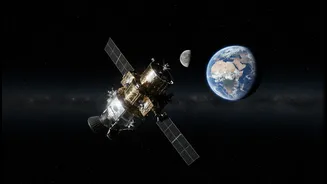
Every check and every data point gathered from the Artemis II mission has a direct impact on what comes next. The success of the heat shield's new reentry profile and the performance of the life support systems give NASA the confidence to proceed with more ambitious flights. The program has been reshuffled, with Artemis III now planned as a 2027 mission to test human landing systems in Earth orbit. The first crewed lunar landing of the program is now slated for Artemis IV, as early as 2028. The detailed analysis of the Artemis II spacecraft is not just about closing out a successful mission; it is about building the foundation of knowledge and confidence needed to return humans to the lunar surface and, eventually, send them to Mars.