

The 1920s: Flapper Finger Waves
The Roaring Twenties were all about rebellion and glamour, and the signature hairstyle was the finger wave. This sleek, S-shaped wave sculpted close to the head was the perfect complement to the era's popular bob haircut. While traditional methods required
wet hair and a lot of patience, you can get a similar effect with modern tools. Start with damp hair and a strong-hold gel. Use a fine-tooth comb to create a C-shape in your hair, holding it in place with your finger. Then, comb the hair in the opposite direction just below your finger to create the next part of the 'S' curve. You can use clips to hold the waves as they set. For a quicker version, you can also use a curling iron to carefully create waves, alternating the direction of the curl with each section to mimic the iconic pattern.
The 1940s: Iconic Victory Rolls
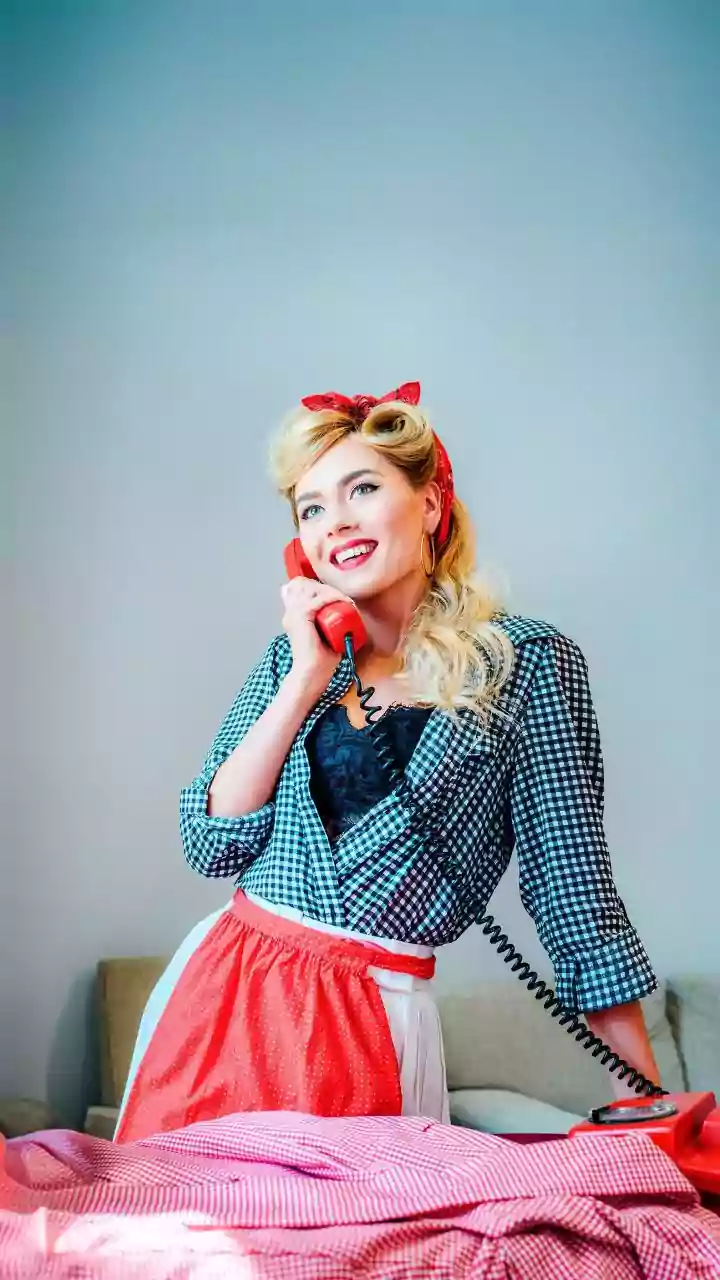
A symbol of wartime patriotism and feminine strength, Victory Rolls are one of the most recognizable hairstyles of the 1940s. This look is characterized by voluminous rolls of hair pinned on top of the head. They look complex, but the technique is surprisingly straightforward. To begin, section off the hair at the front of your head where you want the rolls to sit. Taking one section, gently backcomb the roots for volume. Then, holding the end of the hair, wrap it around two fingers to create a loop. Roll this loop down towards your scalp and secure it tightly with bobby pins. You can create one large roll or, more traditionally, two symmetrical rolls on either side of your part. Hairspray is your best friend to keep these rolls in place all day. For extra volume, you can even use hair extensions or a small foam insert to help shape the roll.
The 1960s: The Wearable Beehive
The 1960s were a time of major social change, and hair reached new heights—literally. The beehive was the ultimate statement of glamour and sophistication. While the original gravity-defying styles involved intense backcombing and even hidden padding (like a bath loofah!), you can create a softer, more modern version. First, separate a section of hair at the crown of your head. Tease the roots of this section generously to create a cushioned pad of hair. Once you have a good amount of volume, gently smooth the top layer of hair over the teased section to hide the backcombing, creating a 'bump'. Pin this section at the back of your head. You can leave the rest of your hair down or pull it into a sleek ponytail. A headband placed just in front of the beehive completes the classic '60s look.
The 1970s: Farrah Fawcett's Feathered Layers
No hairstyle screams 1970s quite like the feathered look made famous by actress Farrah Fawcett. This style is all about volume, movement, and layers that sweep back and away from the face like the feathers of a wing. While the cut itself is key (ask your stylist for long, feathered layers), the styling is what truly brings it to life. To achieve this at home, you'll need a round brush and a blow dryer. Working with damp hair, use the round brush to lift sections of hair at the root and blow-dry them upwards and away from your face. When you get to the ends, flick your wrist to curl the hair outwards. A good texture spray or light-hold hairspray will help give your layers that signature bounce and hold the 'flicked' shape without making your hair stiff.