


A Day Longer Than a Year?
It sounds like a riddle, but it's a simple, albeit bizarre, astronomical fact. On Earth, we have two clear concepts of time: the day (one full rotation of our planet on its axis) and the year (one full orbit around the Sun). For us, 365 of the first happen
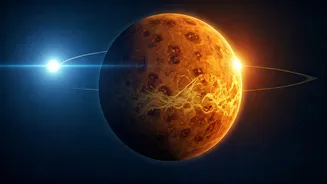
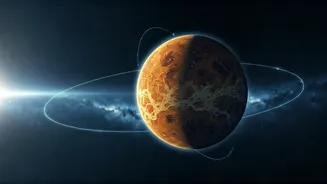
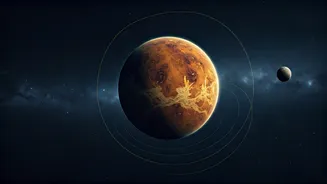
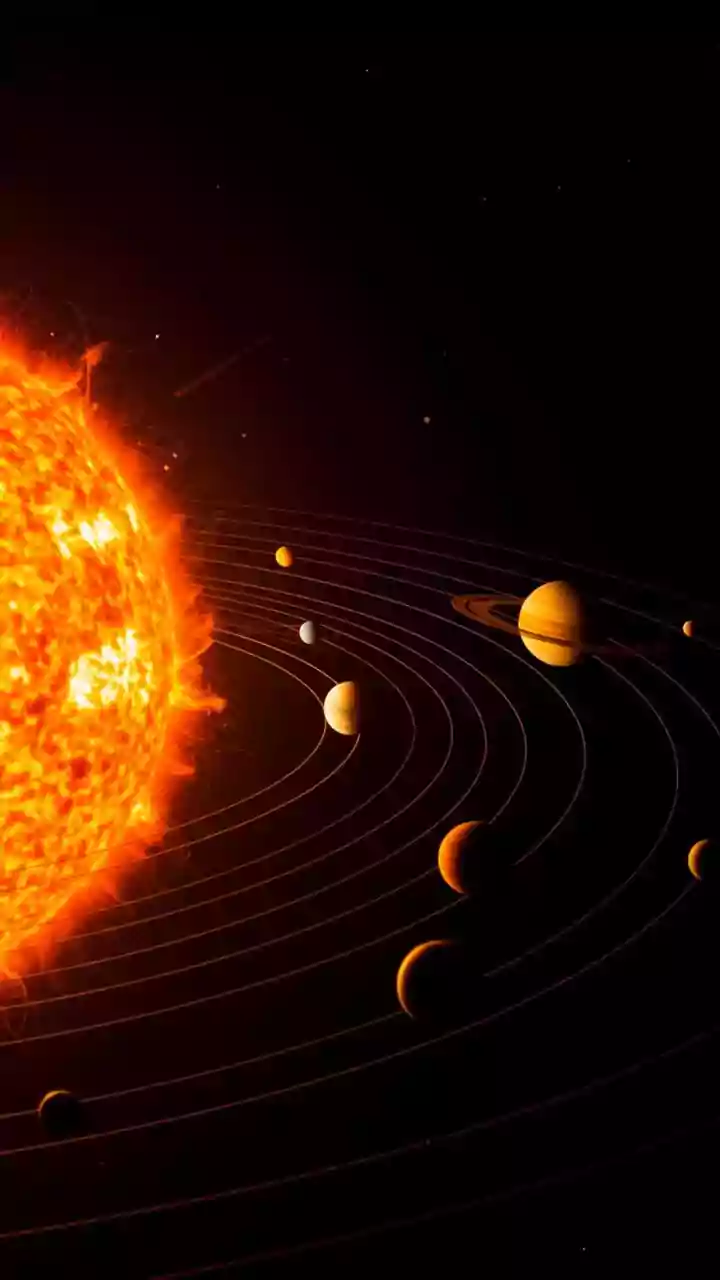
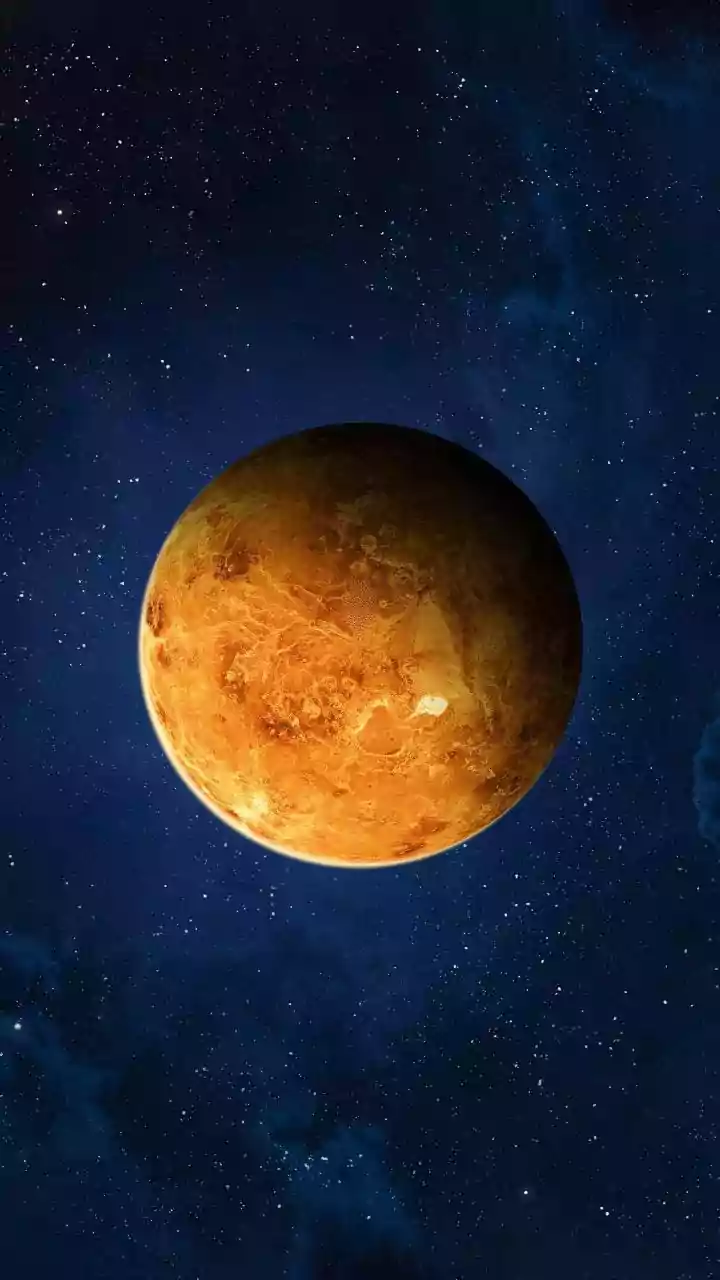
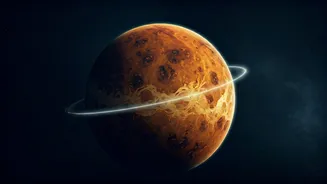
during one of the second. Venus throws this familiar logic out the window. It takes Venus about 225 Earth days to complete one orbit around the Sun, making that its 'year'. However, it takes a mind-boggling 243 Earth days for the planet to complete a single rotation on its axis. So, a single Venusian day is indeed longer than a Venusian year. If you were standing on Venus, you'd complete a full journey around the sun before the planet beneath your feet had even finished one spin.
Going the Wrong Way
The primary reason for this temporal weirdness is Venus's retrograde rotation. Nearly every planet in our solar system, including Earth, spins on its axis in a counter-clockwise direction when viewed from above the North Pole. This is known as prograde motion. Venus, however, is the rebel; it spins clockwise. It's not just spinning incredibly slowly, it’s spinning backwards compared to its peers. Only one other planet, Uranus, is as strange, though it spins on its side. This retrograde motion has profound consequences for how time passes on Venus. It's the key to understanding how the planet's internal 'clock' became so disconnected from its orbital 'calendar'.
Sunrise in the West
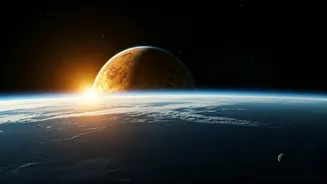
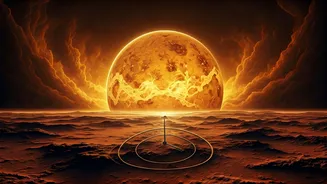
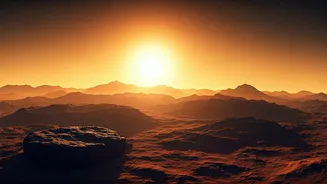
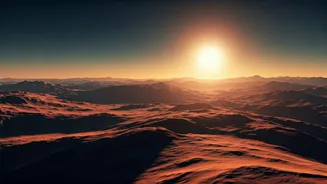
This backwards spin creates another curiosity. On Venus, the Sun rises in the west and sets in the east. But don't expect a daily spectacle. Because the planet is rotating backwards while it orbits the Sun, the time from one sunrise to the next—what we call a solar day—is different from its rotational period. A solar day on Venus is about 117 Earth days long. This means you'd experience roughly two sunrises and two sunsets for every Venusian year. Of course, 'seeing' a sunrise would be impossible. Venus is permanently shrouded in a thick, toxic atmosphere of carbon dioxide and clouds of sulfuric acid, which traps heat in a runaway greenhouse effect and makes the surface hot enough to melt lead.
Why is Venus So Strange?
Scientists have two main theories to explain Venus’s slow, backward spin. The first, older theory involves a colossal impact. Early in the solar system's history, a planet-sized object could have smashed into Venus, not only halting its original spin but reversing it. While dramatic, this idea is less favoured today. The leading theory points to Venus’s own oppressive atmosphere. The planet’s atmosphere is so thick and heavy—over 90 times the pressure of Earth's—that it creates powerful 'thermal tides'. The sun heats the atmosphere, causing it to bulge. This atmospheric bulge then exerts a gravitational drag on the solid planet beneath it, acting like a brake over billions of years. This constant friction could have slowed Venus's original rotation to a crawl and eventually reversed it.
Earth's Twisted Sister Planet
The study of Venus's rotation is more than just cosmic trivia; it’s a lesson in planetary evolution. Venus and Earth started as such similar worlds—rocky planets of comparable size in the habitable zone. Yet today, one is a temperate haven for life, and the other is a hellscape with a day longer than its year. The extreme slowness of its rotation could have played a role in its fate. For instance, a faster spin helps generate a protective magnetic field. Venus lacks a significant one, leaving it exposed to solar winds that stripped away any water it might have once had. Understanding why Venus went 'wrong' helps us appreciate the delicate balance of factors that made Earth 'right'.