


Meet Our Cosmic Neighbor
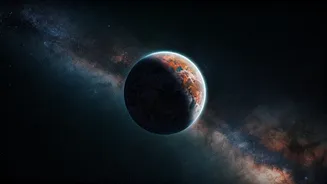
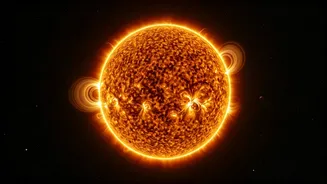
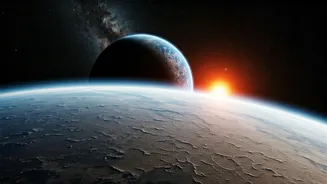
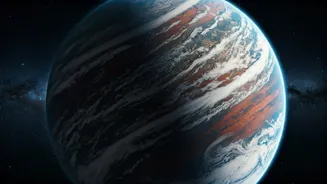
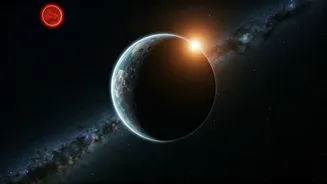
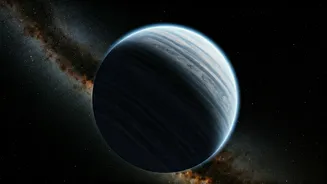
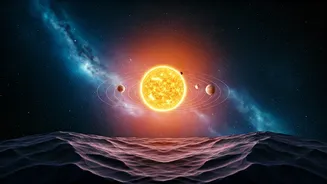
Just 25 light-years away, in the constellation Camelopardalis, orbits a fascinating world named Gliese 3378b. It circles a red dwarf star—a type of star that is smaller, cooler, and far more common in our Milky Way galaxy than stars like our Sun. Initially
discovered in 2024, GJ 3378b was categorized as a "super-Earth." This class of exoplanet includes worlds with a mass higher than Earth's but substantially less than that of our solar system's ice giants, Neptune and Uranus. Super-Earths are a major focus for astronomers because they are one of the most common types of planets found, yet our own solar system curiously lacks one, making them a captivating puzzle.
The Challenge of Weighing a World
You can't exactly place a planet on a bathroom scale, especially one trillions of kilometers away. Astronomers have clever, indirect methods for measuring an exoplanet's mass. The primary technique is called the radial velocity method. It involves watching the planet's parent star for a tiny "wobble." This wobble is caused by the gravitational tug of the orbiting planet. By measuring the extent of the wobble, scientists can calculate the planet's mass. Early estimates for GJ 3378b, based on this method, pointed to a mass around five times that of Earth. This suggested it was a dense, rocky world, a true scaled-up version of our own planet.
A Lighter-Than-Expected Finding
Science is a process of refinement, and a new, more detailed analysis has just given us a revised picture of GJ 3378b. A recent study, published in The Astrophysical Journal, combines data from multiple powerful instruments, including the Habitable-zone Planet Finder and the NEID Spectrometer. This comprehensive look has led to a significant downward revision of the planet's mass. The new estimate places GJ 3378b at just 2.3 times the mass of Earth—less than half the previous figure. This shift doesn't just change a number on a spreadsheet; it fundamentally alters our understanding of what this alien world might be like.
From Rocky Giant to Water World?
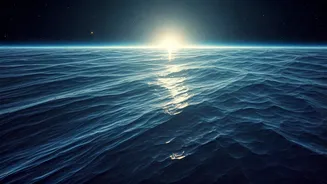
A planet's mass and its size (radius) together reveal its density—a critical clue to its composition. While the radius of GJ 3378b hasn't changed, a much lower mass means it must be far less dense than we thought. The earlier, heavier estimate was consistent with a composition of mostly rock and iron, like Earth. The new, lighter measurement suggests a different story. A planet with GJ 3378b's size and revised mass is less likely to be a pure rock. It could be a "water world," with a significant portion of its mass made up of water, or it might possess a thick, puffy atmosphere, making it more of a "mini-Neptune" than a super-Earth. This change has major implications for its potential habitability.
The Search for Habitable Worlds
This updated view of GJ 3378b brings both good and bad news for those searching for life. The lower mass makes it less likely to have a crushing surface gravity and a suffocatingly thick atmosphere, which improves its chances of hosting liquid water. Excitingly, the planet orbits within its star's "habitable zone," receiving about 90% of the light that Earth gets from the Sun. However, the lower density also raises new questions. It sits on the edge of what astronomers call the 'cosmic shoreline,' a region where intense radiation from a red dwarf star could strip a planet's atmosphere away over time. Understanding whether GJ 3378b is a barren rock, a water world, or a gassy mini-Neptune is now a prime objective for next-generation telescopes.