






The New Digital Gold Rush
The numbers speak for themselves. In the first half of 2026, Indian AI startups attracted over $1 billion in funding. The first quarter alone saw investments of around $1.5 billion, representing nearly 38% of all startup funding during that period. This
isn't just a gradual increase; it's a paradigm shift. Venture capitalists are no longer just looking for AI features; they are backing AI-native companies from the ground up. This flood of capital is fueling a new generation of entrepreneurs building everything from foundational models to industry-specific tools, signaling a clear belief that AI will be a primary driver of economic value for years to come.
From Government Push to Private Enterprise
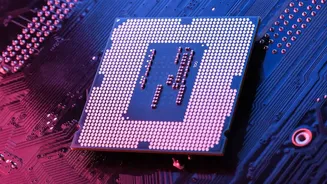
This boom is not happening in a vacuum. A significant catalyst is the IndiaAI Mission, a government initiative with an outlay of over Rs 10,300 crore. A key part of this mission is to democratize access to critical infrastructure. By early 2026, the government had made over 38,000 GPUs (Graphics Processing Units) available to startups at subsidized rates, aiming for 100,000 by the end of the year. This strategic move drastically lowers the barrier to entry for building complex AI models, which was once a major financial hurdle. It allows founders to focus their resources on innovation rather than on exorbitant cloud computing bills, creating a structural advantage.
Homegrown Models for Indian Realities
For years, Indian companies relied on Western AI models. Now, the focus has shifted to building indigenous systems. A new breed of startups like Krutrim and Sarvam AI are developing Large Language Models (LLMs) trained on vast amounts of data in multiple Indian languages. Krutrim, which became India's first AI unicorn, has a model trained on over two trillion tokens that supports 20 Indian languages. This is more than a matter of national pride; it's a business necessity. These homegrown models can capture the cultural nuances and linguistic diversity that foreign models often miss, unlocking the potential to build services for the vast majority of Indians who don't primarily interact in English.
Beyond Chatbots: Solving Real-World Problems
While generative AI captures headlines, the real impact is emerging in vertical, industry-specific applications. In fintech, AI is the new backbone, used for fraud detection, credit scoring for underserved populations, and automating compliance. The healthcare sector is using AI for diagnostic imaging analysis, drug discovery, and delivering personalized health information. Startups are also applying AI to solve uniquely Indian challenges in agriculture, logistics, and legal services. Investors are increasingly prioritizing startups that show a clear path to revenue by embedding AI into essential business workflows, moving beyond hype to tangible impact.
Navigating the Road Ahead
Despite the momentum, the path is not without its challenges. The high cost of AI talent and infrastructure, even with subsidies, remains a concern. There are also reports that the massive compute power being built by the government is currently underutilized, highlighting a gap between building capacity and fostering widespread adoption. Furthermore, as the market matures, simply having an innovative AI product is no longer enough; startups now face the challenge of gaining market recognition in a crowded field. Issues of data privacy, regulation, and ethical AI use are also becoming more pressing as these technologies become more integrated into daily life.