

The Foundation: A Humble Banana Leaf
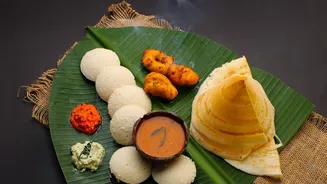
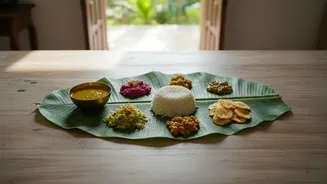
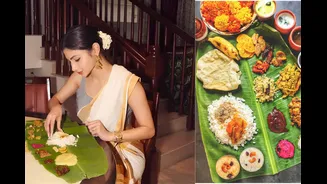
The Sadhya experience begins not with a plate, but with a fresh banana leaf. Traditionally, the leaf is placed with its narrow end pointing to the left of the guest. This isn't just for aesthetics; the leaf's structure and the specific placement of over
two dozen dishes follow a logic refined over centuries. The upper half is reserved for side dishes and accompaniments, while the larger lower half holds the rice and main curries, making it easier to mix and eat with your right hand. When warm food touches the leaf, it is believed to release beneficial compounds, adding a subtle flavour and connecting the diner to nature.
The Opening Act: Pickles and Crunch
The serving starts on the top left, with small but potent flavours meant to awaken the palate. A pinch of salt is often first. You'll find an assortment of pickles (achar), like sharp mango and lime, alongside the iconic Inji Puli, a sweet, sour, and spicy chutney made from ginger, tamarind, and jaggery. This section also includes crunchy elements like Upperi (banana chips) and Sharkara Varatti (jaggery-coated banana chips), providing a delightful textural contrast. A crisp Pappadam is a mandatory accompaniment, ready to be crushed over the rice.
The Supporting Cast: A Medley of Vegetables
Next comes a vibrant array of vegetable dishes, showcasing Kerala's agricultural bounty. Key among them is Avial, a thick mix of various vegetables cooked in a coconut and yogurt gravy, symbolizing unity and resourcefulness. You will also find Thoran, a stir-fry of finely chopped vegetables like cabbage or beans with grated coconut, and Kalan, a rich, sour curry made with yogurt and vegetables like yam or raw plantain. Olan is a milder dish of pumpkin or ash gourd in a thin coconut milk gravy, while Pachadi and Kichadi are yogurt-based sides, one typically sweet (like pineapple pachadi) and the other sour (like cucumber kichadi).
The Main Event: Rice, Lentils, and Sambar
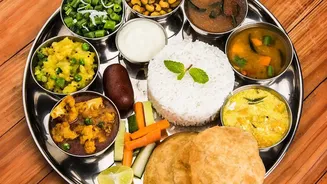
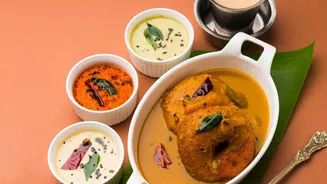
Once guests are seated, a mound of fluffy Kerala Matta rice is served in the centre of the leaf's lower half. The meal officially begins with a ladle of Parippu, a simple but comforting curry made from moong dal, which is topped with a spoonful of fragrant ghee. Diners traditionally mix this with rice and crushed pappadam for the first few bites. Following the Parippu, it's time for Sambar, a robust lentil-based vegetable stew with a tamarind-infused broth. This thick, flavourful curry is generously poured over the second serving of rice.
The Tangy Interludes and Sweet Finale
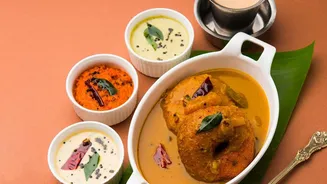
After the sambar course, the meal transitions to lighter, more liquid-based curries. Rasam, a tangy and peppery soup, is served to cleanse the palate and aid digestion. This is often followed by Pulissery, a savory yogurt-based curry. The grand finale of the Sadhya is the Payasam, a sweet dessert. Often, two or three varieties are served, such as the jaggery-based Ada Pradhaman (made with rice flakes and coconut milk) and the milk-based Paal Payasam. Many enjoy mashing a small banana served with the meal into their payasam. A serving of spiced buttermilk typically concludes the feast.
The Etiquette: How to Eat and Appreciate
Sadhya is traditionally eaten with the right hand, as it is believed to enhance the sensory connection to the food. The courses are meant to be eaten in a specific order, starting with the parippu and moving through the sambar and rasam. It's a marathon, not a sprint, with hosts often walking around to offer second helpings. At the end of the meal, you are expected to fold the banana leaf. Folding it inwards, towards yourself, is a sign of satisfaction and gratitude to the host. Folding it outwards can be seen as a sign of displeasure.