






What is Space Medicine?
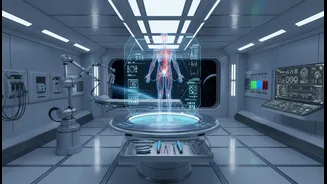
Space medicine is a specialized branch of occupational medicine focused on the health, safety, and performance of astronauts. It addresses the unique physiological and psychological challenges of living in space, such as the effects of microgravity, radiation
exposure, isolation, and confinement. In zero gravity, the human body undergoes significant changes: bone density drops, muscles atrophy, and fluids shift, which can affect vision and cardiovascular function. Practitioners in this field work to understand these effects, develop countermeasures, and provide medical care for those who travel beyond Earth's atmosphere. It’s a multidisciplinary science, blending clinical care with cutting-edge research.
Gaganyaan's Unseen Crew Member
With the Gaganyaan mission aiming to send Indian astronauts into orbit, space medicine has transformed from a theoretical discipline into a national priority. The success of this ambitious programme depends not just on flawless engineering but on ensuring the crew returns safely. ISRO has been actively forming partnerships to bolster its capabilities in this area, including a landmark MoU with AIIMS New Delhi in March 2026 to research the physiological challenges of space. This collaboration focuses on critical areas like cardiovascular health, bone loss, and behavioural health in microgravity, underscoring the urgent need for homegrown expertise. Keeping astronauts healthy on long-duration missions, especially for a future Bharatiya Antariksh Station, is a monumental task that India is now gearing up to tackle.
The Current Guidance Gap
Despite this growing need, the path to a career in space medicine is not clearly signposted for aspiring students in India. For medical graduates, the primary route is an MD in Aerospace Medicine, offered at the prestigious Institute of Aerospace Medicine (IAM) in Bangalore, an Indian Air Force institution. However, with a very limited number of seats available to civilians—only about three, according to some reports—this highly competitive programme is the only one of its kind in the country. For a typical MBBS student or a high schooler dreaming of a career in this field, information is fragmented. The steps beyond clearing the NEET-PG exam are often unclear, and awareness about the field's scope remains low.
Not Just for Doctors
A common misconception is that space medicine is exclusively for physicians. In reality, it is a deeply collaborative field where engineers play a vital role. Human factors engineering, for instance, focuses on designing spacecraft interiors, controls, and life support systems that are safe and efficient for human use. Biomedical engineers are essential for developing the next generation of monitoring devices, diagnostic tools, and even medical equipment that can function in zero gravity. As India develops its own life support systems and crew modules for Gaganyaan and beyond, the demand for engineers who understand the interplay between technology and human physiology will only grow. This synergy is currently an under-publicized opportunity for thousands of engineering aspirants.
Building a Bridge to the Stars
To bridge this guidance gap, a concerted effort is needed from educational bodies, government agencies, and ISRO. Clear, accessible online portals detailing career pathways for both medical and engineering students are a necessary first step. Universities could introduce interdisciplinary workshops and short courses on space medicine and bioastronautics. Recently, some institutions have started offering new programmes, like a post-graduate diploma in 'Astrophysiology', aimed at building human resources for space life sciences. ISRO's outreach programmes could be expanded to specifically target medical and engineering colleges, highlighting the critical roles they can play in the human spaceflight programme. Fostering an ecosystem that encourages research and innovation in this domain will not only support national ambitions but also inspire a new generation to pursue STEM careers.