




The Foundation: What Are the Artemis Accords?
Think of the Artemis Accords as the modern rules of the road for space. Established by NASA and the U.S. Department of State in 2020, they are a non-binding set of principles for peaceful, transparent, and cooperative exploration of the Moon and beyond.
The goal is to avoid a celestial wild west, ensuring nations share scientific data, render aid in emergencies, and operate safely as humanity pushes farther from Earth. India signed on in June 2023, becoming the 27th nation to join a coalition that has since grown to include 70 countries. This decision signaled a strategic shift for India, moving from a traditionally independent space program to embracing global collaboration and aligning with a U.S.-led bloc for space governance.
India's Rise as a Lunar Superpower
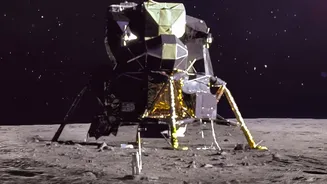
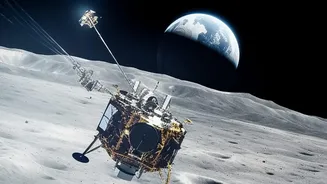
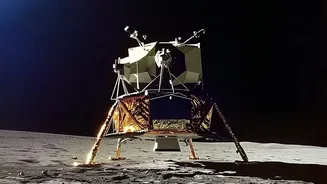
NASA’s invitation didn't come out of the blue. It’s a direct result of the Indian Space Research Organisation's (ISRO) incredible track record. In August 2023, India made history when its Chandrayaan-3 mission successfully soft-landed near the lunar south pole, a treacherous but resource-rich region no other country had reached. The mission, which deployed the Pragyan rover, showcased India’s mastery of complex and, crucially, cost-effective space exploration. This reputation for “frugal engineering” makes ISRO an extremely attractive partner for a project as colossally expensive as building a moon base. With ambitious plans for a sample-return mission (Chandrayaan-4) and its own crewed lunar landing by 2040, India has proven it’s not just a participant, but a leader in the new moon rush.
From Handshakes to Hardware
The partnership is already bearing fruit. The successful joint NASA-ISRO Synthetic Aperture Radar (NISAR) mission, which launched in 2025, provides critical data on Earth's changing ecosystems. Building on that trust, the two nations have committed to a joint mission to the International Space Station and training for Indian astronauts. The recent invitation to collaborate on the moon base was formally extended during an August 2026 meeting of the U.S.-India Civil Space Joint Working Group in Bengaluru. This transforms the Artemis Accords from a political agreement into a practical framework for building hardware and sharing knowledge.
What a Joint Moon Base Could Look Like
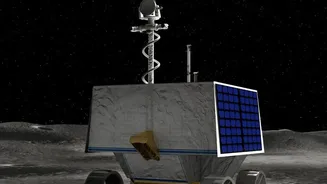
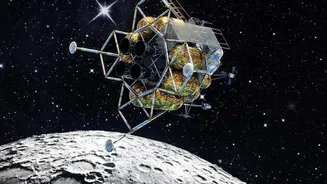
NASA envisions a permanent, sprawling outpost near the Moon's south pole, a location chosen for its access to potential water ice deposits in permanently shadowed craters. While official details on India’s specific role are still being discussed, its contribution could be significant. Instead of just sending personnel, India could leverage its strengths to develop critical components. This might include designing advanced robotic rovers, creating systems for in-situ resource utilization (like extracting oxygen or water from lunar soil), or providing specialized scientific instruments. The partnership allows for a division of labor, accelerating the ambitious three-phase timeline NASA laid out, which aims for initial operating capability by 2032 and a semi-permanent crewed presence shortly after.
Why the Partnership Is a Win-Win
For the United States, bringing India into the fold is a strategic masterstroke. It diversifies the technological and financial burden of the Artemis program and strengthens a democratic coalition in space, providing a clear contrast to the parallel ambitions of China and Russia. For India, participation offers access to NASA's decades of deep-space expertise and technology, fast-tracking its own goals of establishing the Bharatiya Antariksha Station by 2035 and landing an Indian on the Moon by 2040. It integrates ISRO into the premier global effort for lunar exploration, ensuring its systems are interoperable and its scientists are at the forefront of discovery. This collaboration isn't just about sharing costs; it's about combining complementary strengths to achieve a goal that is bigger than any one nation.