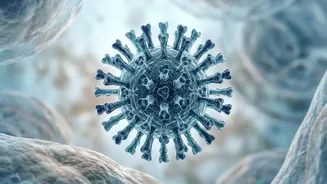








Meet the PJ.2.1 Variant
First detected in Canada in May 2026, the PJ.2.1 variant has since been identified in the United States, Europe, Australia, and parts of Asia. Scientists describe it as a 'saltation variant', meaning it appeared with a large number of genetic changes
at once rather than evolving slowly. This variant descends from the JN.1 lineage that was common until mid-2025. While its many mutations sound alarming, early lab studies bring mixed but reassuring news. Research suggests PJ.2.1 may be more efficient at entering human cells, which could help it spread. However, there is currently no evidence that it causes more severe disease, and early findings suggest that existing updated vaccines continue to provide good protection against it.
The Science of Virus Tracking
So, how do scientists find a new variant like PJ.2.1 in the first place? The answer is genomic surveillance. Think of it as creating a detailed family tree for the virus. Scientists sequence the full genetic code of virus samples taken from tests. By comparing the genetic sequences from different samples over time, they can spot new mutations and track how the virus is changing. This process allows public health officials to identify new variants as they emerge, monitor how quickly they are spreading, and assess whether they pose a new threat, such as being more transmissible, causing more severe illness, or evading the protection offered by vaccines. It's a critical tool for staying one step ahead of a constantly evolving pathogen.
Why Monitoring Still Matters
Years after the pandemic's peak, it is easy to become complacent. However, PJ.2.1 is a perfect example of why continuous monitoring is non-negotiable. Even if a new variant isn't more dangerous, it's vital to know it exists. This information is crucial for several reasons. Firstly, it helps in updating vaccines to match the currently circulating strains, ensuring they remain effective. Secondly, it allows for the early detection of 'super spreader' events and helps explain unusual trends in cases or severity. Thirdly, it can flag variants that might become resistant to existing antiviral treatments. This global effort provides the essential data needed for health authorities to make informed decisions, rather than reacting blindly to a new wave of infections.
India's Watchful Eye: INSACOG
In India, the key player in this effort is the Indian SARS-CoV-2 Genomics Consortium (INSACOG). Launched by the government, this network of dozens of laboratories across the country is tasked with sequencing virus samples and monitoring for genomic variations. Initially focused on variants coming from international travellers, its mandate has evolved to prioritising the early detection of new variants that might emerge within India. INSACOG links its genetic data with clinical and epidemiological data to understand the links between specific variants and disease trends. This network is not just about tracking COVID-19; it's also expanding to include surveillance of wastewater, which can act as an early warning system for the spread of variants in a community.
A Blueprint for Future Threats
The infrastructure and expertise built for monitoring SARS-CoV-2 have created a powerful resource for India's broader public health security. The systems used for genomic surveillance are not limited to one virus. They can be adapted to track other infectious diseases, from seasonal influenza and dengue to emerging threats we haven't even encountered yet. By maintaining and strengthening this capacity, we are not just guarding against the next COVID-19 variant, but are also building a resilient defence system against future epidemics and pandemics. This sustained investment in genomics is one of the most important lessons from the recent past, ensuring we can detect and respond to health threats more quickly and effectively.