





For School Students: The YUVIKA Programme
ISRO’s flagship programme to “catch them young” is the YUva VIgyani KAryakram (YUVIKA), or Young Scientist Programme. This two-week residential programme is designed to give school students a foundational understanding of space science and technology.
Participants visit major ISRO centres, attend lectures by eminent scientists, and get hands-on experience. To be eligible, students must be studying in Class 9 at the time of application. Selection is based on a comprehensive merit system that evaluates Class 8 marks (50% weightage), performance in an online quiz, participation in science fairs, Olympiad ranks, and sports achievements. A special 15% weightage is given to students from rural or panchayat-area schools to ensure wider access. ISRO covers all expenses, including travel, accommodation, and course materials for selected students.
The Premier Gateway: Indian Institute of Space Science and Technology (IIST)
For students who have completed Class 12, the most direct path to a career in ISRO is through the Indian Institute of Space Science and Technology (IIST) in Thiruvananthapuram. IIST offers undergraduate (B.Tech) and dual-degree programmes in specialised fields like Aerospace Engineering, Avionics, and Engineering Physics. Admission to these highly competitive courses is based purely on the rank secured in the Joint Entrance Examination (JEE) Advanced. Candidates must also secure a minimum of 75% aggregate marks in their Class 12 board exams (65% for SC, ST, and PD candidates). Students who graduate from IIST with a high CGPA may be directly recruited as Scientist/Engineer 'SC' in various ISRO centres, subject to vacancies.
University Internships and Project Work
For students already pursuing undergraduate or postgraduate degrees in science and technology, ISRO offers several opportunities for practical experience. The two primary channels are the Internship Scheme and the Student Project Trainee Scheme. The Internship Scheme is a short-term programme, lasting up to 45 days, for students pursuing or having recently completed UG, PG, or PhD courses. It requires a minimum aggregate of 60% marks or a 6.32 CGPA. The Student Project Trainee Scheme supports longer academic projects required for degree completion, with durations varying by course. For instance, B.Tech students must have completed their sixth semester, while M.Tech students can apply after their first semester. These opportunities are available across various ISRO centres like URSC, VSSC, and IIRS, each managing its own application process. It's important to note that these internships generally do not provide a stipend or accommodation.
Direct Recruitment: The ICRB Examination
For engineering graduates who did not attend IIST, the primary entry point into ISRO is through the ISRO Centralised Recruitment Board (ICRB) exam. This exam is conducted to recruit for the coveted Scientist/Engineer 'SC' position in disciplines like Electronics, Mechanical, and Computer Science. To be eligible, candidates need a B.E./B.Tech degree with a minimum of 65% marks or a CGPA of 6.84. The selection process involves a written test that assesses core technical knowledge and aptitude. Candidates who clear the written test are shortlisted for a personal interview. The final merit list is prepared based solely on performance in the interview, making it a crucial stage of the selection process. In some cases, ISRO also uses GATE scores for shortlisting candidates for interviews.
International Collaboration: The UNNATI Programme
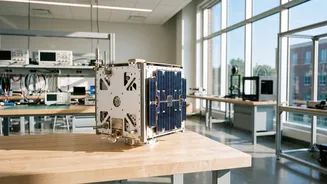
While most programmes are for Indian citizens, ISRO also contributes to global capacity building through the UNNATI (UNispace Nanosatellite Assembly & Training by ISRO) programme. Launched to commemorate the 50th anniversary of the first UN conference on outer space, UNNATI is a training course on nanosatellite development for international students, engineers, and scientists from developing countries. The intensive programme includes theoretical coursework and hands-on training in assembling, integrating, and testing nanosatellites. So far, participants from over 33 countries have benefited from this initiative, which is conducted at ISRO's U.R. Rao Satellite Centre (URSC).