




The Challenge of Coming Home
Any object entering a planet's atmosphere at orbital speeds faces an immense challenge. A spacecraft returning to Earth can hit the upper atmosphere at more than 18,000 miles per hour. The friction from air molecules converts this incredible speed into
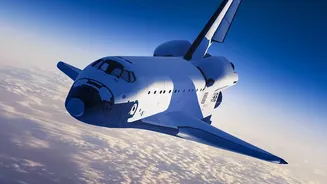
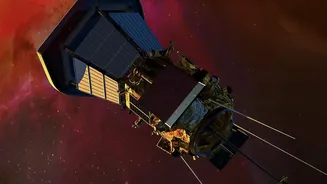
intense heat, reaching thousands of degrees Celsius—hot enough to vaporise most metals. To survive, a spacecraft needs a thermal protection system, or heat shield. Historically, these have been rigid structures designed to either burn away in a controlled manner (ablative shields, like on the Apollo capsules) or absorb and radiate the heat (like the Space Shuttle's ceramic tiles). While effective, these designs have a fundamental limitation.
The Size Constraint of Rigid Shields
The problem with traditional heat shields is simple geometry. A heat shield cannot be wider than the rocket's payload fairing—the nose cone that protects the cargo during launch. This physical limit dictates the maximum size and, therefore, the maximum weight of any payload you want to land. For a planet with a very thin atmosphere, like Mars, this is a major hurdle. The Martian atmosphere is about 100 times less dense than Earth's, offering far less drag to slow a craft down. To land heavy cargo—or eventually, human habitats—you need a much larger heat shield to create more drag higher up in the thin atmosphere. But you can't just build a bigger rocket fairing; the costs and engineering become prohibitive. This is where inflatable technology changes the game.
An Idea That Inflates
An inflatable heat shield, also known as a Hypersonic Inflatable Aerodynamic Decelerator (HIAD), is exactly what it sounds like. It launches in a tightly packed, uninflated state, fitting easily inside a standard rocket fairing. Once in space, just before re-entry, it inflates with nitrogen or another gas, expanding into a large, mushroom-like shape many times its packed size. The structure is made of stacked, inflatable rings or tori, woven from synthetic fibres that are, by weight, significantly stronger than steel. This provides a rigid and stable shape. The side facing the intense heat of re-entry is covered with a flexible thermal blanket made of advanced, heat-resistant woven ceramic fibres.
LOFTID: A Successful Demonstration
This technology is not just theoretical. In November 2022, NASA successfully tested the concept with its Low-Earth Orbit Flight Test of an Inflatable Decelerator (LOFTID) mission. Launched as a secondary payload, the six-metre-diameter LOFTID vehicle inflated in orbit and re-entered the atmosphere at hypersonic speed. It survived the intense heating and pressure, successfully demonstrating that the inflatable structure could create enough drag to slow down and protect itself before splashing down safely in the Pacific Ocean. The test was declared a huge success, proving the technology is ready for use on future missions and generating significant commercial interest.
Bigger Shields, Bolder Missions
The primary advantage of an inflatable heat shield is its ability to create a massive drag area from a small, lightweight package. This allows spacecraft to begin decelerating higher in the atmosphere, where the air is thinner, reducing the peak heating experienced. More importantly, it enables the landing of much heavier payloads. While current technology limits Mars landers to the planet's lowlands where the atmosphere is thickest, HIADs could open up scientifically interesting highland regions for exploration. This technology is considered essential for future human missions to Mars, which would require landing massive payloads like habitats and life support systems—far heavier than anything sent before. Beyond Mars, these shields could be used for missions to Venus or Saturn's moon Titan, and for cost-effectively returning cargo or reusable rocket stages to Earth.