



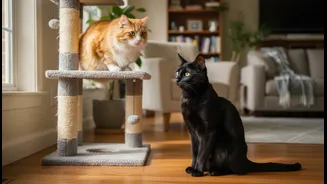
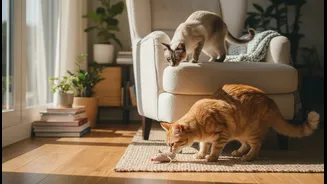
First, Understand Your Cat's World
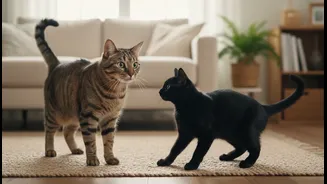
Before you can build peace, it helps to understand why conflict happens. Cats are inherently territorial. In their minds, your home is their established domain, filled with their scent, resources, and safe spaces. A new cat isn't a potential friend; it's
an intruder threatening their access to food, resting spots, and security. This instinct triggers defensive behaviours like hissing, swatting, or hiding. The goal of a slow introduction is to gradually and calmly redefine the newcomer from 'intruder' to 'family.' This process respects their nature and rewires their perception, which takes time. Rushing it can create lasting fear and animosity that is much harder to undo.
Step One: The Foundation of Separation
When your new cat arrives, they must not meet your resident cat. The first step is complete separation. Prepare a dedicated 'safe room' for the new arrival with its own food, water, litter box, toys, and hiding spots. This room allows the new cat to decompress from the stress of a new environment and establish a small territory of its own. A towel under the door can prevent premature visual or scent contact. This initial isolation is non-negotiable and forms the bedrock of the entire process. It ensures both cats feel secure before the formal introductions even begin.
Step Two: Introductions Through Scent
A cat's world is built on smell. Their sense of smell is more critical than any other for identification and comfort. This is why 'scent swapping' is the first real introduction. Take a clean sock or cloth and gently rub it on your new cat’s cheeks to collect their facial pheromones. Present this cloth to your resident cat, perhaps near their food bowl or with a treat, to create a positive association. Do the same in reverse, bringing your resident cat’s scent into the newcomer’s room. Once they react neutrally (or with mild curiosity) to the scents, you can progress to site-swapping: letting each cat explore the other's territory for short periods while the other is secured elsewhere. This allows them to gather information and get used to each other's presence without any direct confrontation.
Step Three: The First Glimpse
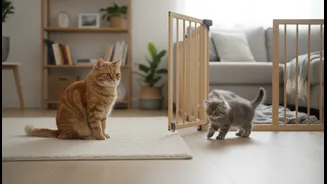
Only when both cats are calm with scent and site swapping should you allow them to see each other. This must be done through a barrier. A baby gate, a screen door, or a door cracked open just an inch are all effective tools. Keep these initial visual meetings extremely short—just a few seconds at first—and always associate them with something positive, like a favourite treat or a meal. The goal is for them to see each other and think, 'Good things happen when that other cat is around.' If there is any hissing, growling, or puffed-up tails, you are moving too fast. End the session immediately and go back to scent swapping for a few more days before trying again.
Step Four: Supervised Meetings
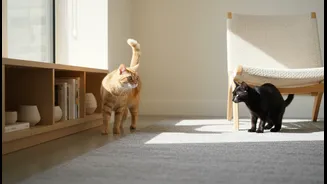
After several successful and calm visual introductions, you can allow the cats to share the same space under strict supervision. Choose a neutral area of the home, if possible. Keep the initial meetings brief and structured around a positive activity, like a shared play session with a wand toy or receiving high-value treats. The key is to keep them distracted and engaged in something enjoyable. Watch their body language intently. Yawning, slow blinking, and relaxed postures are great signs. Staring, stalking, or flattened ears mean it's time to calmly separate them and end the session. Slowly increase the duration of these meetings as they become more comfortable.
Navigating Setbacks and Hissing Fits
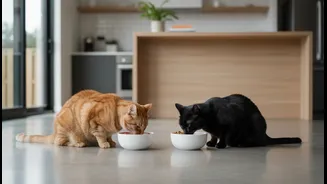
Even with a perfect process, setbacks can happen. A sudden hiss, a swat, or even a brief fight can feel like a major failure, but it's often a normal part of the process. If a fight breaks out, make a loud noise to startle them apart and separate them immediately. Never punish them, as this will only increase their stress and fear. A setback simply means you need to take a step back in the introduction process. Go back to the previous stage where they were both comfortable—whether that was feeding on opposite sides of a door or just scent swapping—and stay there for a few days before trying to move forward again. Patience here is paramount; forcing them back together too soon will only deepen their anxiety.