



For many beginners, the goal of a Seated Forward Bend seems obvious: touch your toes. But what if the real benefit lies not in how far you can fold, but in how you fold? Let's explore Paschimottanasana with a focus on spinal health.
What Is a 'Long Neutral Spine'?
A 'neutral spine' isn't
perfectly straight; it maintains its natural, gentle curves in the lower back (lordotic) and upper back (kyphotic). Think of it as your body's built-in shock absorber. In a forward bend, the goal is to hinge from the hips while keeping this elongated, neutral shape in the spine for as long as possible. This action protects the vulnerable discs in your lower back from being compressed or strained, which can happen when we round forward aggressively just to reach our feet. The 'long' part of the cue is a reminder to create space between your vertebrae, lengthening from your tailbone to the crown of your head before and during the fold.
The Goal Isn't Touching Your Toes
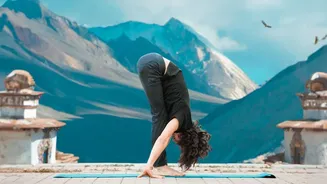
The true aim of Paschimottanasana is to create a deep, mindful stretch along the entire back side of the body—from your heels to your head. When you fixate on grabbing your feet, you're more likely to sacrifice spinal alignment. This often leads to rounding the back, which shifts the stretch from the hamstrings into the sensitive lower back. A more beneficial approach is to imagine your torso resting on your thighs, leading with your chest rather than your chin. This reframing prioritises the sensation of lengthening over the visual accomplishment of touching your toes, making the pose safer and more effective. Flexibility will come with patience and consistent, mindful practice.
A Step-by-Step Guide
1. Start in Dandasana (Staff Pose), sitting tall with your legs extended in front of you. Flex your feet so your toes point toward the ceiling. 2. If your lower back immediately rounds, sit on the edge of a folded blanket or a block. This elevation tilts your pelvis forward, making it easier to hinge from the hips. 3. Inhale and lengthen your spine, reaching your arms up to create space in your torso. 4. As you exhale, begin to hinge forward from your hip creases, keeping your back long. Imagine your navel moving toward your thighs. 5. Let your hands rest wherever they comfortably land—on your shins, ankles, or thighs. Don't force them to reach your feet. 6. Keep a gentle bend in your knees, especially if you have tight hamstrings. This prevents strain on both your hamstrings and your lower back. 7. With each inhale, try to find a little more length in your spine. With each exhale, you might explore deepening the fold, but without rounding your back. Hold the pose for several breaths before slowly rolling back up.
Essential Modifications for Beginners
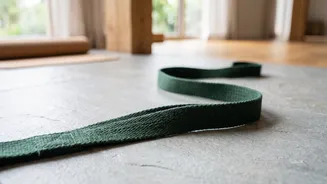
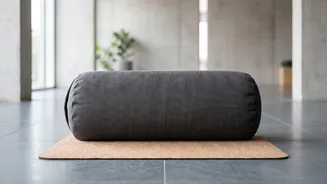
Props are your best friends in this pose; they are tools for support, not signs of failure. If you can't comfortably reach your shins while keeping your back long, loop a yoga strap or even a towel around the balls of your feet. Hold the strap with both hands, keeping your elbows soft. Use it to help maintain length in your spine, not to pull yourself forcefully into the pose. A folded blanket or cushion placed under your sitting bones is another game changer. It elevates your hips and creates a forward pelvic tilt, which is crucial for a healthy forward bend. You can also place a rolled up blanket under your knees for support if they are significantly bent.
Benefits Beyond the Hamstrings
While famous for its hamstring stretch, Paschimottanasana offers a wealth of other benefits. The pose provides a deep stretch for the entire spine, which can improve flexibility and tone the spinal nerves. The gentle forward compression massages the abdominal organs, which can aid digestion. On a more subtle level, forward bends are known to have a calming effect on the nervous system. By turning your attention inward, this pose helps to relieve stress and mental fatigue, making it a wonderful practice for settling an overactive mind.