





A New Space Race for Earth
Bengaluru recently played host to a pivotal gathering of international space agencies, including the BRICS Heads of Space Agencies (HOSA) meeting. These high-level discussions signaled a significant evolution in space diplomacy. For decades, the focus
was on exploration and national prestige. Now, the conversation has firmly shifted towards a more pressing, collective goal: leveraging space technology to monitor and mitigate the impacts of climate change on Earth. Leaders from various space-faring nations convened to discuss not just joint missions to other planets, but joint efforts to save our own. The talks emphasized creating structured, long-term frameworks for collaboration, moving beyond simple information sharing to building a shared space economy geared towards sustainability.
Satellites as Climate Sentinels
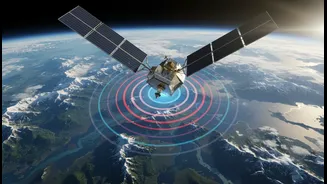
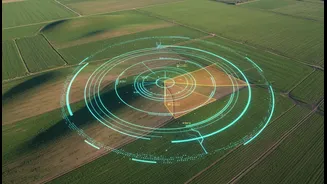
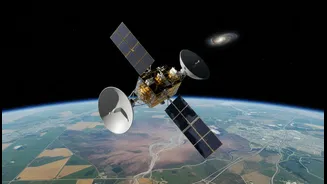
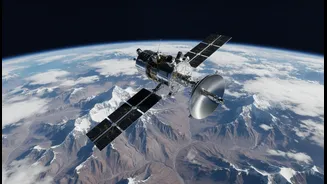
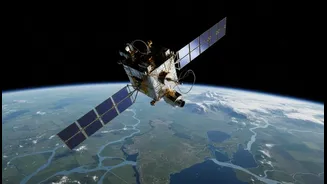
So, how exactly does a satellite orbiting hundreds of kilometers above Earth help fight climate change? These “eyes in the sky” are crucial tools for gathering data on a global scale, offering insights impossible to obtain from the ground. Earth observation satellites use remote sensing to track key indicators of our planet's health. They can measure the thickness and retreat of polar ice sheets, monitor rates of deforestation in critical rainforests, and track changes in sea levels with remarkable precision. Equipped with advanced sensors, satellites can also detect the concentration of greenhouse gases in the atmosphere, helping to identify pollution sources and model future climate scenarios. This continuous stream of data is vital for scientists to understand long-term trends and for governments to make informed policy decisions.
Forging a Data Alliance
A key outcome of the recent talks is the push for greater data sharing among nations. Historically, satellite data could be siloed within national agencies. However, the urgency of the climate crisis is fostering a new era of openness. Agreements like the one between India's Department of Space and the European Commission to share data from ISRO's satellites and Europe's Copernicus Sentinel program are prime examples. This reciprocity allows scientists globally to access a wider, more robust dataset. The goal is to create a seamless flow of information that can be used for everything from disaster management and agricultural planning to tracking biodiversity loss. By combining data from different satellite constellations, researchers can build a more complete and accurate picture of the changes happening to our planet.
India's Leadership Role
By hosting these critical conversations, Bengaluru has cemented its status as a hub for global space diplomacy. India, through the Indian Space Research Organisation (ISRO), is positioning itself as a leader in this new paradigm. ISRO already operates a sophisticated fleet of Earth observation satellites that are vital for monitoring monsoons, cyclones, and Himalayan glacier melt. Furthermore, ambitious collaborations like the NISAR mission, a joint project between NASA and ISRO, underscore India's commitment. Set to be the most advanced radar imaging satellite ever built, NISAR will provide unprecedented detail on land surface changes, helping to manage everything from groundwater resources to landslide risks. This proactive role strengthens India's standing as a key player in using space for the benefit of the Global South and the world.
Challenges on the Horizon
Despite the growing consensus, the path to seamless global cooperation is not without obstacles. Integrating vast datasets from different agencies, each with their own formats and protocols, is a significant technical challenge. Geopolitical tensions can also complicate agreements on data sharing and joint missions. Another growing concern is the issue of space debris. As more satellites are launched, ensuring the long-term sustainability of Earth's orbit becomes paramount for all future space activities, including climate monitoring. Addressing these hurdles will require not just technological solutions but also sustained diplomatic effort and a shared commitment to the principle that the view from space should be used to protect our common home.