




The Surprising Power of a Kiwi Vine
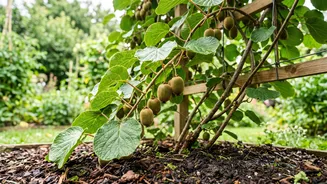
A kiwifruit plant isn't a delicate ornamental; it's a vigorous, woody vine that grows with surprising speed and strength. Native to the forests of East Asia, these climbers are built to ascend trees, reaching lengths of over 30 feet to find sunlight.
In a home environment, this translates to a plant that can quickly cover a trellis or balcony railing. A young vine might seem manageable, but a mature plant is a different beast entirely. They develop thick, woody trunks and a dense canopy of large, heart-shaped leaves. This rapid growth is what makes them great for creating a lush, green screen, but it's also the source of their considerable weight.
Calculating the Hidden Load
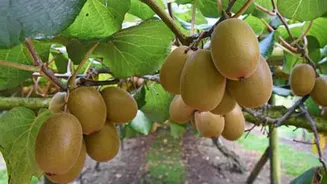
The true weight of a kiwi vine can be shocking. A single mature plant, without any fruit, can weigh over 90 kgs (200 pounds) in vine and leaf mass alone. Add a full crop of fruit, and you could be looking at another 35 to 45 kgs (80 to 100 pounds). This doesn't even account for the weight of a large container—at least 75 litres (20 gallons) is recommended—filled with wet soil. All told, a single potted kiwi plant can exert a total load of well over 150 kgs. Furthermore, this isn't just a static, downward pressure. When winds catch the dense foliage, the vine acts like a sail, creating a significant pulling force on whatever it is attached to. A standard decorative railing may not be designed to handle such a sustained, heavy load.
How to Assess Your Balcony Railing
Before you commit to growing a kiwi vine, a thorough inspection of your balcony railing is non-negotiable. Look for any signs of weakness or deterioration. For metal railings, check for rust, especially at the joints and where the railing is anchored to the building. For concrete, look for cracks or crumbling. For wood, check for rot or splintering. Grab the top rail and give it a firm shake. Any wobbling, creaking, or movement is a major red flag. In many apartment buildings, making structural alterations or attaching heavy items to railings is restricted. It's wise to consult your building's management or a structural professional to understand the load capacity of your balcony and its railings before proceeding. Residential railings are often designed to withstand a specific force per foot, but not necessarily the constant, heavy load of a mature vine.
Smarter Support Systems for Small Spaces
Relying solely on your balcony railing is a risky strategy. A much safer approach is to provide a dedicated, heavy-duty support structure. A sturdy, freestanding trellis made from timber or metal can bear the vine's weight without putting any stress on the railing itself. You can position the pot at the base of the trellis and train the vine to climb it. Another option is to use high-tensile wires anchored securely into the structural walls of the building. This method directs the load into the building's main frame, bypassing the balcony railing completely. These purpose-built supports not only ensure safety but also promote better air circulation and sunlight exposure, which leads to a healthier plant and a more abundant harvest.
Choose the Right Kiwi for Container Life
Not all kiwi varieties are created equal, especially when it comes to container gardening. The fuzzy kiwis (Actinidia deliciosa) found in supermarkets are extremely vigorous growers and require separate male and female plants for pollination, taking up even more space. For a balcony, consider more manageable options. The 'Issai' hardy kiwi (Actinidia arguta) is an excellent choice as it is self-fertile, meaning you only need one plant to get fruit. It's also less vigorous than its fuzzy cousins. Another good option is the Arctic Kiwi (Actinidia kolomikta), which is the most cold-hardy and stays even more compact, making it well-suited to life in a large pot. These smaller varieties will still require robust support, but their reduced size makes them a more practical and safer fit for urban balcony gardens.