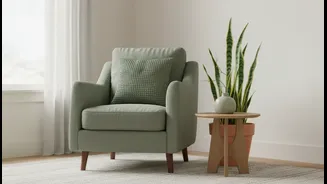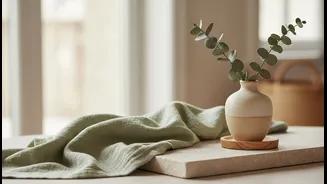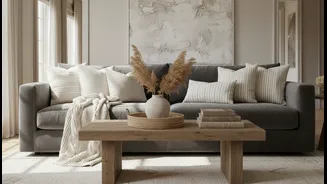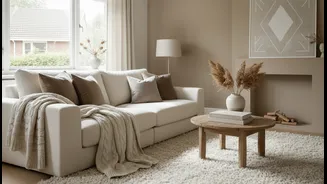





Prioritise Texture Over Everything
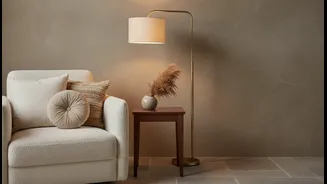
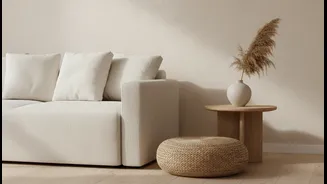
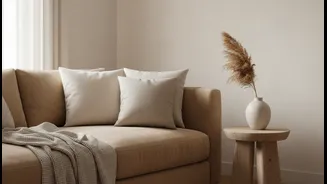
The secret to adding warmth without overwhelming a neutral space is focusing on texture. A room can feel one-dimensional without a variety of surfaces that invite touch and add visual depth. Think about introducing a mix of materials. Pair a smooth linen
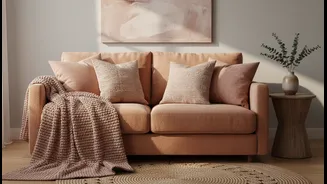
sofa with chunky knit throws, velvet cushions, or a plush bouclé armchair. Natural fibres are particularly effective at adding an organic, cosy feel. Consider textiles made from wool, cotton, and linen, which are known for their softness and breathability. These materials add a tactile quality that makes a room feel layered and sophisticated, preventing the flat, sterile look that can sometimes plague minimalist designs.
Use a Controlled Colour Palette
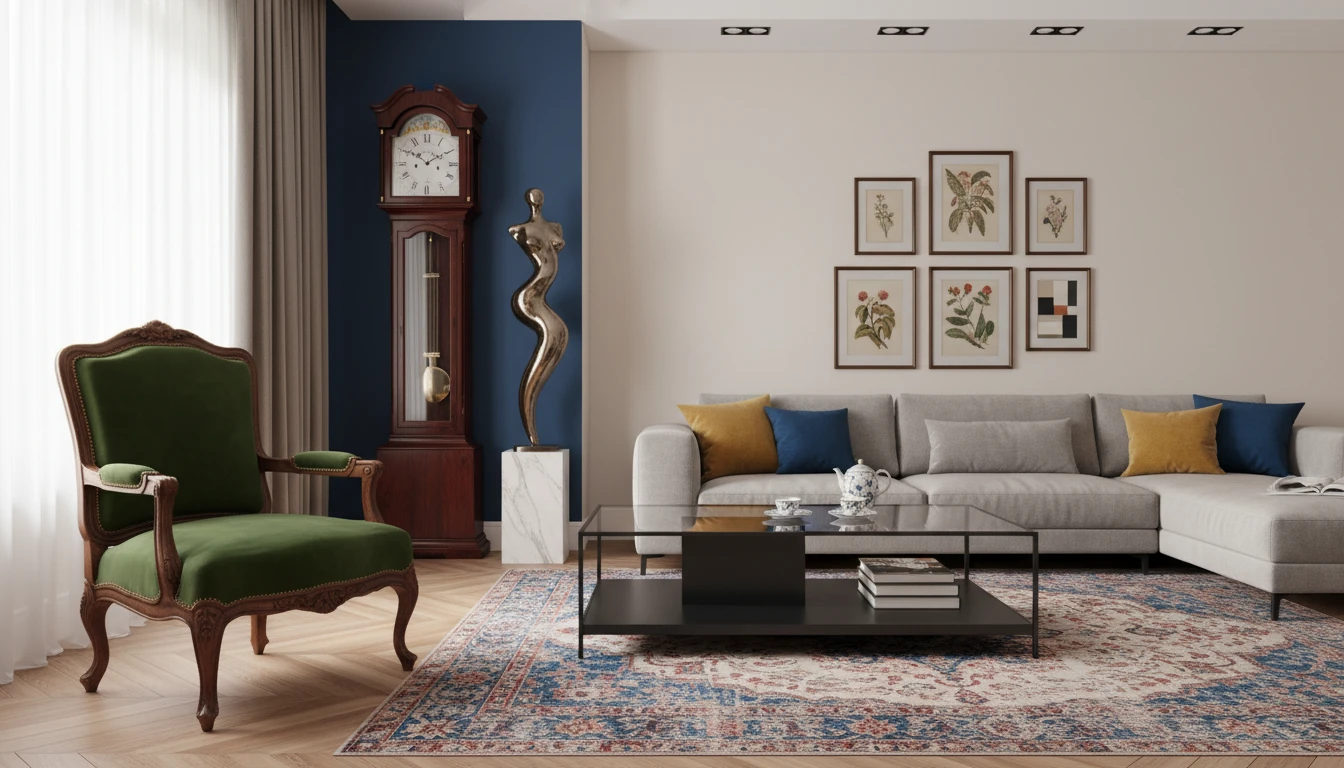
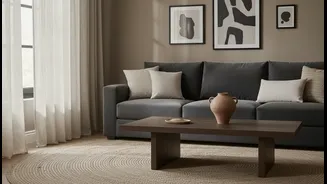
Adding warmth doesn't necessarily mean adding bright, loud colours. To avoid a 'themed' look, stick to a controlled and cohesive colour palette. Pull shades from your existing neutral base—like beige, cream, or grey—and introduce muted, earthy tones such as terracotta, soft greens, or deep blues as accents. This ensures the new additions feel harmonious rather than jarring. If you do want to use a bolder colour, use it as a 'hero' piece, like a single statement rug or a couple of vibrant cushions, and keep the surrounding textiles more subdued. The key is to let the colours complement each other rather than compete for attention.
Layer Textiles Thoughtfully
Layering is an art that adds instant cosiness and a curated feel to any room. Start with a foundational piece, like a large area rug, to anchor a seating area. A wool or jute rug can add significant warmth and texture underfoot. From there, build layers on your furniture. Drape a soft throw over the arm of a sofa or at the end of a bed. When it comes to cushions, mix and match sizes, shapes, and materials. A good rule of thumb is to combine three different textures, such as a knit, a velvet, and a simple cotton or linen cushion, all within your chosen colour palette. This creates a look that is rich and inviting, not messy.
Incorporate Pattern with Restraint
Patterns can inject personality, but they are often the main culprit behind 'costume decor'. To use them successfully, think subtlety and scale. Instead of multiple bold, competing designs, choose one main pattern and support it with smaller, more understated ones. For example, you could pair a large-scale abstract pattern on a rug with smaller geometric or simple stripe patterns on pillows. As long as they share a common colour palette, the mix will feel intentional. Another strategy is to focus on patterns with a textural quality, like a herringbone weave or a cable-knit design. These add visual interest without creating visual noise, maintaining the calm of a neutral space.
Extend Beyond Cushions and Throws
While cushions and throws are the easiest way to add textile warmth, don't forget other surfaces. Window treatments play a huge role in a room's atmosphere. Layering sheer linen curtains with heavier velvet or wool drapes can soften the hard lines of a window frame and provide insulation. Upholstered furniture, like an ottoman or a headboard, offers another opportunity to introduce soft texture. You can even use textiles as art; a beautiful woven wall hanging or a framed piece of embroidered fabric can act as a unique focal point that adds softness and absorbs sound, further enhancing the room's cosy feel.