



The Health Risks of Sitting Still
Sitting for prolonged periods, especially in the tight confines of an airplane, can significantly slow blood flow in your legs. This immobility is a primary contributor to a condition called deep vein thrombosis (DVT), where blood clots form in the deep veins
of the body, usually the legs. While the overall risk for travellers is low, it increases on flights longer than four hours. In serious cases, a piece of the clot can break off and travel to the lungs, causing a potentially life-threatening blockage known as a pulmonary embolism. Factors that can increase your risk include age, obesity, a personal or family history of blood clots, and recent surgery. Beyond DVT, extended sitting can cause general muscle stiffness, soreness, and swelling in the legs.
Why the Aisle Seat Is Your Ally
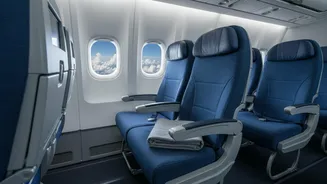
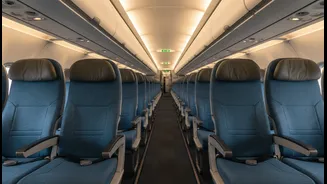
The single greatest advantage of an aisle seat is freedom of movement. You can get up to stretch, walk the cabin, or use the restroom without having to climb over your seatmates. This convenience makes it far more likely that you will move regularly, which is crucial for maintaining good circulation. Experts often recommend getting up and moving around every hour or two on a long flight. An aisle seat removes the social awkwardness of repeatedly disturbing others, especially if they are sleeping. This easy access not only helps mitigate health risks but also provides a greater sense of space, reducing feelings of being cramped or claustrophobic. Other perks include the ability to stretch your legs into the aisle (when clear of carts and people) and a faster exit upon landing.
Maximise Movement, No Matter Your Seat
Even if you are not in an aisle seat, you can and should perform simple exercises to keep your blood flowing. These can be done discreetly without disturbing your neighbours. Try these movements periodically throughout the flight: Foot Pumps: With your heels on the floor, lift your toes up high, then lower them and lift your heels. Continue this pumping motion for 30 seconds. Ankle Circles: Lift your feet off the floor slightly and rotate your ankles in circles for 30 seconds, then reverse direction. Knee Lifts: While seated, lift one knee towards your chest, holding for a few seconds before lowering it. Alternate legs and repeat several times. Shoulder Rolls: Relieve upper body tension by rolling your shoulders up, back, and down in a circular motion. Staying well-hydrated is also key, as dehydration can contribute to clot risk. Drinking plenty of water has the added benefit of naturally prompting you to get up for restroom breaks.
Aisle vs. Window: The Great Debate
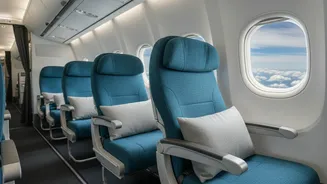
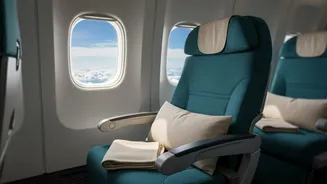
The best seat ultimately depends on your personal priorities. While the aisle seat is superior for mobility and health, the window seat has its own distinct advantages. Window seats offer a surface to lean against for sleeping, epic views, and no disturbances from passing carts or passengers in the aisle. You also have control over the window shade. However, this comes at the cost of being 'trapped' and needing to ask others to move every time you want to get up. Consider your travel style. If you are a nervous flier, have a high risk for DVT, need frequent restroom breaks, or simply feel restless, the aisle seat is the clear winner. If you prioritise sleep, privacy, and can time your movements to coincide with when your seatmates are awake, the window may be your peaceful sanctuary. The middle seat, of course, offers the drawbacks of both with few of the perks, though some argue it comes with ownership of two armrests.