





The Planet's Oldest Thermometers
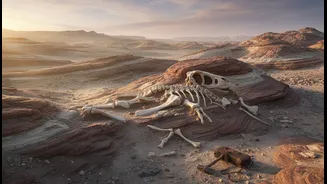
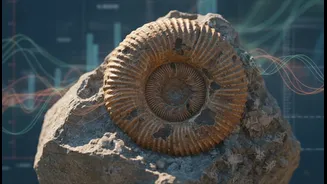
Fossils are much more than just the preserved remains of ancient life; they are direct evidence of the environments they lived in. Think of them as nature's own time capsules. Palaeoclimatology, the study of past climates, and palaeontology, the study of fossils,
are intrinsically linked. For instance, the shape of a fossilised leaf can tell scientists a surprising amount about the climate it grew in. Leaves from warm, tropical climates often have smooth edges and 'drip tips' to shed excess rain. In contrast, those from cooler climates are frequently smaller with jagged or toothed edges. By analysing the characteristics of fossil leaves, scientists can reconstruct past temperatures and rainfall with remarkable accuracy. Similarly, the discovery of fossils of warmth-loving creatures like crocodiles and alligators in regions that are now frigid, such as the Arctic Circle, provides undeniable proof that these areas were once dramatically warmer.
India's Own Prehistoric Climate Diaries
India’s rich fossil record serves as a spectacular open book on its deep climate history. Recent discoveries in the subcontinent are rewriting what we know about our own environmental past. For example, 24-million-year-old fossilised leaves found in Assam’s Makum Coalfield belong to a plant genus, Nothopegia, that today only grows thousands of kilometres away in the Western Ghats. This tells us that Northeast India once had a warm, humid climate very similar to the present-day Western Ghats. The subsequent rise of the Himalayas dramatically altered weather patterns, making the region inhospitable for these species. In another instance, fossil leaves from Nagaland, dating back 34 million years, revealed a connection between the formation of Antarctic ice and the birth of the Indian monsoon system. And in Kashmir, fossils of subtropical plants show that the now-temperate valley was once a warm, wet paradise before the uplift of the Pir Panjal range blocked the monsoon rains.
From Siwalik Giants to Microscopic Clues
The Siwalik Hills, stretching across the northern part of the Indian subcontinent, are a world-renowned treasure trove of fossils. The remains of incredible creatures like giant giraffids (Sivatherium), massive tortoises, and diverse elephant-like animals paint a picture of a lush, seasonal woodland environment between about 18 and 6 million years ago. The changing diversity of these large mammal fossils over millions of years directly corresponds to major shifts in climate and vegetation, from more forested to more open grassland environments. But it isn't just large fossils that tell the story. Microfossils, such as pollen grains and the tiny shells of ocean-dwelling organisms called foraminifera, are hugely important. Different plants produce unique pollen, so fossil pollen tells us what was growing, and by extension, what the climate was like. In the oceans, the chemical composition of microscopic shells records the temperature of the water they grew in, acting as miniscule thermometers that preserve a record of ancient global climate.
A Warning From A Warmer Past
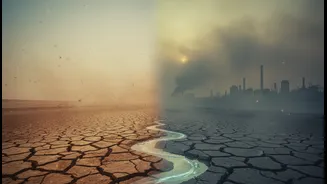
Studying the interplay between life and climate in the deep past is not just an academic exercise. It holds crucial lessons for our present and future. One of the most studied events is the Paleocene-Eocene Thermal Maximum (PETM), a period of intense and rapid global warming that occurred around 56 million years ago. A massive release of carbon into the atmosphere caused global temperatures to spike by 5 to 8°C. By studying the fossil record from this time, scientists can see how ecosystems responded. Some species went extinct, others migrated, and some adapted. For example, a group of single-celled marine organisms called Apectodinium, which thrived in warm waters, spread across the entire globe during the PETM. This ancient warming event is considered one of the best analogues for understanding the potential consequences of modern, human-driven climate change, offering a stark warning written in stone.