





First, What Is This 0.4% Charge?
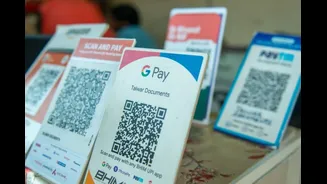
The National Payments Corporation of India (NPCI) has introduced a 0.4% Merchant Discount Rate (MDR) on certain UPI transactions. This is not a fee paid by customers. Instead, it's a processing fee that merchants pay when they receive payments. The charge
applies only to person-to-merchant (P2M) payments of more than ₹2,000. This move aims to create a sustainable financial model for the banks and payment companies that operate the vast UPI network, covering costs for infrastructure, security, and innovation. The collected fee is shared among the payment ecosystem partners, including banks and app providers.
Who Actually Pays (And Who Doesn't)?
The most crucial detail is the number of exemptions. The 0.4% MDR does not apply to all transactions. Firstly, any payment of ₹2,000 or less is completely exempt, which covers the vast majority—over 95%—of all merchant UPI transactions. Secondly, all person-to-person (P2P) transfers, like sending money to a friend or family member, remain entirely free, regardless of the amount. Thirdly, small merchants are protected. Those receiving up to ₹1 lakh per month via UPI QR codes will not have to pay any MDR on their transactions. The rule is designed to primarily affect mid- to large-sized merchants that process higher-value transactions.
The Impact on Low-Value Payments (Up to ₹2,000)
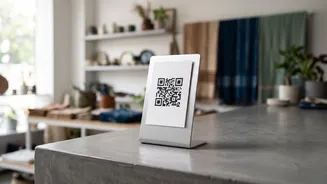
For the average kirana store, cafe, or street vendor, daily business is unlikely to change. Since any transaction at or below the ₹2,000 threshold carries zero MDR, the cost of accepting UPI for everyday purchases remains free. This ensures that small-ticket retail, which forms the backbone of UPI's volume, is not discouraged. A customer buying groceries for ₹800 or paying ₹300 for a meal will trigger no charge for the merchant. The government and NPCI have structured the rule specifically to protect these high-frequency, low-value payments that have become integral to daily life and commerce across India.
The Cost for Mid-Range Transactions (₹2,001 to ₹75,000)
This is where the 0.4% MDR kicks in. For a merchant who is not classified as a small vendor, a UPI payment of ₹3,000 would incur a charge of ₹12. A payment of ₹10,000 would cost the merchant ₹40, and a ₹50,000 transaction would result in a ₹200 fee. While this introduces a new cost, it remains significantly lower than the typical MDR for credit cards, which often ranges from 1.5% to 2.5%. For certain essential sectors like railways, fuel, insurance, and telecom, the fee is a flat ₹5 for any transaction over ₹2,000, providing cost certainty for these businesses. The Ministry of Finance has advised banks to ensure merchants do not pass this cost on to customers.
How High-Value Payments Are Affected
To prevent excessive charges on very large transactions, the MDR is capped. For any payment of ₹75,000 or more, the fee is fixed at a maximum of ₹300. This means a merchant receiving a payment of ₹1,00,000 will pay a ₹300 fee, not the ₹400 that a straight 0.4% calculation would suggest. This cap is particularly relevant for businesses dealing in high-value goods like electronics, furniture, or wholesale trade. It provides predictability and ensures that UPI remains an affordable option even for substantial business-to-consumer payments.