





Can artificial intelligence cure cancer in the next 10 years? That’s the audacious claim from Dario Amodei, CEO of AI giant Anthropic. The prediction reflects Silicon Valley’s soaring optimism, but is it a medical miracle in the making or tech hype?
The Promise From The Top
The
prediction comes from Dario Amodei, the head of Anthropic, a major player in the AI industry known for its Claude family of models and a strong focus on AI safety. In recent statements, Amodei has suggested that AI could compress 50 to 100 years of medical progress into just five to 10 years. He believes that by applying advanced AI to every stage of biological research, diseases like cancer, Alzheimer's, and heart disease could become 'relics of the past' within a decade. This isn't just a stray comment; it's part of a broader vision that Amodei has detailed in essays and public appearances, arguing that the greatest impact of AI won't be chatbots, but a revolution in medicine. He contends that for an AI industry facing a 'crisis of trust', delivering on such profound promises is the only way to earn public confidence.
How AI Could Accelerate a Cure
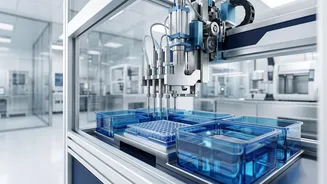
The optimism isn’t based on a single magic bullet, but on AI’s potential to supercharge multiple stages of medical research. Traditionally, drug discovery is a slow, expensive process of trial and error. AI promises to change this by rapidly analysing enormous datasets to identify new therapeutic targets, predict how molecules will behave, and design novel drugs from scratch. For instance, Google DeepMind's AlphaFold has already predicted the structure of over 200 million proteins, a monumental task that has accelerated biological research. Anthropic itself is heavily invested, partnering with firms like Bristol Myers Squibb and Generate Biomedicines to speed up the development of treatments for solid tumours and other diseases. In one project, AI helped redesign a component of CAR T-cell therapy, making it more effective at killing tumour cells in lab tests.
From Code to Clinical Reality
Beyond drug discovery, AI is already making a tangible impact in clinics today. Algorithms are being used to help radiologists detect cancers on scans earlier and with greater accuracy, sometimes spotting patterns invisible to the human eye. AI tools are assisting pathologists in analysing tissue samples and helping oncologists develop personalised treatment plans by mining vast amounts of genomic data to predict how a patient’s specific tumour might respond to different therapies. Anthropic is actively working on the 'plumbing' of the healthcare system, developing tools to streamline processes like clinical trial management. These present-day applications demonstrate that AI is already becoming a powerful assistant in the fight against cancer, moving from a theoretical concept to a practical tool.
A Necessary Dose of Skepticism
For every optimistic tech leader, there's a skeptical medical expert urging caution. A primary objection is that cancer is not one disease, but hundreds of complex, evolving diseases. A 'cure' for one type may be useless for another. Pharmaceutical executives also point out that even if AI can identify a promising drug candidate in weeks, it cannot replace the yearslong process of rigorous human clinical trials required to prove a treatment is both safe and effective. There are also significant regulatory hurdles, with agencies like the FDA needing clear frameworks to approve AIdriven therapies. Furthermore, many current AI models are 'black boxes', meaning even their creators don't fully understand how they arrive at a conclusion, a major problem when patient lives are at stake. Data privacy, algorithmic bias, and the need for massive, highquality datasets are other major challenges that must be overcome.